
Discover iconic northern China on this 10-day escorted tour. From the Forbidden City to the Great Wall and Terracotta Warriors, experience 5,000 years of history.
Your First-Timer's Guide to Imperial China's Northern Heartland
Planning a first China trip from New Zealand comes with a real tension: there is too much country and not enough time. The reflexive answer — "do Beijing, Xi'an, and Shanghai" — sounds reasonable until you look at a map and realise you've just signed up for three cities across two weeks, none of which you'll see properly. The better question is whether two cities done well could be worth more than three cities skimmed.
Beijing and Xi'an together make a coherent argument. Both are northern capitals. Both are organised around the idea of dynastic power — one as its Ming and Qing expression, the other as the Tang and Qin root. And critically, they sit four and a half hours apart on one of the world's most impressive high-speed rail corridors. The logic of the route is obvious once you ride it.
What this guide does is work through the eight things genuinely worth your time across both cities — the well-known ones and the ones most itineraries treat as afterthoughts. Each section is honest about the trade-offs: what you get, what you don't, when to go, and who it suits. For Kiwi travellers on a first China trip, this is the northern route that justifies the flight.
CTS Tours' A Tale of Two Cities itinerary runs 10 days from Auckland — see the tour page for the next departures. October is a well-timed month for this route: it avoids summer crowds while keeping the weather workable for walking.
Table of Contents
- 1. Forbidden City (Gugong)
- 2. Great Wall at Mutianyu
- 3. Beijing Hutongs
- 4. Temple of Heaven
- 5. Beijing to Xi'an by High-Speed Rail
- 6. Terracotta Warriors
- 7. Xi'an City Walls
- 8. Muslim Quarter (Huimin Jie)
- Top 8 Comparison
- Your Beijing & Xi'an Journey: A Practical Plan
1. Forbidden City (Gugong)
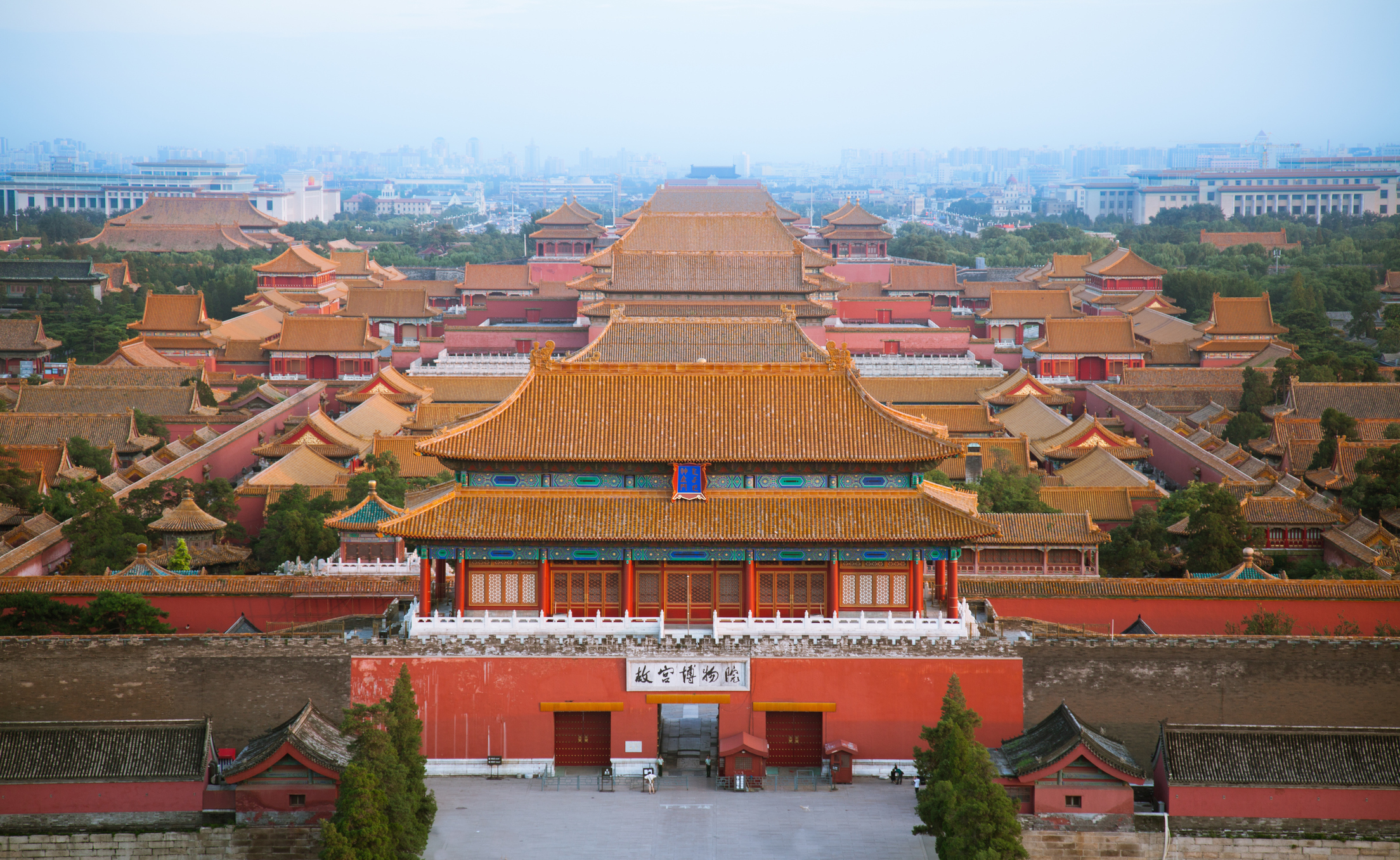
Walk through the Gate of Heavenly Peace before 8:30am and the first courtyard has room to breathe. The light is low and raking across the imperial yellow tiles, the crowds are still forming at the entrance gates, and the scale of the thing — 980 buildings across 720,000 square metres — becomes something you can actually register rather than just absorb as a number.
The Forbidden City was built between 1406 and 1420 under the Yongle Emperor, and 24 emperors lived and ruled from here across the Ming and Qing dynasties. UNESCO inscribed it in 1987 as an outstanding example of Chinese palace architecture. Today, as the Palace Museum, it houses 1.86 million artefacts and regularly draws more than 14 million visitors per year — making it the most visited museum complex in the world. The Palace Museum caps daily tickets at 80,000, which means a pre-booked slot is not optional; it is the only way in.
The trade-off at the Forbidden City is scale. It is vast enough to overwhelm without a plan, and some of the most interesting things — the side halls, the Clock Exhibition, the Treasure Gallery — sit off the main north-south axis where most visitors stay. You come for the experience of standing inside China's centre of imperial power for five centuries, not for a leisurely afternoon.
I'd put the Forbidden City early in the Beijing leg, not later. It sets the visual language for everything else: the colour palette, the architectural grammar, the sense of deliberate hierarchy that you'll recognise again at the Temple of Heaven and even at the Xi'an City Walls. Seeing it first makes the rest of Beijing more legible.
How to move through it without getting lost
The default route through the palace runs south to north: Meridian Gate in, Gate of Divine Might out. That is fine for a three-hour visit. For a more complete experience:
- Main axis (2 hours minimum): Meridian Gate → Gate of Supreme Harmony → Hall of Supreme Harmony → Hall of Preserving Harmony → Imperial Garden. This is the formal spine — grand courtyards, ceremonial halls, the sequence of gates.
- Eastern route (add 45 minutes): Branch east after the Hall of Middle Harmony to reach the Palace of Heavenly Purity and the residential quarters. More human-scaled, less formal.
- Treasure Gallery and Clock Exhibition (add 1 hour each): Separate tickets required. The Clock Exhibition alone is worth the detour for its collection of elaborate European and Chinese timepieces gifted to the Qing court.
- Early morning: The light is best and the crowds are thinnest. Aim for the 8:30am opening slot.
- Midday: The main axis becomes congested. Consider side halls at this point.
- Late afternoon (after 4pm): Ticket sales end, remaining visitors thin out. The garden at the northern end is pleasant in the late-day light.
Practical rule: Book your timed entry slot online before you leave New Zealand. Walk-up tickets are no longer reliably available for the Forbidden City, and the daily cap means sold-out days are common in October.
Couples tend to do well here — the scale rewards slow wandering and there's always something to frame in a photograph. Families with younger children should plan a focused two-hour route rather than attempting the full complex; the tile and stone underfoot is hard going for small legs by hour three. For first-time NZ travellers, CTS guides cover this site with the kind of contextual depth that turns a palace walk into something that makes sense — who slept where, who was restricted from where, and why the layout encoded power so deliberately.
2. Great Wall at Mutianyu
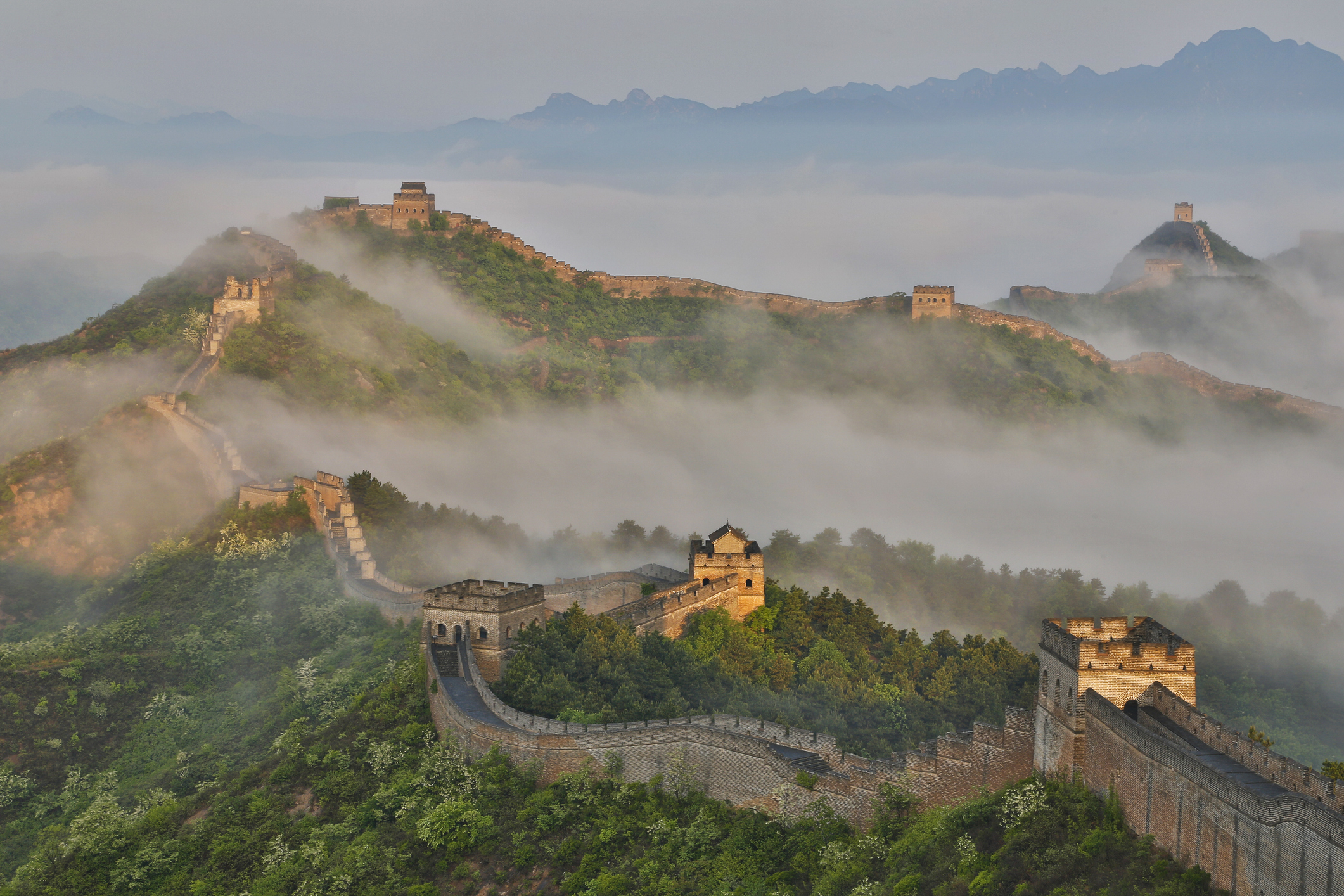
The first thing most NZ travellers notice at Mutianyu is not the wall itself — it's the hillside. The wall climbs and falls with the ridgeline in a way that photographs simply don't prepare you for. The gradient is real, the watchtowers are dense (roughly one every hundred metres along this section), and the views north into forested valleys feel genuinely remote, even though you're 75 kilometres from central Beijing.
According to UNESCO, the Great Wall was inscribed in 1987 as one of the greatest construction achievements in human history. The total length of all Great Wall sections ever built reaches approximately 21,196 kilometres, with the Ming-era wall — the best-preserved and most recognisable section — measuring around 8,850 kilometres. Mutianyu's section was rebuilt in its current form during the Ming Dynasty in 1569 and remains among the most intact stretches anywhere.
The trade-off here is straightforward. Mutianyu is the best-organised and best-maintained section near Beijing, which means it is also a popular choice. What you gain is reliable access, good infrastructure, and a wall section that is actually walkable rather than crumbling. What you give up is solitude. October weekends will be busy, though less so than summer. Weekday visits in October are notably calmer.
I'd push back on the idea that a busy site means a lesser experience here. Mutianyu's watchtowers have enough space that you can always find a quieter stretch between the main cable car landing and the eastern end. The views from Watchtower 14, looking west along the ridgeline, are worth the extra ten minutes of walking.
Cable car, hike, or toboggan — which to choose
Three access options exist, and the right one depends on your group:
- Cable car up, cable car down: The practical choice for anyone prioritising time on the wall over the ascent. The ride takes roughly five minutes and drops you near Watchtower 14. Asia's first cable-car access to the Wall, installed in 1985, this is the default for most escorted tours.
- Hike up, toboggan down: The most popular combination for active travellers. The ascent from the south gate takes 40–50 minutes on a stepped path through pine and oak forest. The toboggan descent (a dedicated track, sled-controlled by hand brake) drops you back to the base in minutes and is genuinely entertaining. Not appropriate if you have significant knee problems.
- Chair lift: A single-seat open lift operates as an alternative to the cable car on certain sections. Scenic and slightly slower.
Practical rule: The toboggan queue peaks between 10am and 2pm. Come down before 10am or after 3pm to reduce waiting.
For NZ families, Mutianyu is the right Great Wall choice — the infrastructure is organised, the toboggan is a memorable end to the day, and the wall section is easy enough that most children aged eight and up can manage a two-hour walk between towers. Retirees will find the cable car access makes this entirely manageable without requiring significant fitness. CTS includes Mutianyu specifically because the experience is reliable — the wall, the towers, and the views deliver on what was promised.
3. Beijing Hutongs
A hutong is easy to describe — an alleyway, flanked by courtyard houses, running between the main roads — but the word captures almost nothing about what it actually feels like to walk one. The scale drops immediately. The street noise recedes. You pass a doorway propped open to reveal a courtyard that has been someone's home for a hundred years, and another, and another.
Hutongs date to the Yuan Dynasty (around 700 years ago), their name likely derived from the Mongolian word for "water well" — which tells you something about how they were originally organised. At their peak in the mid-1980s, Beijing had over 6,000 hutongs. Urban development has reduced that number significantly, but several historic networks around the Drum and Bell Towers, Nanluoguxiang, and Shichahai remain largely intact and are now under historic preservation.
The trade-off in the hutongs is one of atmosphere versus authenticity. The most-visited lanes — Nanluoguxiang especially — have become lined with cafes and souvenir shops, which is less interesting than a residential hutong where people actually live. The best way around this is a rickshaw tour that takes you off the main corridors and into the side alleys that tourists don't find on foot.
I'd put the hutong visit in the morning, before lunch, when residents are out buying vegetables and the light is soft. An afternoon visit works too, but the lunch-hour lull between 11am and 1pm means some of the small shops and courtyard entries are quieter than they'll be later.
Who should prioritise this
- Couples: The hutong network around Shichahai (the lake district) is especially good for an afternoon walk, ending at the lakeside for a drink. Slow-paced, no queues, easy to navigate.
- Families: A rickshaw tour removes the navigation challenge and adds a memorable element for children. Most tours include a stop at a siheyuan (courtyard home) where a local family shows the layout and architecture.
- First-timers: Genuinely important. The hutongs are the residential counterweight to the Forbidden City — the palace shows you how emperors lived, the hutongs show you how Beijing worked around them. Seeing both in the same trip makes the city make sense.
- Anyone tempted to skip it for another museum: Don't. This is irreplaceable urban texture that is slowly disappearing.
Practical rule: A two-hour rickshaw tour costs modestly, covers more ground than walking the same time, and lets a local guide explain what you're looking at. It is money well spent.
CTS Tours integrates the hutong experience with context — the Drum Tower backdrop, the relationship between these neighbourhoods and the imperial core — rather than leaving NZ travellers to wander with a phone map.
4. Temple of Heaven
Come early enough and the Temple of Heaven park does something unexpected. The complex opens at dawn, and before the main gates to the ceremonial buildings begin admitting tourists, the surrounding parkland fills with Beijing residents: ballroom dancers using portable speakers, tai chi groups in unhurried lines, retirees with caged songbirds perched in the trees. It is one of the more striking daily rituals in Beijing and costs nothing to watch.
The main complex — the Hall of Prayer for Good Harvests, the Circular Mound Altar, and the Imperial Vault of Heaven connected by a long elevated walkway — was built between 1406 and 1420 and extended under the Jiajing Emperor in the 16th century. UNESCO inscribed it in 1998 as "a masterpiece of architecture and landscape design which simply and graphically illustrates a cosmogony of great importance for the evolution of one of the world's great civilisations." In practical terms, that means it is one of the most architecturally elegant buildings in Beijing — the three-tiered circular hall in deep blue, set against the sky, is genuinely distinctive from anything in the Forbidden City.
The trade-off is that the Temple of Heaven is often treated as a half-day add-on that gets squeezed around the Forbidden City. Done that way, it becomes a photo stop. Given two to three hours — arriving at the park before 8am, watching the morning activity, then walking the ceremonial axis — it becomes something worth remembering.
I usually recommend this for couples and travellers who want a counterpoint to the imperial grandeur of the Forbidden City. Where the palace is about enclosure and hierarchy, the Temple of Heaven is about the sky. The design logic is vertical rather than horizontal, and that changes the experience entirely.

Best time to visit and what to look for
- 6:30–8:00am (park only, no extra ticket needed): Tai chi, morning exercise, ballroom dancing in the western parkland. One of the more authentic and photogenic things you'll see in Beijing.
- 8:30am–12pm: Ceremonial core opens. Light on the Hall of Prayer is best in the morning. Crowds are manageable on weekdays.
- After 2pm: Afternoon light can be harsh in October, but the long shadows by 4pm create good photographic conditions. The complex starts clearing out after 4:30pm.
Practical rule: The circular architecture of the Hall of Prayer for Good Harvests encodes precise acoustic properties — stand in the centre of the Circular Mound Altar and speak normally to hear the sound reflected back to you. It is a designed feature, not a coincidence.
For Kiwi travellers with limited days in Beijing, the Temple of Heaven pairs naturally with a hutong morning — both are walkable from the central city and together fill a day without the intensity of the Forbidden City. Retirees often find this the most rewarding Beijing stop: the parkland gives space, the architecture rewards slow attention, and the morning exercise culture is a reminder that Beijing is a lived-in city, not a museum.
5. Beijing to Xi'an by High-Speed Rail
The overnight option exists, but I'd take the daytime G89 without hesitation. You depart Beijing West station, pass through Zhengzhou — the capital of Henan Province — and arrive into Xi'an North in under four and a half hours. The distance is approximately 1,216 kilometres. That is roughly Wellington to Auckland and back again, covered while you watch the North China Plain flatten and then fold back into the loess terraces of Shaanxi Province. The landscape transition is one of the more quietly dramatic geographical shifts you'll make on any trip.
G89-class refers to the class of service on the Beijing–Xi'an high-speed railway — it is one of the faster express services on the corridor, with minimal stops. The CTS itinerary books 2nd class seating, which on Chinese high-speed rail is not budget territory: it is a wide, reserved, numbered seat in a quiet carriage. The trains are clean, punctual, and include catering. For NZ travellers who associate "second class" with compromised comfort, Chinese HSR 2nd class is likely to be a genuine reframe.
The trade-off is time of day versus landscape. Evening departures mean you miss the view; daytime departures mean you arrive in Xi'an with less evening time. The daytime option is the better experience.
I'll be direct about something: the train journey is one of the moments in this itinerary that lands differently in person than it reads on paper. NZ travellers who arrive expecting a connecting service and leave thinking it was one of the highlights are not unusual. There is something specific about moving across China at 300km/h on a seat you booked six weeks ago from Auckland — it lands the scale of the country in a way that flying does not.
What to expect on board
- Boarding: Arrive at Beijing West at least 30 minutes before departure. Passport is required for the ticket collection machines (if self-collecting). CTS guides handle this — confirm the meeting point before the day.
- Seating: 2nd class seats are in rows of 3+2, numbered, with generous legroom by any intercontinental standard. Window and aisle available; middle seats are the same as everywhere.
- Catering trolley: Passes through regularly with hot food boxes (Chinese dishes), snacks, and hot water. Bring your own snacks if you prefer, but the food is fine.
- Luggage: Large bags go in the overhead racks or the end-of-carriage storage. There is no luggage check-in process; you carry your bags onto the platform and board.
- Arrival: Xi'an North station is modern and large. Your CTS guide meets the group at the station.
Practical rule: The right side of the train (if facing direction of travel) gives slightly better views of the Shaanxi loess landscape approaching Xi'an. Not essential, but worth knowing when choosing seats.
For Kiwi travellers flying in from Auckland, the train is a natural transition between the two cities. It is faster and more centrally connecting than a domestic flight, cheaper when booked in advance, and the station-to-city-centre connections are excellent. CTS includes this in the itinerary specifically because it is the best way between these two cities — logistically and experientially.
6. Terracotta Warriors
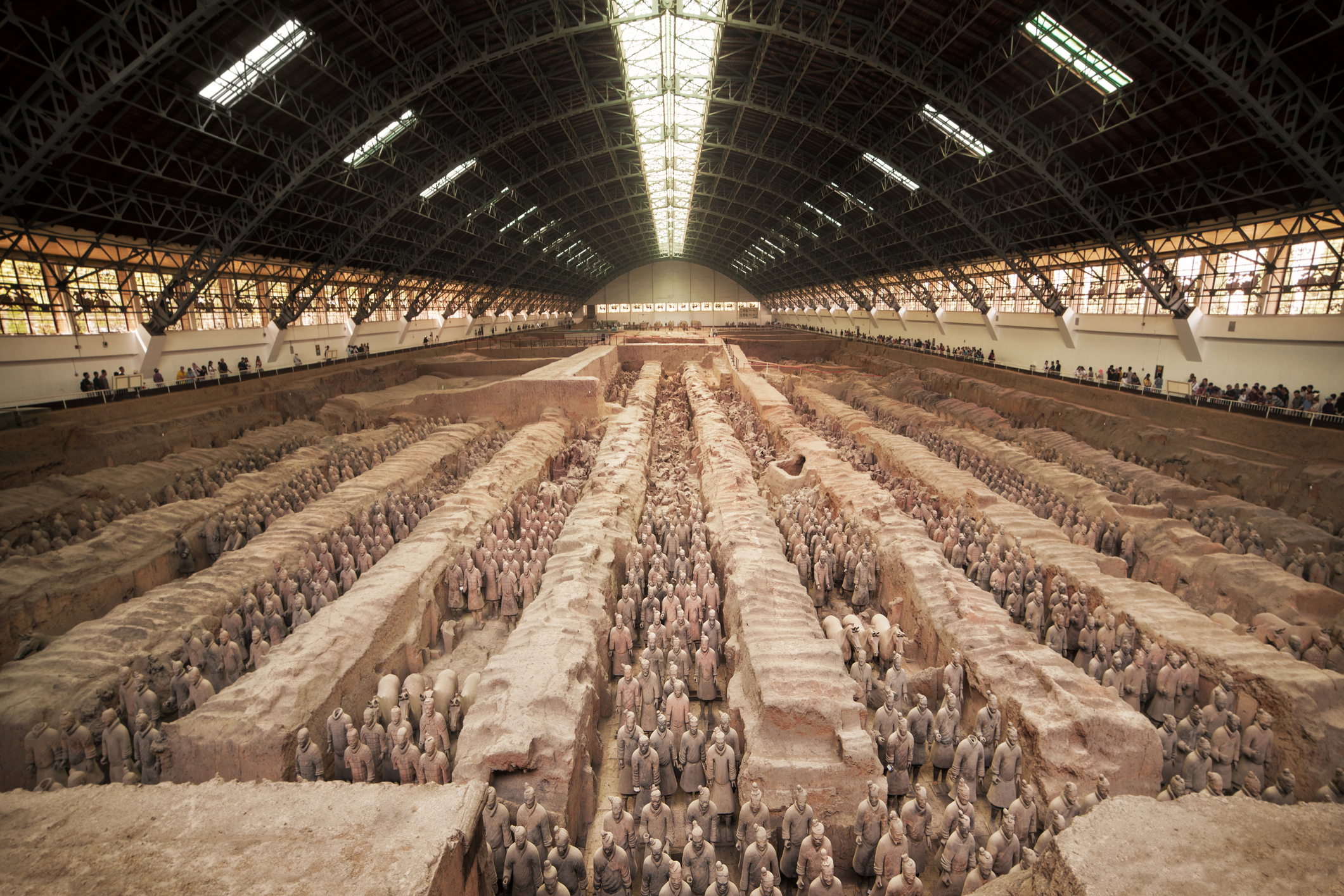
There is a version of this visit where you stand on the edge of Pit 1, look down at the rows of warriors stretching away into the excavated earth, and feel almost nothing — because the image is so familiar from photographs that the real thing takes time to register. Give it ten minutes. Walk slowly along the viewing gallery. Start looking at faces.
No two are the same. That is the thing the photographs don't convey. Each figure was individually modelled — different hairstyles, different expressions, different armour configurations. The Qin Emperor's craftsmen created an army of individuals, not copies, at a scale that still resists easy comprehension: more than 8,000 soldiers, 130 chariots, and 150 cavalry horses, across three pits.
The discovery came on 29 March 1974, when farmers digging a well approximately 1.5 kilometres east of the tomb mound struck fragments of terracotta figures. UNESCO inscribed the Mausoleum of the First Qin Emperor in 1987, the same year as the Forbidden City. Construction of the mausoleum began around 246 BC when Qin Shi Huang took the throne at age thirteen, and the warrior army was buried as part of a vast funerary complex intended to serve him in the afterlife.
The trade-off is that Pit 1 is the overwhelming focus of most visits, which means Pits 2 and 3 — smaller, differently organised, and in some ways more interesting — get rushed. Pit 2 contains cavalry and archers in mixed formations. Pit 3 is the command centre, with senior officer figures arranged as though mid-briefing. Both reward attention.
I'd give this a full morning, arriving as the site opens. The audio guide (available on-site in English) is good enough that a private guide is not essential for a first visit, though having context around the burial customs and the Qin dynasty's administrative machinery makes the warrior programme make more sense.
How to visit all three pits without rushing
- Pit 1 (Main Hall): Start here. Allow 45–60 minutes. Walk the full perimeter before stopping to photograph — the eastern end has some of the most detailed figures.
- Pit 2 (Cavalry & Archers): 20–30 minutes. Partially unexcavated; the mix of buried and exposed sections gives a strong sense of the ongoing archaeological process.
- Pit 3 (Command Centre): 15–20 minutes. Smaller but conceptually interesting — the officers, the chariot configurations. Often the quietest pit.
- Bronze Chariots Exhibition Hall: Separate building on site, not always in tour schedules but worth 20 minutes. Two bronze chariots at half-size, recovered from near the tomb mound, with extraordinary metalwork detail.
- Timing: Arrive before 9am. The site is at its busiest from 10am to 2pm. A full visit of all three pits and the bronze chariots takes 2.5–3 hours at a good pace.
Practical rule: Photography is permitted throughout (without flash). Pit 1's scale photographs better from the raised gallery than from the lower-level walkway — choose your position before shooting.
For first-time NZ travellers, this is the Xi'an stop that most consistently exceeds expectations. Families with older children (12+) who have some history context will find it absorbing. Retirees with an interest in ancient history often rate this as the highlight of the entire itinerary. Couples who expected a quick tick and find themselves still talking about specific faces an hour later is a pattern CTS guides know well. The A Tale of Two Cities itinerary allocates a proper morning here — which is the right call.
7. Xi'an City Walls
The Xi'an City Walls are one of the most intact examples of Chinese military fortifications in existence, and they are at their best at dusk or early morning, when the light is low and the 13.75-kilometre perimeter stretches away in both directions with no visible end.
Construction began in 1370 under the Hongwu Emperor of the Ming Dynasty, the same emperor who rebuilt much of the Great Wall. The walls were strengthened in 1568 by laying blue-grey brick across the original tamped-earth core. They stand 12 metres high with a top width of 12–14 metres — wide enough to drive four carriages abreast, which was the point. The enclosed area is approximately 14 square kilometres, containing the historic heart of Xi'an.
The trade-off is that the walls are long, and doing the full 13.7 kilometres on foot in a single session requires several hours and significant energy. Most visitors do a section rather than the full circuit — typically one to two kilometres in either direction from the South Gate (the main entry point) to get a sense of the scale and the views.
I'd do the city walls in the late afternoon, arriving an hour before sunset. The battlements cast good shadows in the raking light, the crenellations and watchtowers look like what they are rather than a tourist attraction, and the view of modern Xi'an spreading beyond the ancient perimeter is one of the more useful things you can see on this itinerary — it makes the relationship between ancient and contemporary China visible in a single glance.

Bicycle or walk — making the most of 13.7 km
- Bicycle rental: Available at all four gates and several intermediate points. Single bikes and tandems. The full 13.7km circuit takes about 1.5–2 hours at an easy pace. Tandems are popular with couples.
- Walking a section: South Gate to West Gate (approximately 4.5km) or South Gate east to the Southeast Corner Tower (approximately 2km) gives a representative experience without requiring a full circuit.
- Electric scooter rental: Available at some entry points. Faster, less effort, less atmosphere — I'd take the bicycle unless fitness is a significant concern.
- Early morning: The walls are much quieter before 9am. The light is also better.
- Late afternoon into dusk: The most popular time. Slightly busier, but the light is exceptional and the floodlit walls at dusk have their own appeal.
Practical rule: The South Gate (Yongning Gate) is the most photogenic entry point and has the best rental infrastructure. Start here.
For NZ families, the bicycle circuit is an unexpected highlight — it turns a historic attraction into physical activity that children remember. Retirees comfortable on a bike will find the flat, paved surface on top of the wall entirely manageable. Couples on tandems is a cliché for a reason. First-time China travellers who came for the Warriors often find the city walls the Xi'an discovery they didn't expect to care about.
8. Muslim Quarter (Huimin Jie)
Xi'an was the eastern terminus of the Silk Road, and the Muslim Quarter is the most direct physical evidence of that. The Hui Muslim community — descended from Persian and Arab merchants who settled here during the Tang Dynasty, roughly 1,300 years ago — has maintained a distinct culinary and cultural identity in this neighbourhood ever since. The Great Mosque of Xi'an, visible from Huimin Jie, dates its founding to the Tang Dynasty (around 742 AD), making it one of the oldest mosques in China.
This is a food street above all else, and the food is genuinely unlike anything else in China. Biang biang noodles — wide, hand-pulled, slapped against the counter until the character behind the name (reportedly the most complex Chinese character, with 58 strokes) sounds out — come dressed with chilli oil, vinegar, garlic, and a scattering of vegetables. Roujiamo, the so-called Chinese hamburger, is braised beef or lamb (the Muslim Quarter version never uses pork) stuffed into a crispy oven-baked bun. Persimmon cakes, pomegranate juice squeezed to order, lamb skewers pulled from a charcoal grill — the street rewards wandering and pointing.
The trade-off is crowds and noise. Huimin Jie is one of the busiest eating streets in China, and the main corridor can feel overwhelming during peak evening hours. The side alleys running parallel are calmer and have fewer tourist-facing shops. The food quality on the main street is not notably better than the side streets.
I'd put the Muslim Quarter on the first Xi'an evening, before the Terracotta Warriors day. Arriving around 6pm, when the evening foot traffic is building but not yet at peak, is the sweet spot. It also means you eat well, walk it off, and arrive back at the hotel without having spent the evening in a restaurant.
What to eat, what to skip
Order these:
- Biang biang noodles (裤带面): The wide, belt-like noodles are the signature dish. Look for hand-pulling visible from the shop front.
- Roujiamo (肉夹馍): The Muslim Quarter version — lamb or beef, slow-braised. Crispy exterior, rich filling. Eat immediately while warm.
- Persimmon cake (柿子饼): Seasonal in October. A flat, sticky fried cake using the local Shaanxi persimmon. Worth seeking out.
- Lamb soup (羊肉泡馍): More of a restaurant dish than street food — a tearoom or sit-down shop is the right setting. Bread broken into soup, rich broth. Filling and warming.
Skip:
- The tourist-facing "souvenir snacks" in sealed packaging near the entrance gates — these are overpriced and available elsewhere.
- Anything that involves queuing more than ten minutes. The alternatives within fifty metres are reliably good.
Practical rule: The main street peaks between 7pm and 9pm. Arrive before 6:30pm or after 9pm for more space. The Great Mosque (to the west of the main street) can be visited in the early evening and is worth the ten-minute detour for its Tang-Dynasty courtyard architecture.
For NZ families with varied eaters, the Muslim Quarter offers enough visual variety and different foods to hold attention without requiring anyone to commit to a formal restaurant. For couples, the evening atmosphere is lively and easy to explore on foot. For first-time Kiwi travellers uncertain about Chinese food, this is one of the softer introductions — the flavours are distinct but the eating format (street food, point-and-order) is accessible. CTS includes Xi'an food experiences as part of the guided city portion, which helps with navigation and translation on the first evening.
Top 8 Things to Do in Beijing & Xi'an — Comparison
| Attraction | Complexity | Resources / Cost | Expected Experience | Ideal Use Cases | Key Advantages & Quick Tip |
|---|---|---|---|---|---|
| Forbidden City | Medium–High — large complex, multiple sections | Moderate — entry fee + separate exhibition tickets | Imperial grandeur, architectural scale | First-timers, history enthusiasts, all ages | Book timed entry before leaving NZ; go early and plan a route |
| Great Wall (Mutianyu) | Medium — organised, well-marked | Moderate — entry + cable car/toboggan optional | Physical achievement, panoramic views | Active travellers, families, couples | Combine cable car up with toboggan down for the best experience |
| Beijing Hutongs | Low — easy navigation on rickshaw tour | Low–Medium — rickshaw tour cost | Living history, neighbourhood texture | All traveller types, especially first-timers | Morning visits are quieter; choose a rickshaw route over Nanluoguxiang main street |
| Temple of Heaven | Low — straightforward layout | Low — park + inner complex tickets | Architectural elegance, daily Beijing life | Couples, retirees, those wanting cultural depth | Arrive at 6:30am for morning exercise culture in the park |
| High-Speed Rail (G89) | Low — handled by tour | Included in tour | Practical + experiential — China at scale | All travellers as a transition moment | Take daytime departure for the landscape; sit on right side facing direction of travel |
| Terracotta Warriors | Low–Medium — three pits, audio guide sufficient | Moderate — site entry + optional guide | Archaeological wonder, individual craftsmanship | All traveller types; especially families with older children | Visit all three pits — Pits 2 and 3 are usually uncrowded and add context |
| Xi'an City Walls | Low — flat, well-maintained, rental on-site | Low — entry + bike rental | Physical activity, historic urban panorama | Families, couples, active travellers | Rent bicycles at South Gate; late afternoon gives the best light |
| Muslim Quarter | Low — street food format, easy to navigate | Low — food costs only | Culinary variety, atmospheric evening outing | All traveller types, evening activity | Arrive before 6:30pm; explore side alleys parallel to the main street |
Your Beijing & Xi'an Journey: A Practical Plan
The rhythm of a 10-day itinerary
Ten days is the right length for this pairing. Four to five days in Beijing, one day of travel, four to five days in Xi'an gives each city enough time to develop rather than just be sampled. The CTS A Tale of Two Cities 10-day itinerary from Auckland is structured around this logic.
Beijing (Days 1–4 or 5):
- Day 1: Arrive, transfer to hotel. Central Beijing orientation in the evening (Wangfujing area, or a quiet walk near the hotel). Recover from the flight.
- Day 2: Forbidden City (morning, full 3–4 hours). Temple of Heaven (afternoon). Hutong area in the evening around the Drum Tower.
- Day 3: Mutianyu Great Wall (full day excursion). Early start, cable car up, wall walk, toboggan down, return to Beijing by mid-afternoon.
- Day 4: Beijing hutongs properly (morning rickshaw tour). Afternoon free — consider the National Museum, 798 Art District, or Tiananmen Square approach for context.
- Day 5 (if applicable): Summer Palace or Yonghe Temple before the afternoon or evening train.
Train Day:
Take the G89 class daytime service from Beijing West to Xi'an North. Journey time approximately 4.5 hours. The train is part of the experience — plan for it, not through it.
Xi'an (Days 5/6–10):
- First Xi'an evening: Muslim Quarter. Walk, eat, explore the Great Mosque approach.
- Terracotta Warriors: Allocate a full morning, starting as the site opens. All three pits plus the bronze chariots.
- Xi'an City Walls: Afternoon or early evening bicycle ride. South Gate is the most photogenic entry.
- Half-day Xi'an remainder: Shaanxi History Museum (excellent overview of Tang Dynasty artefacts, free entry) or the Big Wild Goose Pagoda (Tang Dynasty Buddhist landmark, walkable from the Muslim Quarter).
- Final day: Buffer for shopping, longer exploration, or a relaxed morning before the return flight via Beijing.
Practical realities for Kiwi travellers
Visa: Many NZ passport holders may qualify for visa-free entry for leisure travel to China — but this depends on your specific travel dates, nationality, and entry conditions. Confirm your requirements directly with a visa specialist or the Chinese consulate before booking. Do not assume; check. The CTS website includes a visa guide linked from the tour page.
Flights: An October trip from Auckland works well for the northern China weather window — temperatures are genuinely comfortable (10–20°C in Beijing, slightly warmer in Xi'an), the summer humidity has gone, and the national holiday crowds from Golden Week (early October) have thinned by mid-month. The A Tale of Two Cities tour from NZD $3,480 includes international flights from Auckland, 4-star hotels across both cities, guide services, listed meals, and the G89-class HSR 2nd class ticket.
Currency and connectivity: WeChat Pay and Alipay dominate Chinese transactions. International visitors now have better access to these apps linked to foreign cards than previously, but carrying some Chinese cash (CNY) for street food and smaller vendors remains useful. A Chinese SIM card or an international roaming plan with adequate data is practical — Google services don't function in mainland China without a VPN, which is worth noting when planning navigation apps.
Walking: Both cities involve significant walking on hard surfaces — cobblestone, tile, and uneven stone. Comfortable, broken-in shoes are not optional. The Forbidden City alone involves several kilometres of walking.
The trip that works
There is a version of the Beijing–Xi'an trip that tries to do both cities in five or six days and ends up feeling like a checklist. There is another version — ten days, structured around the eight stops in this guide, with a guide who knows both cities — that ends up being the reference point for everything else you travel to after it.
The north of China is coherent in a way that reward slows attention. The Forbidden City, the Great Wall, the Terracotta Warriors — these are not interchangeable symbols of "ancient China." They are specific things, built in specific eras for specific purposes, and understanding the differences between them is most of the value. That is what a well-structured escorted itinerary actually delivers: not just access, but sequence and context.
For NZ travellers making their first China trip, this northern route — two cities, one train journey, ten days — is the one I'd recommend starting with.
Sources & References
Data in this guide is sourced from verified public records:
- Forbidden City — Palace Museum collection: 1.86 million artefacts; 14 million+ annual visitors
- UNESCO — Forbidden City inscription (1987)
- UNESCO — Great Wall inscription (1987)
- Britannica — Great Wall of China: 21,196km total length, 8,850km Ming section
- UNESCO — Temple of Heaven inscription (1998)
- UNESCO — Terracotta Warriors (1987)
- China Discovery — Xi'an City Walls: 13.75km perimeter, 12m height
- TravelChinaGuide — Beijing–Xi'an High-Speed Rail: journey distance and timing
Ready to take this from a reading list to a real itinerary? CTS Tours' A Tale of Two Cities departs Auckland from NZD $3,480 (see the tour page for the next departure), including international flights, 4-star accommodation in both cities, guided touring, listed meals, and the Beijing–Xi'an high-speed rail in 2nd class. For a broader look at planning a first China visit, the Beijing & Xi'an first-visit guide for NZ travellers covers the logistics questions most commonly asked before departure.
Frequently Asked Questions
Is this tour too touristy?+
Every popular destination has tourists. The difference is in how you experience it. A good guide gets you to sites early, explains the why (not just the what), and creates space for quiet reflection. You'll see other tourists, but you won't feel like you're in a theme park.
Is it safe?+
Yes. China is statistically safer than most Western countries. Petty theft exists (as everywhere), but violent crime is rare. Your tour operator will have safety protocols, and your guide will give practical advice.
Do I need a visa?+
Most New Zealand citizens require a tourist visa. The Chinese Embassy in Wellington processes visas in 7–10 working days. Cost is ~NZD $150. Start this process 12 weeks before travel.