Plan your Beijing to Xian high speed train journey. Routes, schedules & booking tips for NZ travellers heading to China's ancient capital.
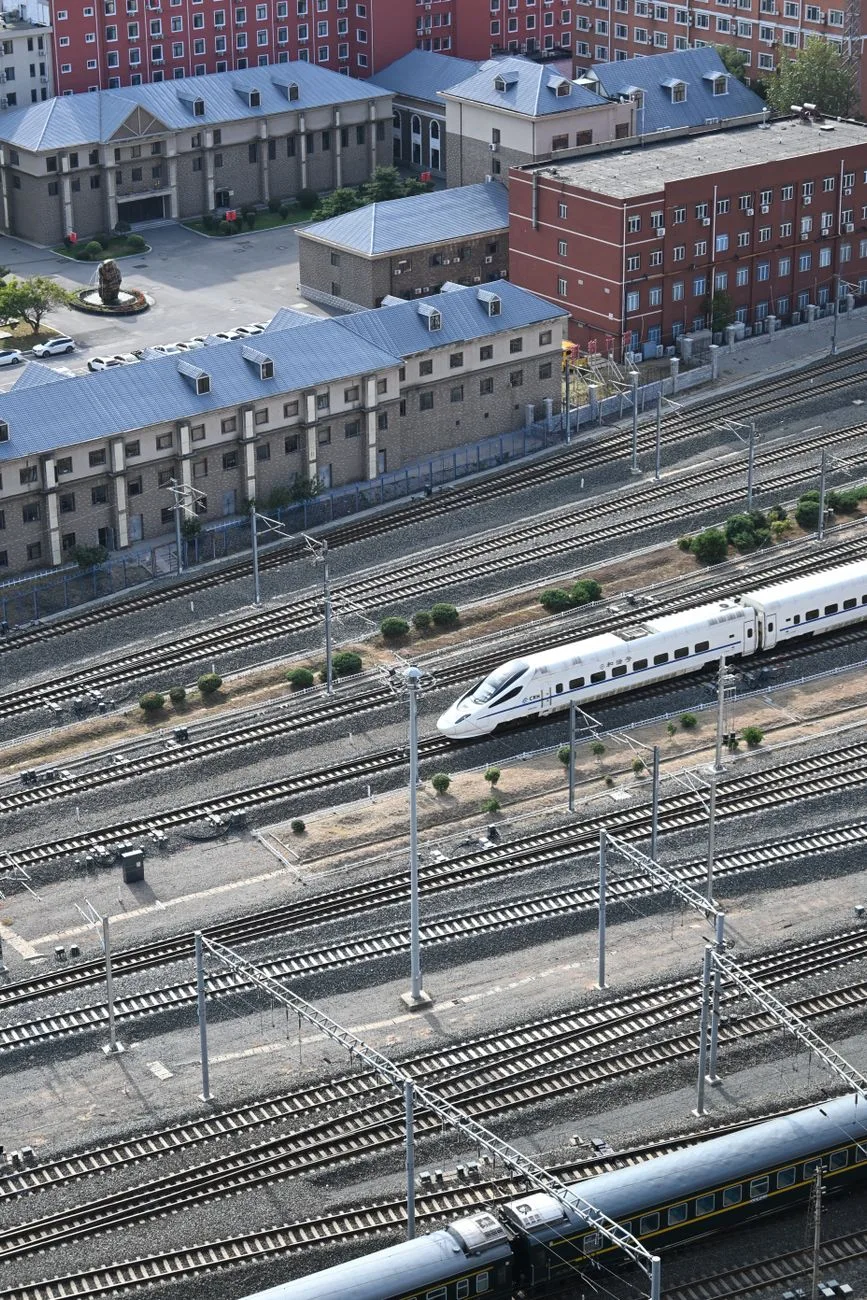
The high-speed train from Beijing to Xi'an is one of those travel experiences that changes how you think about transport. Around 30 G-class services a day cover the 1,200 km in as little as 4 hours 11 minutes, city centre to city centre, at up to 300 km/h — and the journey across the North China Plain into the loess hills of Shaanxi is genuinely worth watching. If you are visiting both cities, the train beats flying on almost every measure. Here is how it works.
What Are the Basics?
- Route: Beijing West Railway Station → Xi'an North Railway Station
- Trains: G-class (gaotie) high-speed services, roughly 30 per day from early morning to evening
- Journey time: about 4 to 5 hours; the fastest services run about 4 hours 11 minutes
- Distance and speed: roughly 1,200 km at up to 300 km/h
- Cost: second class roughly 470 to 580 yuan (about NZD 110 to 140); first and business class higher
Seat classes are simple: second class is the standard booking — comfortable, clean, a 3+2 layout with decent legroom, entirely adequate for four hours. First class gives a 2+2 layout and more recline. Business class is an airline-style lie-flat seat at several times the price. A catering trolley passes regularly with drinks, snacks and instant noodles, and every carriage has hot-water dispensers — bring tea or pot noodles like the locals do. Full schedules and fares are published on sites like Travel China Guide.
How Does Boarding Work?
Chinese rail runs on real-name ticketing linked to your passport — there is no paper ticket to lose. You show your physical passport at the entry gates, at the boarding gate, and occasionally on board. Two practical notes:
- Arrive 40 to 45 minutes early. Beijing West is one of the largest railway stations in Asia; security screening and finding your gate take time, and boarding gates close a few minutes before departure.
- Luggage is easy. There are no airline-style weight checks. Racks above the seats take cabin bags; shelves at the carriage ends take large suitcases.
Beijing West is about 30 to 40 minutes from central Beijing by metro or taxi. At the other end, Xi'an North connects to central Xi'an on Metro Line 2 in around 25 minutes, or 30 to 40 minutes by taxi.
On a guided tour none of this is your problem: tickets are issued in advance, and your guide walks the group from hotel to seat.
What Do I See Out the Window?
The first hour crosses the North China Plain — one of the most densely farmed and historically consequential landscapes on earth, scrolling past at 300 km/h in a way that gives you a physical sense of China's scale no statistic can. The line threads through Shijiazhuang and Zhengzhou, crosses the Yellow River, and then the land begins to fold: the flat plain gives way to the terraced loess hills of Shaanxi, the yellow-earth plateau where Chinese civilisation keeps its oldest records. By the time you slide into Xi'an North you have crossed something you can feel as well as see.
Sit on the left side heading to Xi'an for the better river views, and keep your camera out around the Yellow River crossing.
Why Not Just Fly?
We book the train for our groups deliberately, and clients thank us for it afterwards:
- The total time is a wash. Add airport transfers at both ends, 90-minute check-in, security and taxiing, and the plane's advantage evaporates.
- The stations are central and metro-connected; the airports are not.
- Punctuality. Chinese high-speed rail runs to the minute; domestic flights are far more weather- and traffic-prone.
- Comfort. You can stand, walk, and watch the country go by with a cup of tea.
- Carbon. High-speed rail emits a fraction of the CO2 per passenger of a domestic flight.
How Does This Fit an NZ Itinerary?
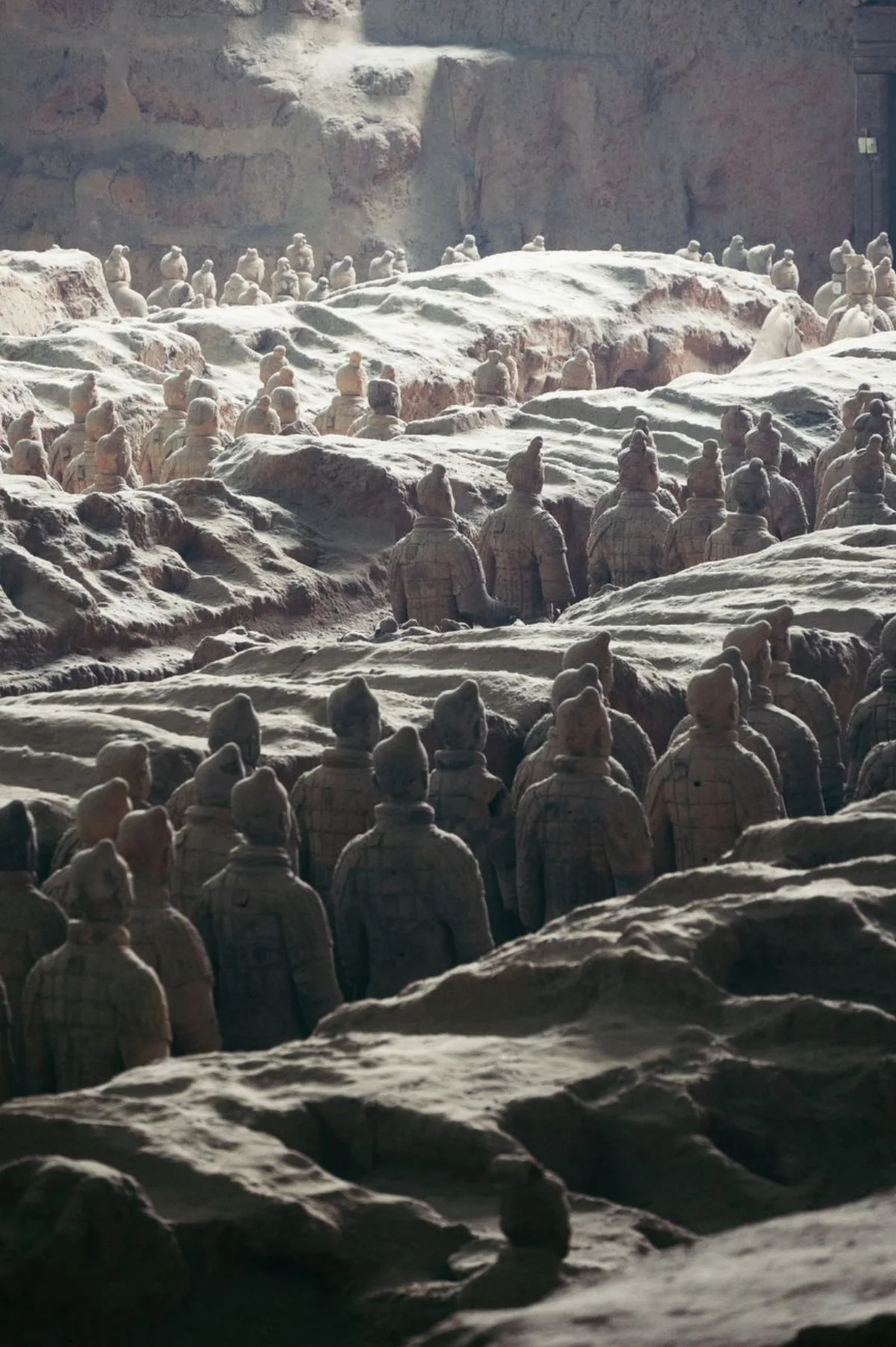
Beijing plus Xi'an is the classic first-time China route — capital, Great Wall, then the Terracotta Warriors — and the train is the hinge between them. Our 10-day Beijing and Xi'an itinerary shows how the days fit together, and with the current 30-day visa-free entry for NZ passports the whole trip books as easily as a Pacific holiday.
On the CTS A Tale of Two Cities Discovery tour, the Beijing–Xi'an high-speed train (second class) is a standard inclusion — tickets arranged in advance, guide with you door to door.
View the full Beijing and Xi'an tour →, or browse our Beijing tours and Xi'an tours.