I'm Baker Gu — Chongqing hot pot is the original, and it's significantly different from what you've eaten elsewhere. Here's what makes it different, what to order, and what to expect from the heat.
I'm Baker Gu, CTS's China travel specialist. I've been eating hot pot in Chongqing far longer than I've been running tours there, and the first thing I tell every New Zealand client before we sit down is this: Chongqing hot pot is not the hot pot you've had in Auckland. It is louder, hotter, more social and more fun — and if you learn five or six menu items before you go, it might be the single best evening of your China trip. Here's the full picture.
Where Does Chongqing Hot Pot Come From?
The dish started on the docks. In the late Qing era, boatmen and porters along the Jialing and Yangtze rivers cooked cheap offcuts — tripe, duck intestine, blood curd — in fierce, numbing broths that covered the ingredients' origins and kept out the river-valley damp. What began as workers' food moved indoors, went upmarket, and became the city's defining dish. Chongqing today has tens of thousands of hot pot restaurants — more per head than any other Chinese city — and locals treat the original beef-tallow broth as a point of civic pride.
That history explains the menu: the classic items are still the dock-worker cuts, now eaten by choice rather than necessity.
What Makes It Different From Other Hot Pot?
Every region of China has hot pot — Beijing has its lamb and copper pots, Shanghai its milder styles, and Chengdu its own butter-broth variant. Chongqing's version is defined by two things:
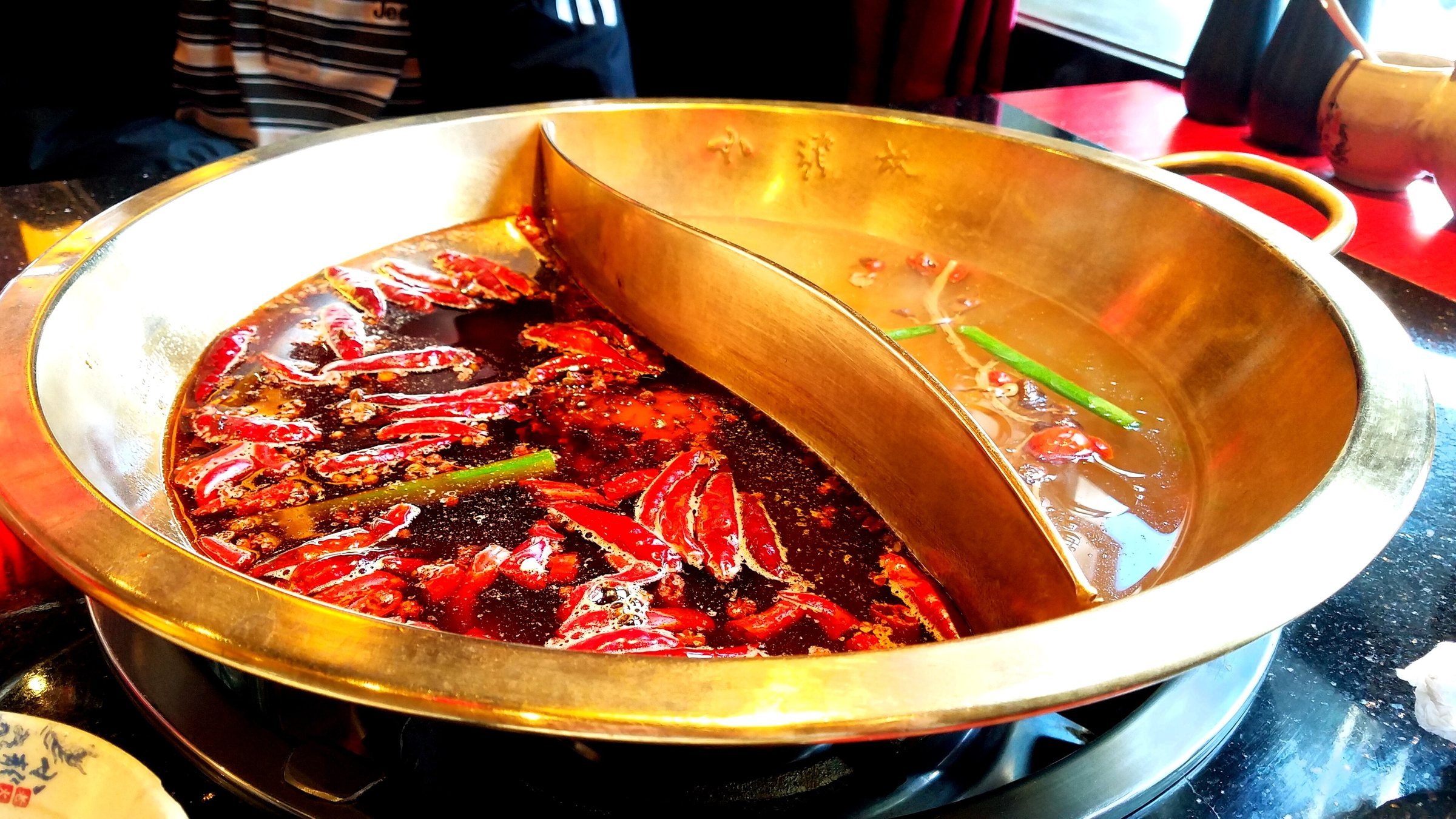
- Beef tallow. The broth base is rendered beef fat, not oil or stock. It carries flavour into everything you cook and gives the surface its glossy red sheen.
- Mala. Dried chillies bring the heat; Sichuan peppercorn (huajiao) brings a tingling, faintly citrus numbness on the lips and tongue. The combination — ma (numbing) plus la (hot) — is the whole point, and it is genuinely novel the first time.
You will also see the pot itself divided into a nine-square grid (jiugongge). The squares are not decorative: different zones of the pot hold different temperatures, so quick-cooking items go in the fast-boiling centre and slow items simmer at the edges.
How Do I Order Without Reading Chinese?
Nearly every restaurant offers a split pot (yuanyang guo) — original broth on one side, mild tomato, mushroom or chicken broth on the other. Order it. Even chilli-proof groups benefit from tasting both.
You will be asked for a spice level: wei la (mild), zhong la (medium), te la (extra). For a first visit, medium on the spicy side of a split pot is the honest sweet spot.
Then tick boxes on the order sheet. My standing order for every group:
- Thin-sliced beef (feiniu) — 20 seconds in the pot, absorbs the broth beautifully
- Tripe (maodu) — the Chongqing essential; count to fifteen and pull it out
- Lotus root (lian'ou) — sweet, crunchy, the perfect counterweight
- Tofu skin (doupi) — soaks up more flavour than any other tofu form
- Potato and mushrooms — reliable crowd-pleasers for cautious eaters
- Duck intestine (yachang) — for the adventurous; seconds only, wonderfully crunchy
At the sauce station, build the standard dip: sesame oil base, crushed garlic, spring onion, coriander if you like it. The oil coats and cools each bite — it is not optional, it is the brake pedal.
What Is the Evening Actually Like?
Hot pot is not a quick meal; it is the whole night's entertainment. You order everything at once, the broth comes to a rolling boil, and the table settles into a two-to-three-hour rhythm of cooking, talking, and reaching across one another. The room will be loud. Iced soy milk or a cold local beer are the traditional coolants. Go hungry, wear nothing precious — the broth spits — and expect to leave very full for roughly 80 to 150 yuan a head (about NZD 20 to 40).
Locals eat hot pot year-round, including in Chongqing's steaming summers, on the theory that sweating is part of the experience. Evening from 7pm is the proper sitting, when the restaurants fill and the city's energy arrives with them.
Where Should I Eat It?
For a first visit, pick a busy restaurant in the Jiefangbei area or near Hongyadong — dinner then flows straight into the riverside lights and the best of Chongqing after dark. Skip anywhere with a tout outside and photos of celebrities in the window; follow the queues of locals instead.
If your route runs on to Chengdu, taste the two cities' styles side by side — the differences are real, and the argument over which is better has run for a century. Our guide to Sichuan food culture in Chengdu covers the other half of the story.
Eating Hot Pot on a CTS Tour
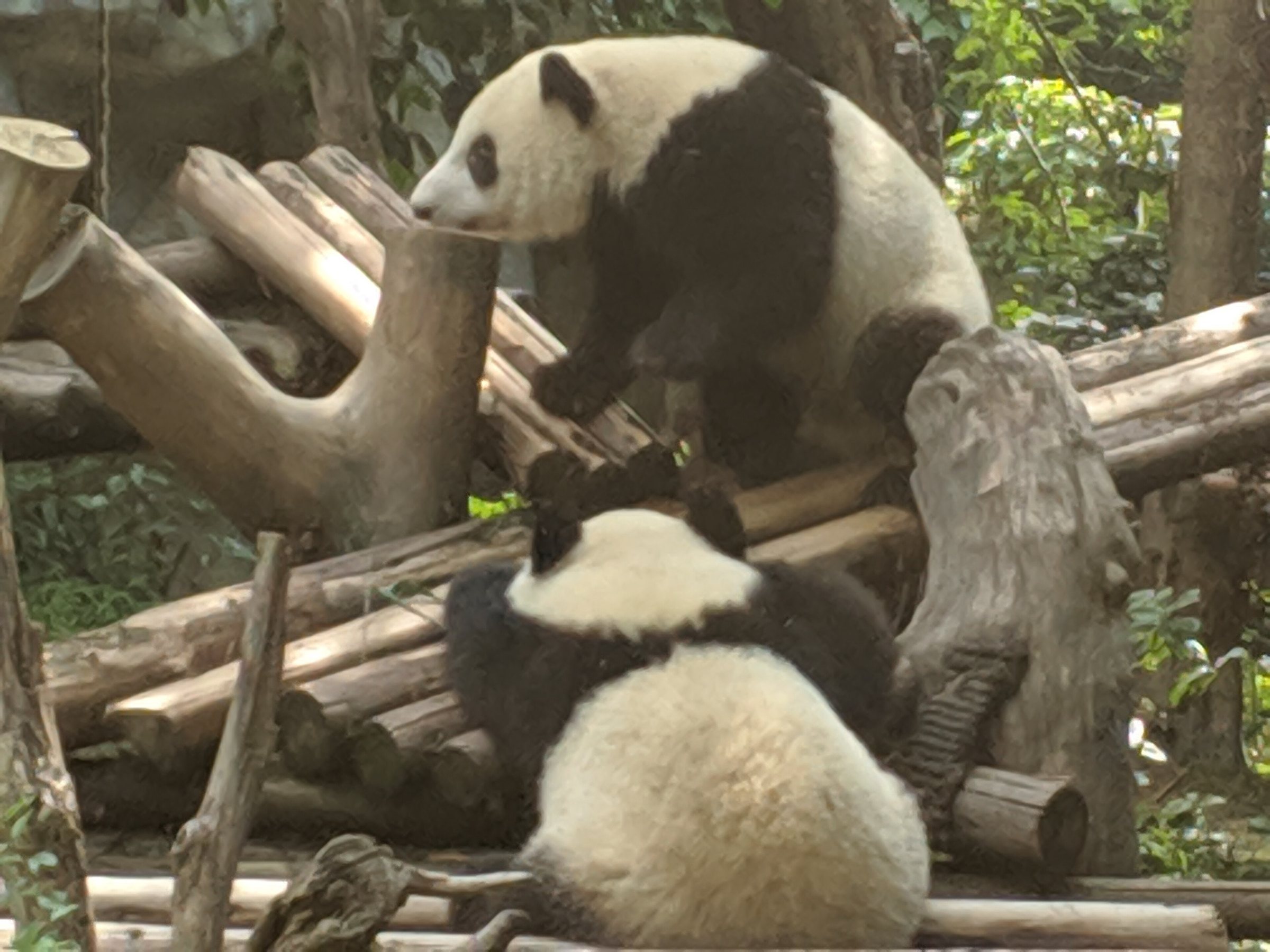
On our Fire and Fuzz itinerary (Chongqing and Chengdu, 10 days) I include a guided hot pot dinner early in the trip — ordering handled, dishes explained, spice levels negotiated — so that by your free evenings you can walk into any local restaurant and order with confidence. That first supervised dinner is the difference between eating hot pot and understanding it.
View the Fire and Fuzz tour → or browse all Chongqing tours.