

Explore Liziba Station, Hongyadong, Dazu Rock Carvings (UNESCO), Chengdu Pandas & Sichuan hotpot. A Chongqing and Chengdu guide for NZ travellers.
Your Kiwi Traveller's Guide to China's Cyberpunk City and the Panda Capital
Most NZ travellers who start planning a China trip end up on the same loop: Beijing for the Great Wall, Shanghai for the Bund, and maybe Xi'an for the Terracotta Warriors. That's a perfectly good trip. But Chongqing and Chengdu are something else — and if you've been watching travel content online in the last two years, you've almost certainly already seen them.
The challenge with choosing what to do across these two cities is the same challenge that makes them worth visiting: they are genuinely different from each other, and different from every other major Chinese city. Chongqing is a 34-million-person mountain metropolis built vertically on cliff faces above two rivers — neon, loud, and architecturally surreal. Chengdu, 300 kilometres west, operates at a completely different frequency: relaxed, tea-soaked, unhurried, and home to the world's most serious panda conservation programme. Together, they cover two very distinct sides of modern China in a single trip.
For NZ travellers, the practical tension is usually time. Ten days is enough to do both cities justice — not rushing, but not lingering either. The bullet train connection between them is part of the experience, not just a logistics solution. And Chengdu has optional day trips (Leshan Giant Buddha, Sanxingdui Museum) that reward people who want to go deeper.
This guide covers the eight experiences I'd prioritise if I were putting together a Chongqing–Chengdu itinerary for New Zealand visitors — along with honest trade-offs, timing advice, and the optional extras worth knowing about. Browse our Chongqing tours for current options.
Table of Contents
- 1. Liziba Station — The Train Through a Building
- 2. Hongyadong — The Cliffside That Looks Like a Film Set
- 3. Dazu Rock Carvings — UNESCO's Best-Kept Secret
- 4. Huguang Guild Hall — The Ancient Merchant City
- 5. Chengdu Panda Base — The World's Best Panda Programme
- 6. People's Park Matchmaking Corner — Chengdu's Most Human Moment
- 7. Sichuan Hot Pot and Food Culture — The Meal That Changes Everything
- 8. The Bullet Train — China's Infrastructure at Its Most Impressive
- Top 8 Comparison Table
- Your Chongqing and Chengdu Journey: A Practical Plan
1. Liziba Station — The Train Through a Building
Stand on the street in Yuzhong District and watch a full-size commuter train emerge from the 6th floor of a residential apartment block. It travels through the building, across a short external section, and disappears into the building on the other side. Above it, people are living in their apartments. Below it, people are running coffee shops and convenience stores. This is Liziba Station — and it is exactly as strange as it sounds.
Liziba is a stop on Chongqing Rail Transit Line 2, a straddle-type rubber-tyred monorail. The station occupies floors 6–8 of a 19-storey mixed-use building in the dense Yuzhong District. Floors 1–5 are commercial, floors 9–19 are residential. The station and the building were constructed simultaneously using a "station-bridge separation" structural method — the station wasn't retrofitted into an existing building, which is the obvious guess. The whole structure was engineered together from the ground up. It was completed in March 2004 and opened for passenger service on June 18, 2005, making it the first through-building rail station in China.
The rubber-tyred trains are a deliberate design choice: they run significantly quieter than steel-on-steel rail, which is the only reason people can actually live in the floors above. Most residents report being barely aware of the trains. For the viewer on the street, though, it is genuinely disorienting to watch a train pass through what looks like a perfectly ordinary apartment window.
I'd put this on your first full afternoon in Chongqing. It takes 30–60 minutes to see properly, it's free to watch from street level, and it sets the tone for everything that follows in the city. Chongqing solves problems that don't exist elsewhere in the world — extreme topography, extreme density — and Liziba is the most visible example of that.
How to See It (and Whether to Ride It)
There are two ways to experience Liziba: watching from the street-level plaza below the building, or riding Line 2 through the station itself.
- Street-level viewing: The viewing plaza on Liziba Road gives the best angle — you can see the train enter and exit the building. Most visitors spend 20–30 minutes here, long enough to watch two or three trains pass. Free, no ticket required.
- Riding through: Take Line 2 from any adjacent station (Liyuishi or Lianhuapochi are the closest). The train passes through the building in under a minute, but you can observe the building structure from the carriage window. Worth doing if you have the time — the fare is minimal.
- Best time: Trains run approximately every 8–10 minutes. Weekday afternoons are less crowded at the viewing area. Weekend mornings can get busy with local visitors and tourists.
Practical rule: Come with your phone charged. This is the single most shareable moment of the trip — every travel media outlet from the BBC to TikTok has covered it, but seeing it in person is different from the video.
For first-time China visitors from New Zealand, this is one of the stops where no cultural preparation is needed — you just show up and watch. For couples, it's a genuinely memorable joint experience. For travellers who are more architecture or engineering minded, the structural explanation makes it even more interesting.
2. Hongyadong — The Cliffside That Looks Like a Film Set
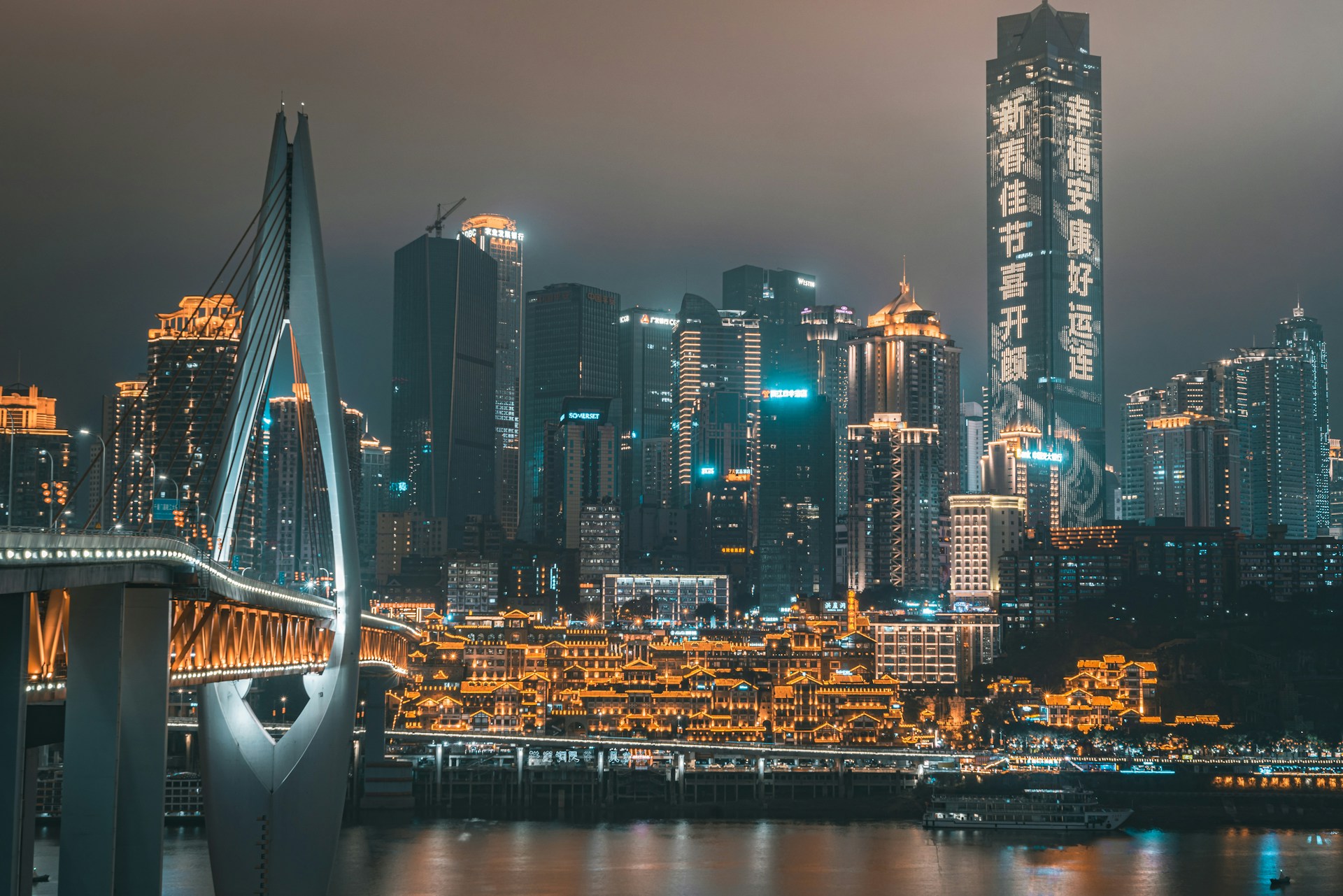
Go after dark. This is not optional advice — Hongyadong in daylight is a reasonable entertainment complex built into a cliff. Hongyadong after dark is something genuinely different. The 11-storey stilted building complex lights up with thousands of red and gold lanterns, neon signs, and architectural illumination that cascades down the cliff face above the Jialing River. If you've seen Spirited Away, the comparison will be instant and involuntary. The resemblance to Miyazaki's bathhouse — the layered illuminated structure on a cliff, the warm amber glow against the dark water — is striking enough that "the Ghibli effect" has become the standard shorthand in international travel media.
Hongyadong is built in the diaojiaolou style — traditional stilted architecture that clings to cliffsides and steep riverbanks. This style developed in the Sichuan and Chongqing region precisely because the topography left little flat ground to build on. The current complex is an 11-storey reconstruction that combines restaurants, tea houses, bars, and souvenir shops across interconnected levels joined by stairs, lifts, and walkways. Entry to the complex is free; individual restaurants and shops charge separately.
The practical reality: the complex itself is busy and commercialised, particularly on weekend evenings. The food and shopping are geared toward tourists. I'd push back on spending a full evening eating inside the complex — better to eat elsewhere and come here specifically for the view and the atmosphere. The real value is the exterior spectacle and the feel of the cliffside setting, not the shops inside.

When to Go and Where to Stand
- After 8pm: The full lighting effect is active. Before sunset, the building reads as a concrete and timber structure; the transformation after dark is what people come for.
- Qiansimen Bridge viewpoint: Cross to the north bank of the Jialing River and walk toward the Qiansimen Bridge. The view from the bridge looking south gives you the full 11-storey facade rising from the riverbank — this is the photograph. Most visitors miss this viewpoint because they're inside the complex.
- River cruise perspective: The Yangtze and Jialing River night cruise (available from Chaotianmen Dock, best after 8pm, 45–60 minutes) passes Hongyadong from the water — a completely different angle that shows the building in its full cliff-face context.
The trade-off is straightforward: Hongyadong is very well known and will be busy on most evenings. You come for the setting and the architecture, not for a quiet riverside walk.
For NZ travellers, this is the "hero image of the trip" moment — the photograph that looks like nowhere else you've been. Couples will find it genuinely atmospheric after dark. Retirees planning an evening out: the internal levels are connected by lifts and the paths are well-maintained, though some stairways between levels are steep.
3. Dazu Rock Carvings — UNESCO's Best-Kept Secret
About 100 kilometres northwest of Chongqing, roughly 1.5 hours by road, there is a series of cliff faces covered in some of the most accomplished Buddhist sculpture in East Asia. Most NZ travellers have never heard of Dazu. That is, frankly, hard to explain — the Dazu Rock Carvings were inscribed on the UNESCO World Heritage List in 1999 and contain approximately 50,000 stone statues across 75 protected sites, along with over 100,000 Chinese-character inscriptions. The scale and quality are extraordinary. The fact that they sit quietly outside Chongqing while the Terracotta Warriors attract millions of visitors annually is a genuine anomaly in Chinese tourism.
The carvings date from the 9th to 13th centuries and are unusual for synthesising Buddhism, Taoism, and Confucianism in a single artistic programme — something rare in Chinese religious art, which typically kept these traditions separate. The aesthetic quality is high by any global standard, and the narrative complexity of the main Baodingshan site is exceptional: these are not repetitive devotional sculptures but a fully realised pictorial programme that tells stories, makes arguments, and operates on multiple allegorical levels simultaneously.
The main visitor sites are Baodingshan and Beishan. I'd prioritise Baodingshan: it contains the large-scale narrative carvings commissioned in the late 12th to 13th centuries, including a 31-metre reclining Nirvana Buddha that is one of the largest in the world. The scale of this figure is difficult to prepare yourself for — it lies along an entire cliff face, carved at near life-size proportions for every detail. Beishan is earlier (9th–10th century), more purely Buddhist, and densely packed — worth visiting for specialists or travellers with more time at the site.

Baodingshan vs Beishan: How to Prioritise
- Time-limited (half day at Dazu): Baodingshan only. The 31-metre reclining Buddha plus the main narrative carvings take 1.5–2 hours to see properly. The Tourist Centre shows a 4K digital film that provides useful context — worth 20 minutes before entering the site.
- Full day at Dazu: Baodingshan in the morning, Beishan after lunch. Beishan requires more context to appreciate — the sculptures are smaller and more densely arranged, and some knowledge of Buddhist iconography helps.
- Practical logistics: The site is approximately 100km from central Chongqing and requires a full-day commitment. A private driver or an organised day trip is the sensible approach — arranging your own transport to Dazu is possible but adds complexity to what is already a full day.
Practical rule: What I'd prioritise at Baodingshan is the reclining Buddha first, before the main crowd groups arrive. The sheer scale of the carving is easier to absorb without people in the foreground.
For NZ travellers: Dazu is the "hidden gem" call-out of this itinerary. Most people come back from Chongqing talking about Liziba or Hongyadong — both are visually spectacular — but Dazu is the experience that tends to surprise people most. Couples with an interest in history and culture consistently rate it as their highlight. First-time China visitors sometimes need a bit of preparation to contextualise what they're seeing — the onsite film helps with this. CTS Tours guides add value here precisely because the iconographic complexity rewards explanation.
4. Huguang Guild Hall — The Ancient Merchant City
Walk through the Huguang Guild Hall's main gate and the neon skyline disappears. The complex — 8,561 square metres of carved timber courtyards, painted pavilions, meeting halls, traditional theatres, and gardens — sits on a terraced hillside directly above the Yangtze River. It was built in 1759 during the reign of the Qianlong Emperor and reconstructed in its current form in 1846. Listed as a National Major Historical and Cultural Site in 2001, it was restored between 2003 and 2005 after decades of partial neglect.
The historical context is what makes it more than a pretty building. The Huguang Guild Hall was built to serve merchants from Hubei and Hunan provinces during the "Huguang Migration to Sichuan" — a massive government-organised population resettlement that took place across the Qing Dynasty, moving millions of people from central China into the depopulated Sichuan Basin after a period of prolonged war and famine. Chongqing became the commercial hub of this migration, and guild halls like this one were where the merchants organised their affairs, resolved disputes, staged operas, worshipped their patron saints, and maintained connections to their home provinces. It was a complete civic and commercial ecosystem — not just a meeting room, but a world.
I find the contrast jarring in exactly the right way. You walk out of the Guild Hall gate and you're back in a city of elevated freeways and glass towers. The juxtaposition is sharper here than almost anywhere else in Chongqing — the ancient merchant world and the cyberpunk skyline visible from the same spot.

Who Should Prioritise This
- Travellers interested in Chinese social and commercial history: The Guild Hall provides one of the clearest windows into Qing Dynasty merchant culture available in Western China. The exhibition on the Huguang Migration is detailed and illuminating.
- Architecture enthusiasts: The carpentry and decorative carving are of a very high standard — particularly the theatre building, which has the proportions and craftsmanship of a serious performance space rather than a decorative reproduction.
- Couples and retirees: The site is physically manageable, set on terraced levels with good pathways. The pace is relaxed and the crowds are lighter than at Liziba or Hongyadong.
- Travellers short on time: This can be paired with a Yangtze River walk — the Guild Hall sits directly on the riverfront — without requiring a separate journey.
The trade-off: the Guild Hall is genuinely fascinating for travellers who arrive with some context, and noticeably less so for those who don't. Reading about the Huguang Migration before your visit will make it ten times more interesting.
For first-time China visitors from New Zealand, this is an excellent way to start building an understanding of the historical layers underneath Chongqing's modern surface.
5. Chengdu Panda Base — The World's Best Panda Programme
The giant panda has about 1,800 individuals left in the wild, according to IUCN data from 2016. The Chengdu Research Base of Giant Panda Breeding — founded in 1987 with just six pandas rescued from the wild — now houses more than 200 giant and red pandas across 3,500 acres of bamboo forest habitat, and is the single most important facility for captive panda conservation in the world. The success of its breeding programme has been a meaningful contributor to the slow stabilisation of the global population.
I want to be precise about what this experience is and isn't, because the distinction matters for NZ travellers deciding how to frame it. This is not a zoo. The enclosures are large, well-designed habitat spaces that prioritise the animals' behavioural and physiological needs — the 3,500-acre site gives a sense of the difference in scale. Pandas are observed in environments that approximate their natural habitat. You cannot hold pandas or take staged photographs with them. What you get instead is genuinely close observation of animals behaving naturally — eating, climbing, playing, sleeping in improbable positions — with the understanding that every healthy panda born here makes a small but real contribution to species survival.
The morning window matters. Giant pandas are most active between 8am and 10am, during feeding. By late morning they have eaten and are characteristically inert. If your group arrives after 10am, you will see a lot of sleeping. I'd plan to be at the gate when it opens at 7:30am.

Getting the Most Out of Your Morning
- Arrive at opening (7:30am): The pandas are active, the crowds are thinner, and the morning light is better for photography. By 10am, visitor numbers increase significantly.
- Morning feeding zone: The outdoor enclosures closest to the main entrance have the highest activity during feeding time. Move through these first before exploring the rest of the site.
- Red pandas: Often overlooked because of the giant pandas' pull, the red pandas at the Base are also worth time. They're more consistently active and easier to observe at close range throughout the morning.
- Full site: Allow 2.5–3 hours minimum to see the main breeding areas, the education centre, and the full range of enclosures. An electric buggy service is available for those who prefer not to walk the full site.
Practical rule: The photographs you'll take here will be the most-shared images of the trip. The trade-off is that the site is very popular — Chengdu receives more than 20 million tourists annually, and the Panda Base is the top-rated attraction. Come early.
For NZ travellers: this is the experience most likely to appear in social media posts from the trip. The emotional response to being 10 metres from a panda eating bamboo is consistent across ages and travel styles — it's one of those places where the reality delivers on the expectation. Retirees and couples both find it satisfying. For families travelling with adult children, it's often the undisputed highlight.
6. People's Park Matchmaking Corner — Chengdu's Most Human Moment
On a typical Saturday morning in People's Park in central Chengdu, you'll find several hundred people standing along the paths near the teahouse area. They're holding printed notices, or have them taped to umbrellas, or clipped to string lines between trees. The notices describe someone: female, born 1993, 162cm, working in healthcare, owns property, prefers non-smoker, 成都本地人 (Chengdu local). The people holding the notices are almost uniformly older — parents, grandparents — and they're scanning other notices and approaching likely-looking candidates for conversation.
This is the Matchmaking Corner (相亲角). It is genuinely one of the most unexpected and affecting experiences in any China itinerary, and it rewards observation more than participation. The cultural context runs deep: China's decades-long one-child policy produced a generation of only children whose parents have an unusually intense investment in their children's marriage prospects. The "only child" pressure to marry and produce grandchildren is compounded by significant social expectations around timing — late twenties is already considered delayed in many Chinese families. The Matchmaking Corner is where this pressure finds its most visible, organised expression.
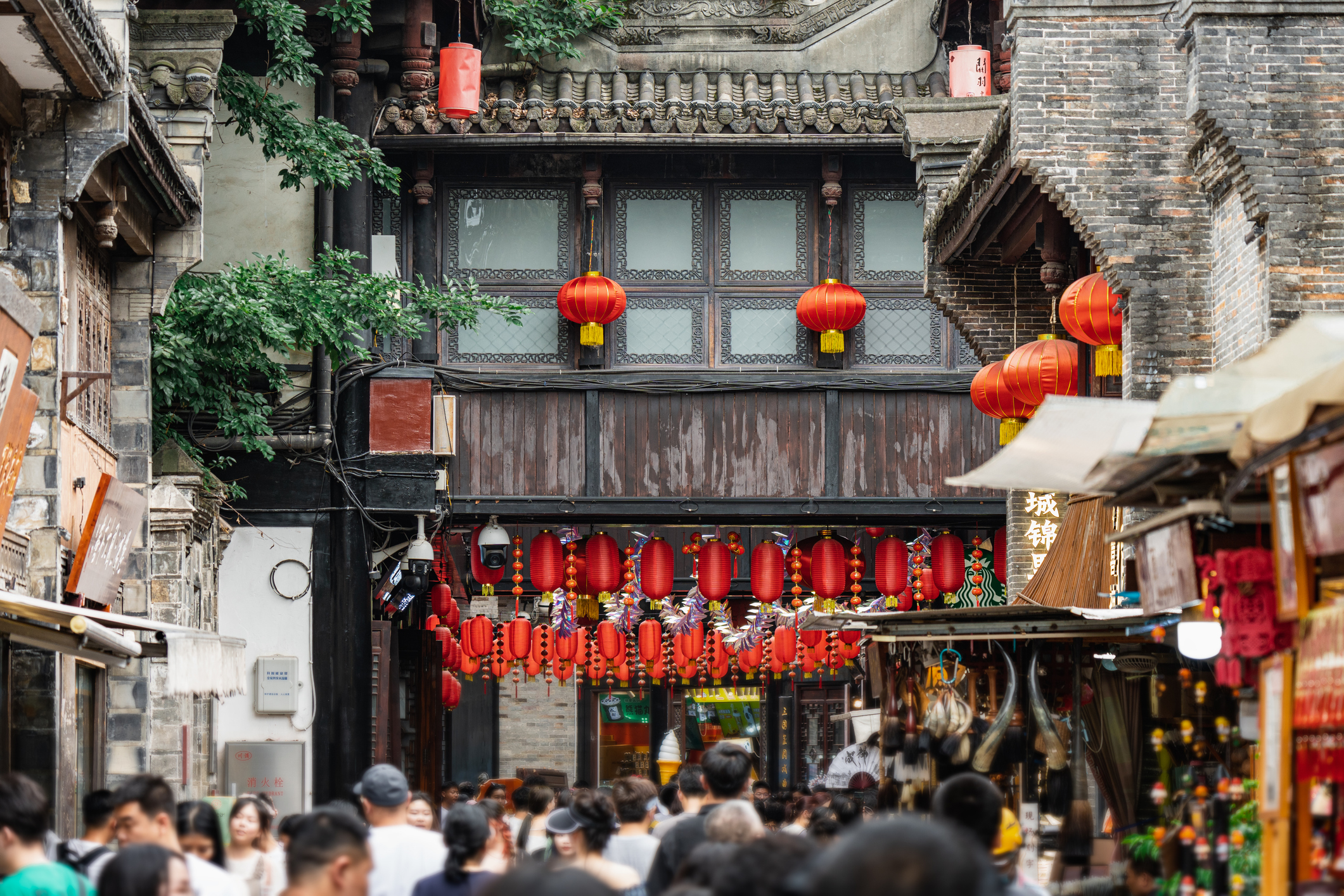
Outside the matchmaking activity, People's Park is also one of the best places to observe the Chengdu that locals actually inhabit. Bamboo chairs around the teahouses stay occupied for hours. People play mahjong in pavilions. Itinerant ear-cleaners (掏耳朵) move through the park with their specialised tools — a Chengdu institution that has been practised for generations and is still an unremarkable part of daily life here.
What to Expect and How Long to Spend
- Best days: Weekends, from about 9am. Weekday mornings are quieter but the activity is still present.
- Duration: 45–90 minutes is usually enough to observe the matchmaking activity, sit in a teahouse, and take in the wider park atmosphere.
- Teahouse etiquette: Gaiwan tea (盖碗茶 — a lidded bowl, not a pot) is the Chengdu standard. Order at the kiosk, take a seat, and relax. You can stay as long as you want and refills are typically included in the price of the first cup.
- The ear-cleaning experience: If you want to try this Chengdu specialty, practitioners are visible throughout the park. The cost is a few RMB for 10–15 minutes. It is exactly as bizarre and relaxing as it sounds.
The matchmaking notices you'll read — age, height, profession, property, income — are a window into a specific kind of social pressure that most Kiwi travellers will find both alien and surprisingly recognisable.
For NZ travellers, this is the "most memorable slice of local life" moment of the itinerary. Not because it's dramatic, but because it's so genuinely human — a park full of parents trying to do right by their kids, using methods that are both deeply traditional and entirely contemporary. For couples who travel together, it produces unexpectedly good conversation. For solo travellers and people with some Mandarin, there are occasional opportunities for real interaction with the parents (who are generally happy to explain what they're doing).
7. Sichuan Hot Pot and Food Culture — The Meal That Changes Everything
Chongqing is the birthplace of Chinese hot pot, and if you've had Sichuan hot pot elsewhere in the world, you need to reset your expectations before arriving. The local version uses a beef tallow-based broth with dried red chillies, Sichuan peppercorn (花椒 — the ingredient responsible for the numbing sensation, called 麻 má, which is distinct from pure heat), doubanjiang fermented bean paste, and a complex base of spices that varies by restaurant. The combination produces a flavour that is not replicated outside the region with any real fidelity.
The Sichuan peppercorn is worth understanding before you eat it. The numbing heat (麻辣, málà — literally "numbing spicy") is not the same sensation as the burning heat of capsaicin-based chillies. It creates a tingling, anaesthetic effect in the mouth that allows you to eat at higher spice levels than you might expect. This is both a feature and a potential surprise. First-timers occasionally misjudge how much they've consumed because the numbing effect masks the accumulation of heat.
I'll be honest: hot pot in Chongqing can be seriously spicy for a New Zealand palate. If your group has mixed spice tolerance, ask for a split pot (鸳鸯锅, yuānyang guō) — half mild/half spicy. Most good hot pot restaurants offer this and it's a sensible approach for groups. The communal format — everyone cooking their own food in the shared pot — is genuinely enjoyable and a very good social dining experience.
What to Order and How to Navigate the Spice
- Malatang (麻辣烫): A lighter, single-serving version of hot pot, widely available from street stalls and casual restaurants. Good for solo or quick meals.
- Rabbit heads (兔头): A Chengdu specialty — braised rabbit heads in Sichuan spices. Confronting for some, completely normal here. Worth trying once if you're adventurous.
- Ciqikou Ancient Town snacks: An afternoon at Ciqikou offers maoxuewang (spicy pork blood curd stew), zhounü (glutinous rice rolls), and traditional Chongqing street food in a historical lane setting.
- Jinli Ancient Street, Chengdu: Similar snack culture — three-gun noodles (三炮乃), rabbit heads, glutinous rice balls. Good for afternoon food exploration before or after the Wuhou Shrine.
- Spice management tip: Cold beer and plain white rice are the most effective counterbalances. Avoid milk — the fat actually helps briefly but the spice returns. Water makes it worse.
Practical rule: Don't judge Sichuan peppercorn by your first mouthful. The numbing sensation is strange the first time and genuinely pleasant once you're accustomed to it. By the third day in Chongqing, most NZ travellers have recalibrated completely.
For NZ travellers, food is one of the main reasons people come to China — and this region delivers more distinctively than almost anywhere else. Sichuan cuisine has its own flavour logic that you can't experience in Wellington or Auckland. Retirees and couples who enjoy food-focused travel consistently rate the hot pot experience as one of the trip highlights. Younger travellers tend to photograph everything. For those who want the full context, a local restaurant recommendation from your CTS Tours guide is worth asking for — the difference between a good local hot pot restaurant and a tourist-facing one is noticeable.
8. The Bullet Train — China's Infrastructure at Its Most Impressive
Most itineraries move from Chongqing to Chengdu by bullet train. The distance between the two cities is approximately 300 kilometres. The bullet train covers it in about 1.5 hours in second class — which is a comfortable, air-conditioned seat with a fold-down tray table and more legroom than most domestic flights. The trains are quiet, on time, and run on a dense schedule.
I'd frame this differently from most travel writing about Chinese high-speed rail, which tends to lead with superlatives about speed records. What's actually impressive about the Chongqing–Chengdu line is the normalcy of it. This is not a special express that requires expensive tickets and advance planning — it's a frequently-used domestic service that connects two major metropolitan areas at 250+ km/h as a matter of routine. The infrastructure that makes this possible (the tunnels through the mountains, the elevated track across the flat basin, the station management systems) represents a level of investment and engineering coordination that has no real equivalent in New Zealand. Riding it once makes that scale tangible in a way that reading about it doesn't.
The second-class seat is appropriate for this journey — comfortable, practical, and the same class most local travellers use. First class adds cost without adding much for a 1.5-hour trip. Bring something to read or download something beforehand, though the window view for the first 30 minutes out of Chongqing is worth watching — the city recedes dramatically through a series of bridges, tunnels, and river crossings before the landscape opens into the flat Sichuan Basin.
What to Expect On Board
- Boarding: Chongqing has multiple high-speed rail stations; check which station your train leaves from, as it depends on where you are staying.
- Luggage: Overhead racks accommodate standard carry-on luggage. Larger bags go in the end-of-carriage racks. The train is not a good place for oversized bags.
- Food and drink: A trolley service runs through the carriages. Basic food and drinks available. Nothing remarkable — bring your own snacks from a convenience store if you're particular.
- Arrival in Chengdu: The guide meets the group at the station exit for transfer to the hotel. No navigation required.
The trade-off: you're in a comfortable train for 1.5 hours between two cities. The scenery through the Sichuan Basin is flat and agricultural for most of the journey. The experience is the infrastructure, not the landscape.
For NZ travellers who haven't used high-speed rail before, this is a useful orientation. The same network connects most of China's major cities — if you continue to Beijing or other destinations, you'll be using it again. Retirees and travellers who are nervous about unfamiliar transport systems will find it far less intimidating than expected. CTS Tours includes the 2nd class fare in the tour price, and the guide manages the entire transition — NZ travellers don't need to navigate Chinese train ticketing independently.
Top 8 Things to Do in Chongqing and Chengdu — Comparison
| Attraction | Complexity | Resources / Cost | Expected Experience | Ideal Use Cases | Key Advantages & Quick Tip |
|---|---|---|---|---|---|
| Liziba Station | Low, show up and watch | Minimal, free to view | Visually unlike anything else | All travellers; photographers; social media | Ride Line 2 through the building as well as watching from street |
| Hongyadong | Low, free entry | Low, drinks/food optional | After dark only | Couples; photographers; evening itinerary | Walk to Qiansimen Bridge for the full facade view — don't just stay inside |
| Dazu Rock Carvings | Medium, full-day trip | Low–Medium, entrance + transport | UNESCO-quality, genuinely surprising | History and culture travellers; couples | Watch the 4K film at the Tourist Centre first to contextualise the carvings |
| Huguang Guild Hall | Low–Medium, self-guided or guided | Low, modest entrance fee | Better with context | History enthusiasts; retirees; architecture interest | Read about the Huguang Migration beforehand — makes it significantly more interesting |
| Chengdu Panda Base | Medium, timing-dependent | Moderate, entrance fee + transport | Emotionally resonant, photography guaranteed | All travellers; couples; families | Arrive at 7:30am opening — pandas are asleep by 10:30am |
| People's Park Matchmaking Corner | Low, walk in and observe | Minimal, tea optional | Unexpected cultural depth | Curious travellers; couples; solo travellers | Sit in a teahouse for 30 minutes after observing the matchmaking activity |
| Sichuan Hot Pot | Low, local restaurants everywhere | Low, very affordable | Regional food experience at source | Food-focused travellers; all groups | Order the split pot (鸳鸯锅) if spice tolerance varies within your group |
| Bullet Train | Low | Book ahead | Infrastructure experience | All travellers; first-time China visitors | Watch the first 30 minutes out of Chongqing — the river crossings and tunnels are the scenic highlight |
Your Chongqing and Chengdu Journey: A Practical Plan
How Long Do You Need?
10 days: This is the right length for first-time visitors to this region. It allows 4 nights in Chongqing (enough for Huguang Guild Hall, Liziba, Ciqikou, Dazu Rock Carvings, Hongyadong, and a free day for the river cableway or night cruise) plus 3 nights in Chengdu (Panda Base, People's Park, Jinli Street, and a free day for either Leshan Giant Buddha or Sanxingdui Museum). The bullet train connection between the cities takes half a day.
7 days (tight but manageable): You'd keep Liziba, Hongyadong, Dazu (one-day commitment), Panda Base, and People's Park. You'd skip Huguang Guild Hall or reduce Ciqikou to a brief stop. Leshan and Sanxingdui would both go. This is workable but leaves the itinerary feeling slightly rushed in Chengdu.
Fewer than 7 days (one city only): If you can only do one, the argument for Chongqing is the architectural and visual novelty — nothing else in China looks like it. The argument for Chengdu is the breadth: pandas, food culture, People's Park, and easy day trips. Both are correct. Most NZ travellers who choose one end up planning a return trip for the other.
The Optional Extras Worth Knowing About
If you build in two free days — one in Chongqing and one in Chengdu — here's how to use them:
Chongqing free day:
- Yangtze River Cableway: Opened in 1987, this aerial tramway crosses the Yangtze River in about four minutes, connecting Yuzhong Peninsula with Nanan District. It is one of the last urban cable car commuter systems remaining in any major Chinese city — historically significant and practically spectacular. Cost is a few RMB. Go on a weekday morning to avoid weekend queues.
- Yangtze and Jialing River Night Cruise: Available from Chaotianmen Dock, best after 8pm. The 45–60 minute cruise passes Hongyadong from the water and gives you the full panorama of Chongqing's neon skyline from below. If you haven't yet seen Hongyadong, pair the cruise with an afterwards visit to the complex.
Chengdu free day:
- Leshan Giant Buddha (Option A): A UNESCO World Heritage Site inscribed in 1996, located 120km south of Chengdu. The Leshan Buddha is the world's largest stone Buddha statue at 71 metres tall — carved into red sandstone cliffs above the confluence of three rivers. Construction started in 713 AD under the Tang Dynasty and took 90 years to complete. The boat view from the river is the only way to see the full scale. This is a full-day trip; the high-speed rail from Chengdu takes approximately 35 minutes to Leshan city. Worth it for travellers who want their UNESCO content outside Dazu.
- Sanxingdui Museum (Option B): Approximately 1.5 hours from Chengdu, this is arguably China's most surprising museum. The Sanxingdui civilisation (c. 3,000–5,000 years old) existed entirely independently of the Yellow River cultures that dominate Chinese historical narratives. Its Bronze Age artefacts — towering masks with protruding eyes, humanoid bronze figures unlike anything in mainstream Chinese art — were excavated from pits that remained hidden until 1986. The museum was substantially expanded in 2022 with a new wing. Best for travellers with strong interests in history and archaeology.
- Sichuan Opera Face-Changing (Option C): Evening performances available across Chengdu at teahouse venues and dedicated theatres. The biànliǎn technique — performers switching between elaborately painted silk masks in fractions of a second, with no visible mechanism — is classified as a national intangible cultural heritage. The method of mask-switching is a trade secret. Visually spectacular and completely unique to Sichuan. Combine with a pre-show dinner.
Practical Realities for Kiwi Travellers
Weather in November: Chongqing and Chengdu in early November are mild — average temperatures around 12–18°C, with Chongqing occasionally foggy (it's one of China's "fog capitals" due to its river valley topography). Light layers are appropriate. Rain is possible in both cities but typically short-duration.
Language: Mandarin is universal; Chongqing and Chengdu both have local dialect, but Mandarin works everywhere. In tourist areas, English is sufficient for basic navigation. A guided tour handles language entirely — NZ travellers don't need any Mandarin, though a few basics (xièxiè for thank you, nǐ hǎo for hello) are appreciated.
Mobile payment: China has almost fully transitioned to mobile payment (WeChat Pay, Alipay). Cash is accepted at most tourist sites but not everywhere. Travellers on a guided tour can generally rely on the guide for transactions at included sites; for free-time spending, a small amount of RMB cash is useful as backup.
Visa: Australian and New Zealand passport holders are eligible for the 144-hour visa-free transit policy for some entry points; however, this has specific conditions and does not apply to all itinerary structures. CTS Tours will advise on the current visa requirements for NZ passport holders at time of booking.
The Trip Rhythm That Works
If I were advising a NZ couple doing this trip, I'd say: arrive in Chongqing with no expectations from previous China trips. The city looks different from Beijing, moves differently from Shanghai, and the food is in a different category from either. Give it two full days before you try to make comparisons. By the fourth day, you'll have calibrated — and the transition to Chengdu the next day will feel less like a transfer and more like a deliberate shift in register.
Chengdu rewards the slower pace that Chongqing doesn't particularly invite. Use the teahouses. Don't rush the Panda Base. Sit in People's Park longer than feels necessary. The city's claim to be China's most relaxed major city is more than marketing — it's a genuinely different urban culture, and you need a little time to settle into it.
Sources & References
Data in this guide is sourced from verified public records:
- UNESCO — Dazu Rock Carvings inscription (1999): 75 protected sites, ~50,000 statues
- IUCN Red List — Giant Panda: ~1,800 wild pandas as of 2016 assessment
- UNESCO — Leshan Giant Buddha (1996): inscribed jointly with Mt. Emei
- Chongqing Rail Transit Line 2 — Liziba Station opened June 2005 (Chongqing Metro official records)
- Chengdu Research Base of Giant Panda Breeding — established 1987 (official base records)
Frequently Asked Questions
Is Sichuan hotpot too spicy?+
Sichuan peppercorns create a numbing sensation that's different from typical heat. Start at 40% of the heat level you normally prefer and work your way up. It's completely fine to tap out or order milder broth.
What time should we visit the Panda Base?+
Arrive by 7:00 AM. The pandas are most active in early morning. By 10:00 AM, they're resting. This timing is non-negotiable for a good experience.
How many days do we need for Dazu?+
A full day (5–7 hours including transport from Chongqing) is recommended. Early start from Chongqing, arrive at Baodingshan by 8:30 AM, self-guided walk (2–3 hours), lunch in Dazu town, optional afternoon at Beishan site.