

Escape Shanghai's skyline. Discover UNESCO gardens in Suzhou, West Lake's serenity, Jiangnan water-town elegance. Perfect for NZ travellers seeking gardens & tea culture.
Your NZ Traveller's Guide to Shanghai Energy and Jiangnan Elegance
Most NZ travellers planning a first trip to China get pulled toward the northern route: Beijing, the Great Wall, Xi'an, the Terracotta Warriors. That is a legitimate trip. But it is not the only one — and for many people, it is not the right one. If you are more drawn to water-town lanes, classical gardens, lakeside tea terraces, and a skyline that actually makes you stop walking to stare, then the Yangtze Delta is where you want to be.
This guide covers the Shanghai and surroundings route — the Jiangnan loop through Suzhou, Wuxi, Xinshi, Hangzhou, and back to Shanghai — not Beijing or Xi'an. You will not find the Terracotta Warriors in this article, and that is the point. The Jiangnan region (literally "south of the Yangtze") is China's other great civilisational corridor: silk, scholars, refined gardens, freshwater lakes, and one of the world's most photogenic city skylines. It is a different trip, and for many Kiwi travellers aged 40 and over, it is actually the more satisfying one.
What follows is an honest section-by-section guide to the seven main draws on this route. Each one comes with trade-offs, timing advice, and the kind of specific detail that helps you decide whether it deserves your time. This is not a brochure. If an attraction is best skipped in the wrong conditions, I'll say so. If a crowd is inevitable, I'll tell you how to work around it.
For reference: China Discovery Tours from New Zealand run a 10-day Jiangnan loop at NZD $2,699 per person twin-share; see the tour page for the next departures. That context informs the timing advice throughout — October is one of the better months to be in this part of China.
Table of Contents
- 1. The Bund (Waitan) — Shanghai's Colonial Waterfront
- 2. Suzhou Classical Gardens — UNESCO's Scholar Landscapes
- 3. West Lake, Hangzhou — A Living Ink Painting
- 4. Wuxi and Lake Taihu — The Quiet Third
- 5. Xinshi Ancient Water Town — Canal China at its Most Unhurried
- 6. Shanghai Food Scene — Xiaolongbao, Hairy Crab, and More
- 7. Pudong and Shanghai Modern — The Skyline Argument
- Top 7 Comparison
- Your Jiangnan Journey: A Practical Plan
1. The Bund (Waitan) — Shanghai's Colonial Waterfront
The first thing most NZ travellers do when they land in Shanghai is walk the Bund. This is the right instinct. The 1.5-kilometre waterfront promenade along the western bank of the Huangpu River gives you two things simultaneously: 52 colonial-era buildings at your back — neoclassical, Art Deco, Baroque, Gothic — and the Pudong skyline directly in front, glittering across the water like a science fiction concept art board. There is genuinely no other place in the world where you can stand between a 1920s British customs house and a 632-metre glass supertower and have both feel real.
I'd put the Bund on your first morning, not your last. It is easy to find, easy to navigate on foot, and functions as an orientation point for the rest of the city. After you have walked it once, every other Shanghai neighbourhood makes more sense spatially. The light before 8am is also considerably better than midday, and the foot traffic is a fraction of what it becomes by 10am.
The honest trade-off is crowding. The Bund is one of the most-visited stretches of pavement in China, and for good reason — but that means that if you arrive at 10am on a clear Saturday, you will be sharing it with a substantial portion of Shanghai's 26 million residents. You come for the architecture and the view, not for a quiet riverside contemplation. Go early, or come back after dark when the Pudong towers light up and the dynamic shifts entirely.
Shanghai welcomed 9.36 million inbound visitors in 2025, up 39.58% year-on-year. That growth is visible on the Bund at peak hours.
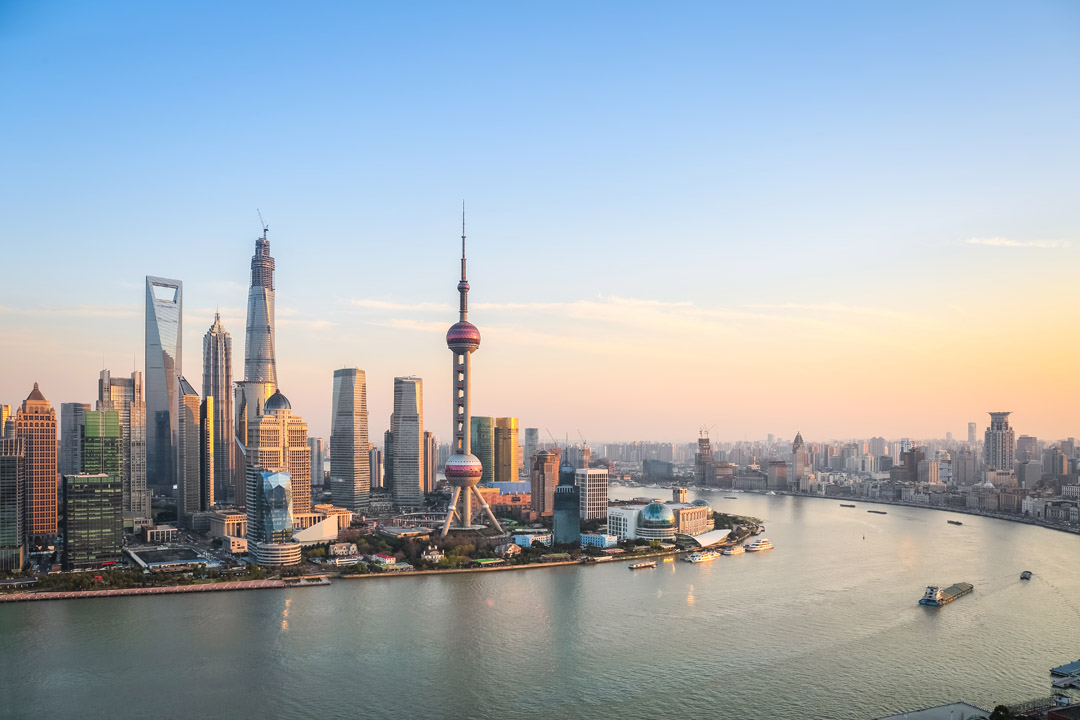
When to visit the Bund
- Early morning (before 8am): Best light for photography, lowest crowds, cool October air makes the walk pleasant. The colonial buildings are particularly striking at this hour.
- Midday to late afternoon: Busiest period. Fine for a quick orientation walk, but plan to spend no more than 45 minutes.
- After dark: The Pudong skyline lights up fully — the Oriental Pearl Tower, Shanghai Tower, and Shanghai World Financial Center create one of the world's great urban light shows. Worth a second visit specifically for this.
Practical rule: Walk north to south in the morning (sun behind you for photography). Walk south to north after dark (Pudong lights at their best when facing upstream).
For couples: This is the standout evening walk. Combine it with dinner in one of the restaurants above the river level for a memorable first night.
For first-time NZ travellers: The Bund is useful precisely because it requires no preparation. No tickets, no queues, no translation needed. It is a walking street, and it works.
CTS Tours typically allocates Bund time early in the Shanghai segment, giving travellers the orientation benefit before the deeper city exploration begins.
2. Suzhou Classical Gardens — UNESCO's Scholar Landscapes
Suzhou's classical gardens take some adjustment if you arrive expecting spectacle. They are not large. They are not dramatic. The first fifteen minutes can feel underwhelming to visitors who came from the Bund or expect something more explicitly grand. Then something shifts: you notice that the window frame is designed to turn the rockery behind it into a painting, that the zigzag bridge forces you to slow down and look sideways, that the reflection in the pond is the point, not the pond itself. These gardens were built by retired scholars as philosophical environments — spaces for contemplation, poetry, and the illusion of wilderness inside a city wall.
The Classical Gardens of Suzhou were inscribed on the UNESCO World Heritage List in 1997, with nine gardens receiving protected status across the original 1997 listing and a 2000 extension. The Humble Administrator's Garden (Zhuozheng Yuan) is the largest and most visited, covering around 5.2 hectares and featuring the quintessential scholar-garden logic: divided water spaces, borrowed scenery from outside the walls, and pavilion names that read like short poems. The Master of the Nets Garden is smaller and arguably more precise — a tighter composition that many visitors find more satisfying precisely because it is easier to hold in the mind.
The trade-off here is time versus depth. A rushed one-hour tick-off visit is genuinely a waste. These gardens reward people who are willing to sit in a pavilion for ten minutes and notice what changes. I'd recommend blocking at least two hours across one or two gardens rather than speed-running four in a morning. Retirees and garden enthusiasts in particular will find this is the section of the Jiangnan route they talk about longest.
How to get the most from a Suzhou garden visit
- Humble Administrator's Garden: Go first, arrive when it opens (7:30am). The morning mist on the central pool is not a cliché — it is genuinely atmospheric in October.
- Master of the Nets Garden: Smaller, calmer, better for focused observation. Good second visit on the same morning.
- Lion Grove Garden: More theatrical rockery — children and active travellers enjoy it more; purist garden visitors sometimes find it less refined.
- Lingering Garden: UNESCO-listed, excellent Taihu lake rocks, slightly further from the city centre. Best for those with a dedicated half-day.
Practical rule: Read the pavilion names. They are not decorative labels — they tell you what you are supposed to think or feel in that exact spot. Even a rough English translation changes the experience.
For couples: The zigzag bridges and water-framed pavilions make for exceptional photography in October light.
For retirees: More rewarding with some context on Scholar-Garden design philosophy. CTS guides explain the layered symbolism — borrowed views, compressed wilderness, the deliberate restriction of sightlines — and this transforms the visit from pleasant to genuinely interesting.
CTS Tours naturally schedules Suzhou early in the loop, which works well: the town's pace and scale calibrate travellers for the rest of the Jiangnan region before Shanghai's scale arrives at the end.
3. West Lake, Hangzhou — A Living Ink Painting
West Lake is one of those places that photographs well, but visiting it still manages to exceed the photographs. The lake's surface area is 6.39 square kilometres, ringed by hills on three sides and framed by causeways, pagodas, and gardens that have been deliberately cultivated for aesthetic effect since the Tang Dynasty. It was inscribed on the UNESCO World Heritage List in 2011 under criteria ii, iii, and vi — meaning it was recognised not just as a scenic area but as a cultural landscape that influenced garden design across China, Japan, and Korea over more than a thousand years.
The Su Causeway — a 2.8-kilometre raised path crossing the lake — gives you the classic West Lake experience: walking or cycling between willows and peach trees, with the water on both sides and Leifeng Pagoda visible above the southern treeline. In October, the osmanthus trees are in bloom and the hillsides have started to turn. This is, honestly, one of the better times to be here. The hazing summer humidity has cleared, the autumn colours are beginning, and the Dragon Well tea (Longjing) harvest village of Longjing, a short drive from the lake, is finishing its autumn picking.
The trade-off is that West Lake is not a hidden gem. It is one of China's most celebrated landscapes, and the main lakeside paths near Broken Bridge and Leifeng Pagoda can be very crowded on weekends. Weekday mornings are significantly calmer. The northern and western shores, away from the main tourist circuits, reward walkers who are willing to go slightly off the standard route.

Who should prioritise West Lake
- Couples: The Su Causeway and Leifeng Pagoda sunset combination is among the most romantic settings on the entire Jiangnan route. Plan an evening here.
- Active travellers: Hire a bicycle or an electric-assisted bike and complete the full lake circuit (about 15 kilometres). Allow half a day.
- Tea enthusiasts: A short detour to the Dragon Well (Longjing) tea village gives you the chance to taste freshly produced Longjing tea in the terraced hillside setting where it has been grown for centuries.
- Travellers with limited energy: The lake is very walkable in sections. Even a 45-minute stroll along the northern shore between Broken Bridge and Bai Causeway delivers the essential West Lake experience without overextension.
Practical rule: Leifeng Pagoda is worth the entry fee not for the pagoda itself but for the elevated view it gives over the southern lake and the surrounding hills. Go in the late afternoon.
For first-time NZ travellers: West Lake is the stop that most reliably surprises people who expect China to be purely cities and monuments. The landscape tradition here is genuinely different from anything in New Zealand, and the scale is intimate enough to absorb without rushing.
A well-planned Shanghai and surroundings itinerary typically allows a full day in Hangzhou, which is the right amount of time to cover the lake and the Longjing tea area without feeling rushed.
4. Wuxi and Lake Taihu — The Quiet Third
Wuxi sits between Suzhou and the other Jiangnan cities in a way that could make it easy to underrate. It does not have UNESCO-listed gardens, and its urban centre is modern and unremarkable. But what Wuxi has that nowhere else on this route has is Lake Taihu — China's third-largest freshwater lake, covering approximately 2,338 square kilometres of open water between Jiangsu and Zhejiang provinces, dotted with roughly 90 islands, and ringed by gardens, temples, and hilltop viewpoints that the tourist trail largely skips.
The Lingshan Grand Buddha, on the northern shore of Taihu, is an 88-metre tall bronze Shakyamuni — completed in 1997 and consuming 725 tonnes of bronze in its construction. It is genuinely massive in a way that photographs do not quite capture: the scale only becomes real when you are standing at the base of the steps looking up. The surrounding Lingshan Scenic Area also includes the Brahma Palace complex, a series of ceremonial halls and gardens with substantial spectacle value, particularly the bronze lotus that opens daily to music. If that kind of theatrical set piece appeals, budget extra time here. If it does not, the Buddha itself and the lake views are enough.
The trade-off at Wuxi is that Lake Taihu's scale actually works slightly against intimate engagement. It is a lake best experienced from specific vantage points — Turtle Head Isle (Yuantouzhu) is the most visited, with cherry blossoms in spring and clear open-water views in autumn — rather than circumnavigated. The lake's southern and western shores are largely industrial or agricultural. Focus on the northern shore.
How to combine Wuxi with the wider itinerary
- Morning at Turtle Head Isle: The best open-water views across Taihu. October light here is particularly clear. Allow two hours.
- Midday at Lingshan: The Buddha complex works well in the middle of the day when the surrounding landscape is fully lit. Allow two to three hours.
- Afternoon drive: Wuxi to Xinshi or Hangzhou is roughly 1–1.5 hours, which means a full Wuxi morning is compatible with an afternoon arrival at the next destination.
- Skip: The Wuxi city centre commercial areas. They add nothing to the Jiangnan experience.
Practical rule: The Taihu lakefront at Turtle Head Isle is best experienced without rush. Take the small boat out to one of the islands if time allows — the perspective from the water is different from the shore and worth the extra 30 minutes.
For active travellers: The Lingshan scenic area involves a significant amount of walking across its full extent. Wear comfortable shoes and allow more time than you think you need.
For first-time China travellers: Wuxi offers a good counterpoint to the garden intensity of Suzhou — the scale shifts from the intimate to the expansive, and the Buddha is immediately legible in a way that Classical Garden design philosophy sometimes is not on a first visit.
CTS Tours covers Wuxi as part of the Jiangnan loop with short inter-city drives, which keeps the day from feeling like a transport exercise.
5. Xinshi Ancient Water Town — Canal China at its Most Unhurried
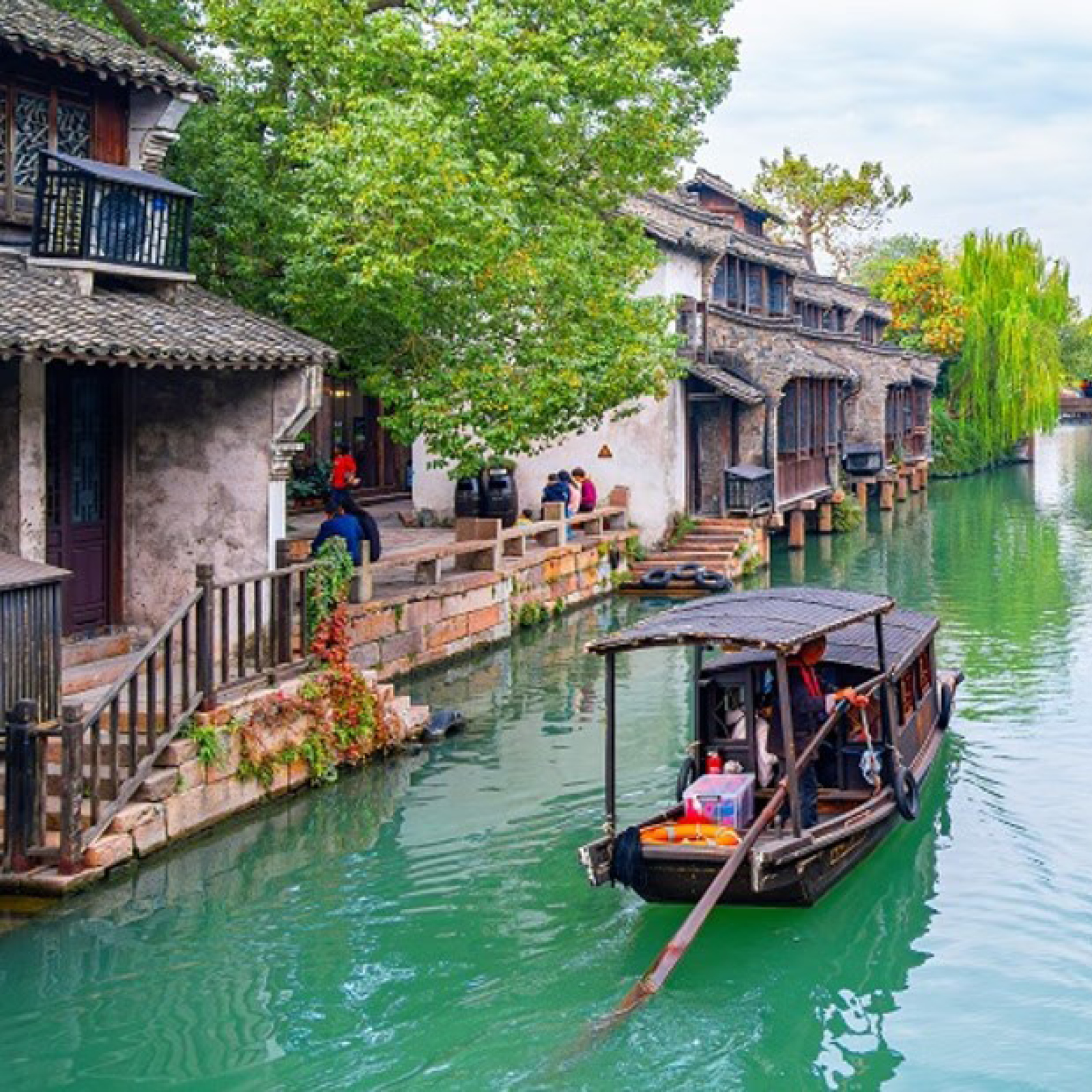
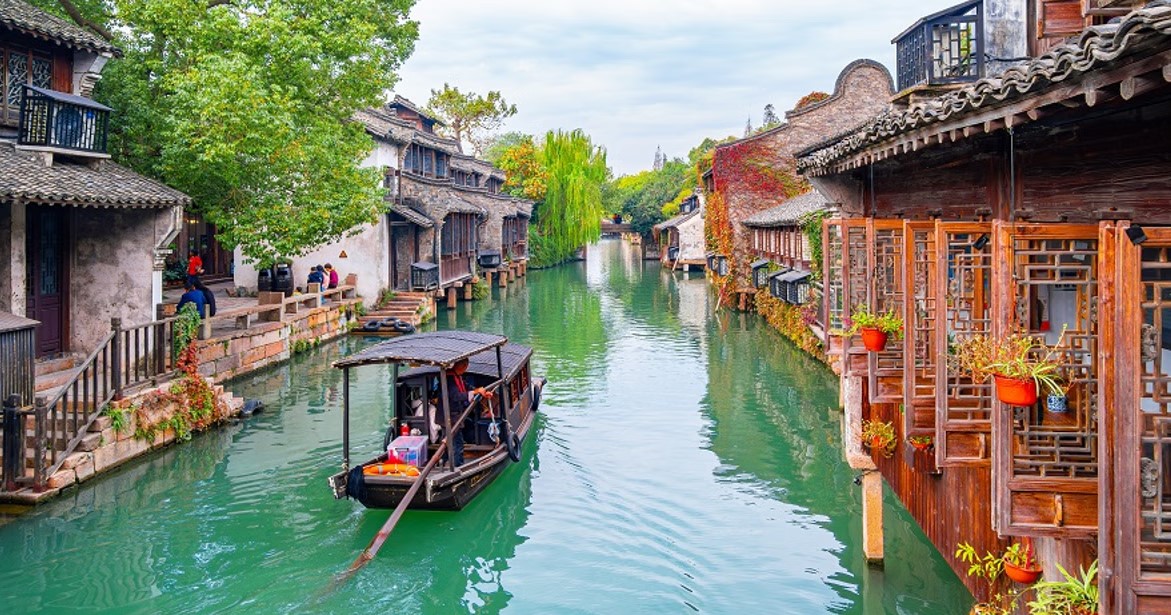
There is a version of the water-town experience in China that has been thoroughly managed for tourism: souvenir shops every five metres, costumed performers, aggressive gondoliers. Xinshi is not that version. The town sits quietly on the Beijing–Hangzhou Grand Canal in Deqing County, Huzhou, with a history of more than 1,700 years, and its 18 canal-divided sections connected by over 50 stone bridges retain a working-town texture that the more famous water towns — Wuzhen, Tongli, Xitang — have partly traded away in exchange for visitor throughput. By the end of 2024, Xinshi had welcomed 1.5 million visitors, up 59.5% year-on-year — growing fast, but still considerably quieter than its more famous counterparts.
The canal architecture here follows the classic Jiangnan pattern: whitewashed walls, dark roof tiles, canal-facing doorways with stone steps descending into the water. Gondola-style boats drift the main canal routes. In October, the town also sits at the edge of silk country — Xinshi is historically one of the Grand Canal's most important silk-trading hubs, and the local museum traces this thread (literally) from mulberry leaf to finished fabric.
I find water towns work best when you resist the urge to cover them systematically. The correct approach is to pick a direction, walk, and let the canal lanes take you somewhere without a name on the map. Xinshi rewards that approach more than most.
The trade-off is honest: if classical garden aesthetics or urban skyline energy are your primary interests, a water town can feel repetitive after an hour or two. The towns are beautiful but tonally similar at a surface level — what distinguishes them is the absence of management, not the presence of spectacle. If that kind of quiet is what you are looking for, Xinshi delivers.
Who should go, and who can skip it
Go if:
- You want a Jiangnan water town that has not been fully sanitised for tourism
- Slow walking, photography, and unstructured time appeal to you
- You are interested in Grand Canal history and the silk trade
- You want an October afternoon that feels genuinely unhurried
Consider skipping if:
- Water town aesthetics feel repetitive to you after Suzhou's canals and bridges
- You are on a tight schedule and need to prioritise the UNESCO-listed stops
- You want active engagement (Xinshi is quiet and contemplative, not energetic)
Practical rule: Arrive by mid-afternoon and stay into the early evening. The canal light in late afternoon is the best of the day, and the town becomes noticeably quieter after the day-trippers leave.
For retirees and couples: This is the stop that many NZ travellers describe as the one that felt most like "actually being somewhere" rather than sightseeing. The absence of crowd management paradoxically makes it feel more real.
CTS Tours includes Xinshi as a natural overnight or transit stop between the Taihu region and Hangzhou — the timing works well as a deliberate deceleration between two more intensive days.
6. Shanghai Food Scene — Xiaolongbao, Hairy Crab, and Everything Else
Food is not a sideshow on this route. In Jiangnan cuisine, the kitchen is where the region's character is most legible — subtle, seasonal, technically disciplined, focused on the quality of ingredients over dramatic spicing. This is not Sichuan. If you came expecting chilli heat and bold flavours, recalibrate. Jiangnan cooking rewards attention rather than intensity.
The two things NZ travellers most reliably want to eat in Shanghai are xiaolongbao (soup dumplings) and shengjianbao (pan-fried pork buns with a thin crisp base and a molten filling). Both are legitimate obsessions. Xiaolongbao require technique to eat properly — puncture the skin on the side, let the soup pour into your spoon, then eat the whole thing in one motion. Din Tai Fung, the Taiwanese chain with multiple Shanghai locations, is the internationally known option and produces a consistent, technically precise product. For a more local experience, Jia Jia Tang Bao near People's Square is the address that Shanghai food writers tend to mention.
October adds a specific seasonal dimension that other months cannot offer: hairy crab season. Yangcheng Lake hairy crabs — from the lake near Suzhou — are available from mid-September through November, and October is peak. They are eaten steamed, taken apart with a small toolkit of specialised utensils, and consumed slowly. A proper hairy crab meal takes time and produces a considerable amount of shell. The flavour — particularly the golden roe — is like nothing else in the culinary calendar. For NZ travellers arriving in mid-October, this is a timing gift: you are in the right place at the right moment for a genuinely seasonal food experience that cannot be replicated at other times of year.
Several meals on the CTS tour are deliberately left at your own expense — a choice that allows you to explore local noodle shops, street vendors, and neighbourhood restaurants at your own pace rather than sitting through group set menus. This is a feature, not an oversight.
What to order, and where to start
- Xiaolongbao: Non-negotiable. Order at Din Tai Fung for reliability or Jia Jia Tang Bao for character. Have them for breakfast or as a late-morning snack.
- Shengjianbao: Best from street vendors and small shops rather than sit-down restaurants. Look for the flat-bottomed pan on the pavement.
- Hairy crab (October only): Book at a restaurant in advance. Tell your guide or hotel concierge you want this specifically — it involves a short trip to a specialist restaurant and a meal that takes 90 minutes to eat properly.
- Braised pork belly (hong shao rou): The Shanghainese version is sweeter and glossier than other regional interpretations. Worth ordering once, especially with rice.
- Yellow wine (huangjiu): Shaoxing-style rice wine, served warm in small cups, pairs naturally with the crab. Mild enough for non-spirits drinkers.
Practical rule: At Din Tai Fung, go at opening time (11am) or accept a queue. The food is consistent but the queue can be long by noon.
For first-time NZ travellers: The Shanghai food scene is the easiest entry point into Chinese cuisine precisely because the flavours are generally milder and the menus at mid-range restaurants are increasingly bilingual.
For retirees: A hairy crab dinner is genuinely one of the standout food experiences available in China in October. The pace is slow, the ritual is interesting, and the flavour is worth the effort.
CTS Tours can advise on specific restaurant recommendations that work within the itinerary's geographic flow — this is one area where local specialist knowledge adds real value.
7. Pudong and Shanghai Modern — The Skyline Argument
In 1990, Pudong was mostly farmland and light industrial. Today it is the argument that China makes about itself most loudly: that transformation at scale is possible, that modernity is not a Western monopoly, and that a city can build something genuinely new rather than just adding floors to what already existed. Whether or not you find this argument compelling, the skyline it produced is objectively impressive.
The three towers that define it: the Oriental Pearl Tower (468 metres, opened 1994, designed by a committee and therefore the most debated aesthetically), the Shanghai World Financial Center (492 metres, the distinctive trapezoid aperture at the top), and the Shanghai Tower — at 632 metres, the world's third-tallest building — a twisting glass supertower that takes the building's aerodynamic performance as its design premise. These three buildings stand within a few hundred metres of each other in Lujiazui, and viewing them together from the Bund is the experience that most communicates how much has changed in thirty-five years.
If you want to go up rather than across, Shanghai Tower's observation deck on the 118th floor gives the most extraordinary perspective — you look down on the other supertowers, which is itself a slightly vertiginous experience. The optional Maglev train (approximately NZD $30 per person, paid locally) from Pudong International Airport to Longyang Road station runs at 431 km/h, which feels exactly as fast as that number suggests and covers the 30-kilometre journey in about eight minutes. It is not necessary transport, but it is a genuinely memorable experience for NZ travellers who want a tangible sense of what China does with infrastructure.
The trade-off with Pudong is that it is urban spectacle rather than cultural depth. You come to see what was built and to calibrate your sense of scale, not to understand Shanghai's social history or cultural texture. For that, you need the older parts of the city — the French Concession, Tianzifang, or the Back Bund neighbourhoods.
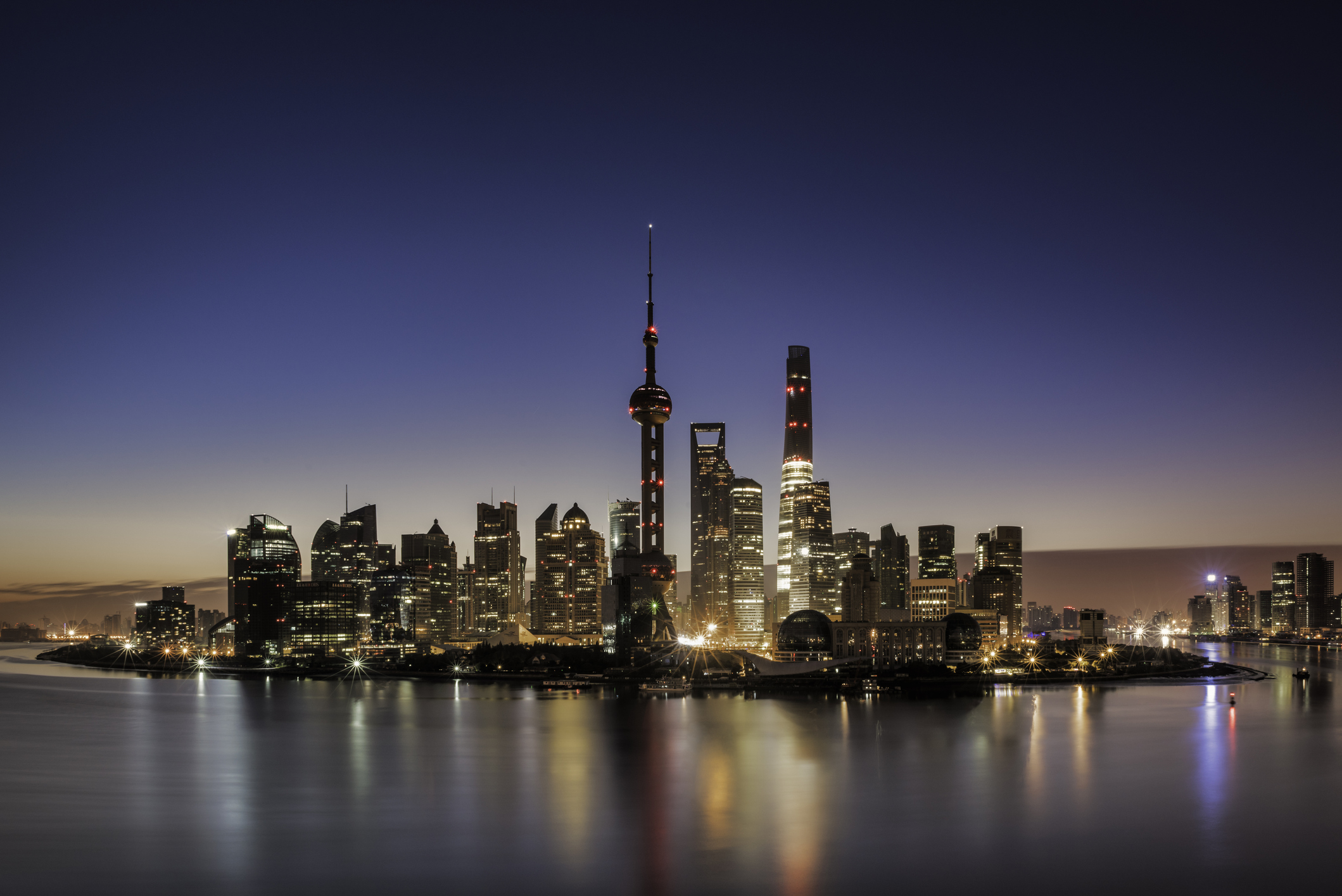
Best way to do Pudong
- From the Bund: The best view of Pudong is from the western bank. Do this first, at dusk or after dark, before going across.
- River ferry: A short Huangpu River ferry from near the Bund is a cheap, practical way to cross to Pudong and gives you the city-from-the-water perspective that most visitors skip.
- Shanghai Tower observation deck: Allow two hours including queuing. Book tickets in advance online to skip the slower ground-floor queue. The views on a clear October day extend remarkably far.
- Optional Maglev (~NZD $30pp, paid locally): Only makes sense logistically if you are arriving from or departing to Pudong International Airport. As a standalone attraction it requires significant backtracking.
- Optional Shanghai Acrobatics Show (~NZD $80pp, paid locally): Held at the ERA Intersection of Time venue in the Huangpu district — not in Pudong, but paired naturally with an evening in this part of the city. A technically sophisticated performance worth the cost for first-time China visitors.
Practical rule: A clear day matters enormously for the observation deck. October is reliably clearer than summer. Check the forecast the morning before you go up.
For couples: Shanghai Tower at sunset, followed by dinner in the Bund area, is the most consistently spectacular evening available on this route.
For retirees: The observation deck involves elevators rather than stairs, and the physical demands are minimal. The main consideration is queuing time — arrive when it opens (8:30am) to minimise this.
This is where a CTS Tours Shanghai and surroundings itinerary typically concentrates the final days: the earlier Jiangnan loop has been the cultural preparation, and Shanghai Modern is the punctuation mark.
Top 7 Things to Do in Shanghai & Surroundings — Comparison
| Attraction | Complexity | Resources / Cost | Expected Experience | Ideal Use Cases | Key Advantages & Quick Tip |
|---|---|---|---|---|---|
| The Bund | Low, easy to navigate on foot | Minimal, free entry | Iconic waterfront | All travellers, especially first visit | Go before 8am for crowds; return after dark for the Pudong light show |
| Suzhou Gardens | Medium, requires slow engagement | Low, CNY 90–150 entry | Refined cultural depth | Couples, retirees, garden & art enthusiasts | Two gardens done well beats four done quickly |
| West Lake, Hangzhou | Low–Medium, multiple access options | Low, park mostly free; Leifeng Pagoda ~CNY 40 | Landscape revelation | All travellers; especially active and couples | Cycle the full circuit; visit Longjing tea village the same morning |
| Wuxi & Lake Taihu | Medium, requires transport between sites | Low–Moderate, Lingshan entry ~CNY 210 | Expansive and spiritual | First-time China visitors, active travellers | Turtle Head Isle for the lake view; Lingshan for scale |
| Xinshi Water Town | Low, unstructured walking | Minimal, largely free entry | Quiet and authentic | Couples, retirees, photographers | Arrive mid-afternoon; the crowds thin as day-trippers leave |
| Shanghai Food Scene | Low–Medium, some navigation needed | Low–Moderate, varies widely | Seasonal and irreplaceable (Oct) | All travellers; especially food-focused | Book a hairy crab dinner in October specifically — don't leave it to chance |
| Pudong & Shanghai Modern | Low, well-signed and accessible | Moderate, Shanghai Tower deck ~CNY 180; Maglev ~NZD $30 optional | Scale and spectacle | All travellers; best as trip finale | Clear October days make the observation deck worth the cost — check forecast first |
Your Jiangnan Journey: A Practical Plan
How this route is structured
The Jiangnan loop runs Suzhou → Wuxi → Xinshi → Hangzhou → Shanghai, with inter-city drives typically running 1–1.5 hours. This is a deliberate pacing choice. Unlike the northern China route — which requires flying between Beijing and Xi'an and involves considerably more logistical complexity — the Jiangnan circuit keeps you within a compact region, using short road transfers to move between cities without losing half a day to airports and security queues. It is, as the brief accurately describes it, "steady, not rushed."
This is also emphatically not the Beijing/Xi'an route. There is no Great Wall, no Forbidden City, no Terracotta Warriors. NZ travellers who want those should look at the northern China Discovery product. What this route offers instead is classical garden design, freshwater lakes, water-town canal architecture, China's most dynamic modern skyline, and a seasonal food calendar that October times perfectly. Different aims, different experience.
For NZ travellers on a 10-day itinerary (NZD $2,699pp twin-share)
The 10-day CTS Tours structure covers the full Jiangnan loop at a pace that allows real engagement rather than checkbox tourism. Key timing observations:
Days 1–2: Suzhou Arrive with some time to adjust to the time zone before the garden intensity begins. The Humble Administrator's Garden and Master of the Nets Garden are the priority. If energy allows, a late afternoon walk along the city's historic canal streets is a good low-pressure way to absorb Suzhou's texture without a formal itinerary.
Day 3: Wuxi Short morning drive from Suzhou (~40 minutes). Turtle Head Isle and Lingshan in sequence work well as a full day. Lingshan is best visited before the midday heat; the lake view at Turtle Head Isle improves as the day cools.
Day 4: Xinshi Arrive by mid-afternoon to maximise the quieter evening hours. This is a half-day engagement rather than a full-day itinerary — use the morning for transit and settling into the pace.
Days 5–6: Hangzhou A full day at West Lake, morning or afternoon, ideally with a Longjing tea village detour. Leifeng Pagoda at dusk on Day 5; the Su Causeway walk and broader lake exploration on Day 6.
Days 7–10: Shanghai Four days in Shanghai is enough to cover the Bund, Pudong, the French Concession, and the food priorities without rushing. The optional acrobatics show (~NZD $80pp, paid locally) works best as an evening addition on Day 8 or 9 after the urban orientation is established.
Practical realities for NZ travellers
Visa: Many NZ leisure travellers may qualify for visa-free entry to China under current policy arrangements. Confirm your specific situation before booking — policies do change, and this is not guaranteed. CTS Tours can advise on the current position at time of booking.
Season: October in the Yangtze Delta is one of the better weather windows. The summer humidity has cleared, temperatures are 15–22°C in most cities, and the autumn light is excellent for photography. Pack light layers and a compact rain layer — the region is not immune to October showers, especially in Hangzhou.
Language: English signage is improving rapidly across all cities on this route, particularly in the major tourist sites. Day-to-day navigation in restaurants and smaller shops remains easier with a guide or translation app. The CTS group arrangement handles this logistically, but NZ travellers travelling independently should prepare accordingly.
Meals: Some lunches and dinners on the CTS itinerary are deliberately left at your own expense — not a cost-cutting measure but a design choice that lets you explore independently. Use these meals for the xiaolongbao, shengjianbao, and hairy crab experiences that sit outside the group format.
Optional extras: The Maglev (~NZD $30pp) and Shanghai Acrobatics Show (~NZD $80pp) are paid locally if taken. Neither is essential to the core Jiangnan experience, but both are genuinely good value for what they offer.
Tipping: The suggested approach is approximately NZD $10 per person per day for local guides and drivers. This is a local custom, not a contractual requirement, but it is the expected norm and worth building into your budget.
If you have more time
A day trip to Tongji or Wuzhen from Suzhou or Hangzhou adds a second water-town comparison — useful if the Xinshi experience resonates and you want to understand how managed tourism changes (or doesn't change) the same basic canal-town format. It is also the kind of extension a specialist can build into a custom itinerary.
Sources & References
Data in this guide is sourced from verified public records:
- UNESCO — Classical Gardens of Suzhou (1997): 9 gardens inscribed
- UNESCO — West Lake Cultural Landscape (2011)
- Wikipedia — West Lake: 6.39 km² surface area
- Wikipedia — Lake Tai: China's third-largest freshwater lake at 2,338 km²
- PRNewsWire — Shanghai inbound tourism 2025: 9.36 million inbound visitors, +39.58% YoY
- Wikipedia — Shanghai Tower: world's third-tallest building at 632m
If you are ready to turn this into an actual departure, the CTS Tours Shanghai & Surroundings Discovery product covers the full Jiangnan loop for NZD $2,699 per person twin-share, with the next departures published on the tour page. CTS is a New Zealand–based China travel specialist — not a global booking platform — which means the people who built the itinerary are in Auckland and can answer questions in plain English before you commit to anything.
The Yangtze Delta is not a second-tier version of northern China. It is a different argument about what China is, and for many NZ travellers, it turns out to be the more compelling one.
Frequently Asked Questions
Do I need to speak Chinese to enjoy Jiangnan?+
No. Your guide speaks English; hotels and restaurants catering to tourists have English signage. Learning a few phrases enhances the experience but isn't required.
What's the best season to visit?+
Spring (April–early May) is best for first-timers — weather is reliable, gardens are peak, and tea culture is active. Autumn (September–October) is second choice with similar benefits.
Is this tour family-friendly?+
Gardens are beautiful but require patience. Water towns are more engaging for kids. Consider ages 14+. Younger children may struggle with the pace.