Liziba Station is the most photographed railway station in China — and possibly the world. Here's everything you need to know: what it is, how to visit, and how to get the best shot.
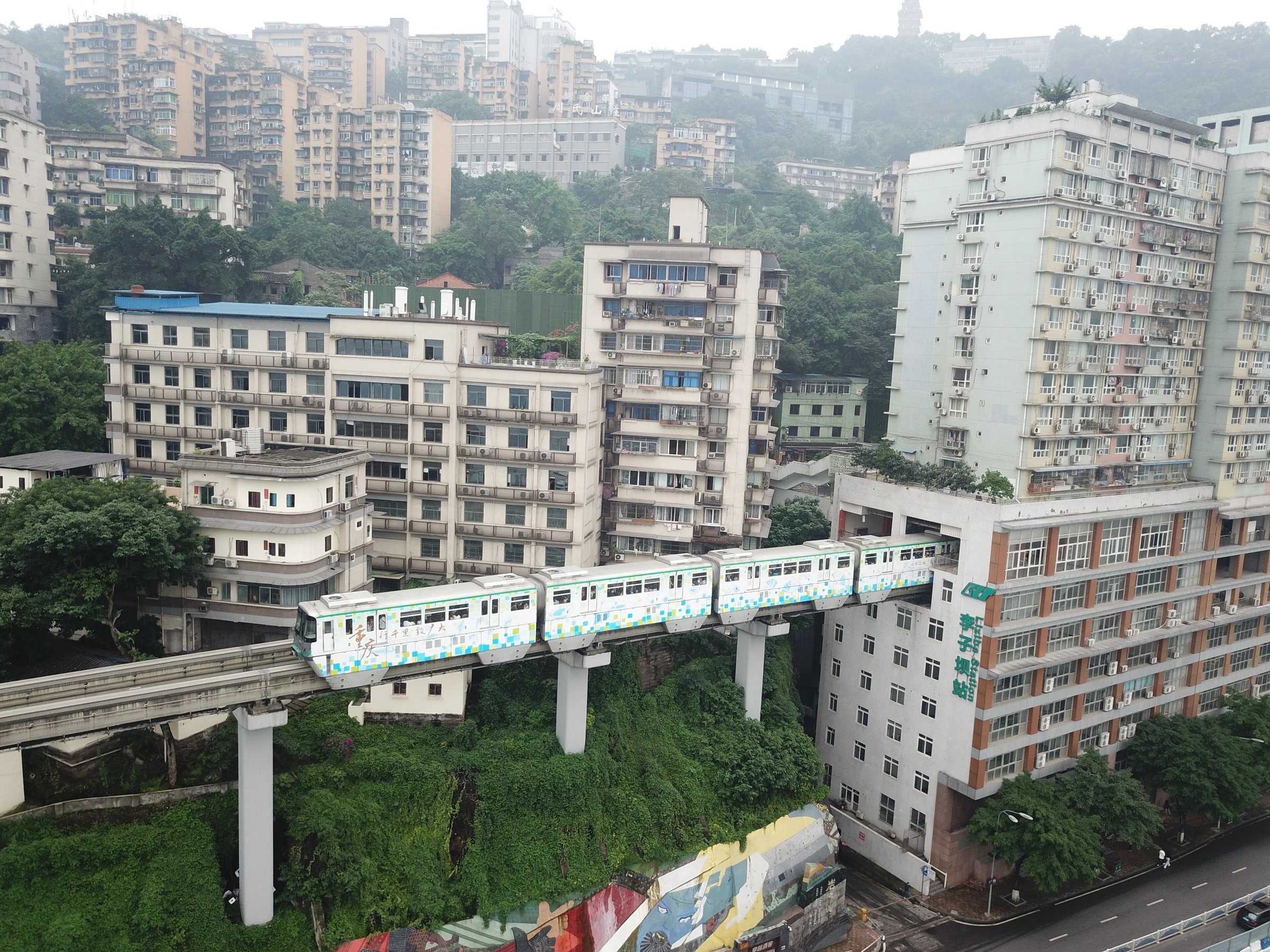
Liziba Station is real. This is the first thing most people need to confirm when they see photographs of it — a commuter train passing directly through the floors of a 19-storey residential building in central Chongqing. It is not a tourist installation and not a mock-up. It is a functioning metro station on Line 2 of the Chongqing Rail Transit system, the building around it is full of apartments and offices, and you can visit it for the price of a metro ticket. Here is everything you need to know before you go.
What Exactly Is Liziba Station?
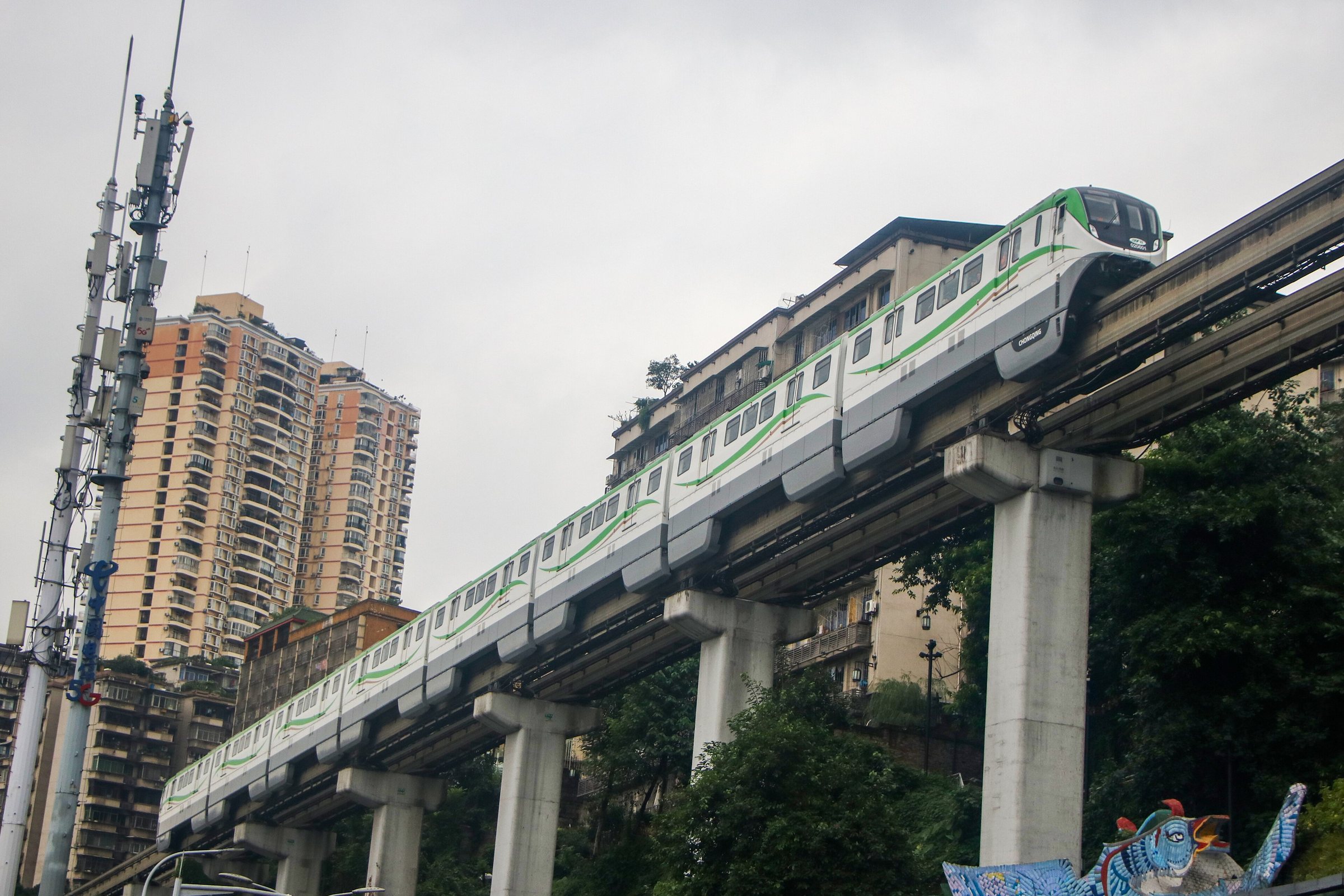
Liziba Station (Chinese: 李子坝站) is a straddle-type monorail stop on Chongqing Rail Transit Line 2, in Yuzhong District on the north bank of the Jialing River. The station occupies floors 6 to 8 of a 19-storey mixed-use tower: floors 1 to 5 are commercial space, floors 9 to 19 are residential apartments.
Station and building were designed together and built simultaneously from 1998, with the structure of the platform separated from the building's load-bearing frame. The station opened for service on 18 June 2005 — the first of its kind in China.
The trains are rubber-tyred monorail rather than steel-wheel, which is the detail that makes the whole arrangement liveable: residents above the line describe the noise as barely perceptible, roughly the hum of a household appliance. Watch a train glide in and you will notice how quiet it is — often quieter than the traffic below.
Why Does a Train Run Through an Apartment Building?
Chongqing is a mountain city. It is built on steep limestone ridges above the confluence of the Yangtze and Jialing Rivers, and there is almost no flat ground for conventional rail corridors. Land in the city core was too tight to route the line around the building plot, so engineers routed it through — and the result became the most photographed railway station in China.
Liziba is the most extreme example, but not an isolated one: Line 2 hugs cliff faces and skims rooftops along much of its riverside run. The ride between Liziba and Fotuguan is worth doing purely for the view of the Jialing River below.
How Do I Visit?
By metro. Take Line 2 to Liziba. From the Jiefangbei area, change onto Line 2 at Linjiangmen or Jiaochangkou; the trip takes about 10 minutes and costs a few yuan. Trains run from roughly 6:30am to 10:30pm at 5 to 10 minute intervals.
Ride through it first. Board one stop away (Fotuguan or Zengjiayan) and ride through the building. Daylight flashes into the carriage on both sides as you pass through the tower — a strange few seconds that the photographs cannot convey.
Then photograph it from the viewing platform. In 2019 the city built a dedicated riverside viewing platform across the road from the station, complete with posted train times, because visitors kept standing in the road for the shot. The straight-on angle you have seen online is taken from here. It is free and open all day.
Light. Morning light comes from the east and lights the river side of the tower; late afternoon gives warmer tones from the west. Midday in summer is flat and hazy — Chongqing's famous fog is real, and moody shots in light mist are their own genre.
How Long Do I Need, and What Should I Combine It With?
Allow 30 to 90 minutes. The classic pairing is Liziba plus Hongyadong, the lantern-lit stilt-house complex a short taxi ride away — do Liziba in the late afternoon and walk into Hongyadong as the lights come on. Eling Park, one stop away, has one of the best free lookouts over the peninsula.
A note on Ciqikou: the Song-dynasty market town is well worth a visit, but it is across town in Shapingba District — pair it with Liziba in the same day by metro, not on foot.
For a fuller picture of how a Chongqing day fits together, see our 10-day Chongqing and Chengdu itinerary and our guide to Chongqing after dark.
Is It Worth It for NZ Travellers?
Yes — with the right expectations. Liziba is a 45-minute wonder, not a half-day attraction, and it is the kind of sight that makes Chongqing feel unlike anywhere else you have travelled. Combined with Hongyadong, the river crossings by cable car, and the night skyline, it is a core part of why Kiwi travellers consistently rate Chongqing the surprise of their China trip.
New Zealand passport holders can currently visit China visa-free for up to 30 days, which makes a Chongqing stop easier than it has ever been.
Planning Your Visit
Many visitors search for the "Chongqing train through a building" — this is that station. For the monorail ride itself and the best viewing platforms, read our Liziba monorail guide.
Browse all Chongqing tours.