Hotpot capital vs panda capital — which Sichuan-region city is right for your China trip from New Zealand? A practical comparison covering food, pace, day trips, and how long to spend in each, written for Kiwi travellers by CTS Tours NZ.
Quick answer: Chongqing and Chengdu are the two anchor cities of southwest China, only 1.5 hours apart by high-speed train. Chengdu is the slower, walkable city — giant pandas, old tea houses, classic Sichuan cuisine, and easy day trips to Mt Emei and Leshan Buddha. Chongqing is the dramatic, vertical mountain city — fiery hotpot, the Liziba monorail through a building, Yangtze River cruise gateway, and Hongyadong's night skyline. NZ travellers can enter both cities visa-free for up to 30 days. If you can only pick one and it is your first China trip, choose Chengdu. If you want something different from Beijing/Shanghai, choose Chongqing. If you have 5+ days, do both.
---
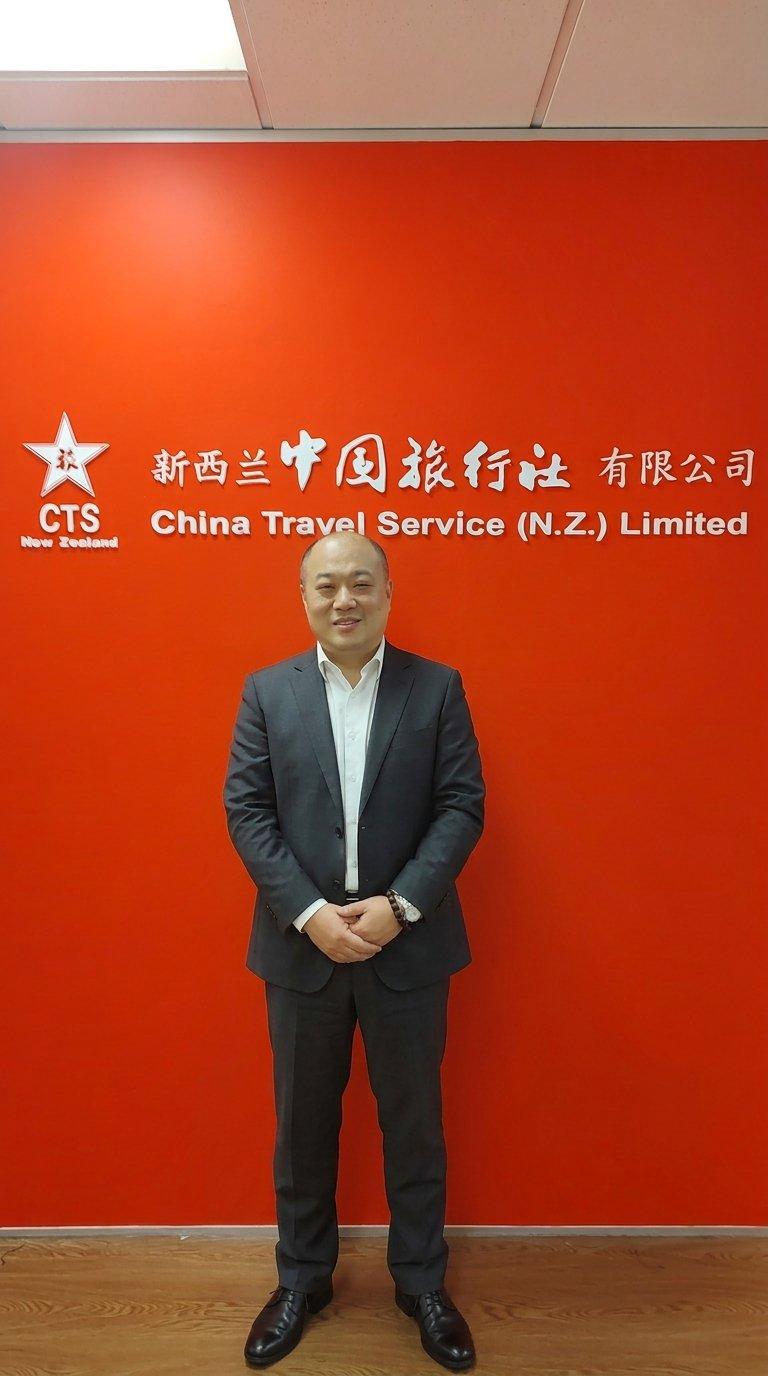
I'm Baker Gu, CTS Tours NZ's China travel specialist. "Should I go to Chongqing or Chengdu?" is the third-most-common question I get from Kiwi travellers planning a China trip, right behind "is the visa really free?" and "how long should I go?". This is my honest, opinionated answer for 2026.
Both cities sit in the Sichuan-Chongqing region of southwest China. Both are famous for spicy food. Both are roughly the same flying distance from Auckland (about 13 hours via one stop). And yet they are completely different experiences — and choosing the wrong one for your travel style is a real way to come home disappointed.
The 30-second answer
| | Chengdu | Chongqing |
|---|---|---|
| Pace | Slow, walkable | Fast, vertical |
| Headline draw | Giant pandas | Liziba monorail through-building |
| Food signature | Sichuan cuisine, dan-dan noodles, mapo tofu | Chongqing hotpot, mala beef tallow |
| Layout | Flat, grid-like | Mountainous, multi-level streets |
| Best for | First-timers, families, slow travel | Repeat visitors, photographers, foodies |
| Day trip options | Mt Emei, Leshan Giant Buddha, Sanxingdui, Jiuzhaigou | Dazu Rock Carvings (UNESCO), Yangtze cruise to Wushan / Three Gorges |
| Recommended stay | 3 days | 2-3 days (or longer with a cruise) |
| Weather caveat | Cloudy most of the year (still comfortable) | Avoid July-August — extreme heat |
If that table already told you everything you needed, go book a tour. If you want the reasoning, keep reading.
Why Chengdu wins for first-time China travellers
Chengdu has been on the tourist map for longer, and it shows. The city has organised itself around two things foreigners love: pandas and slow daily life. Both are genuinely there.
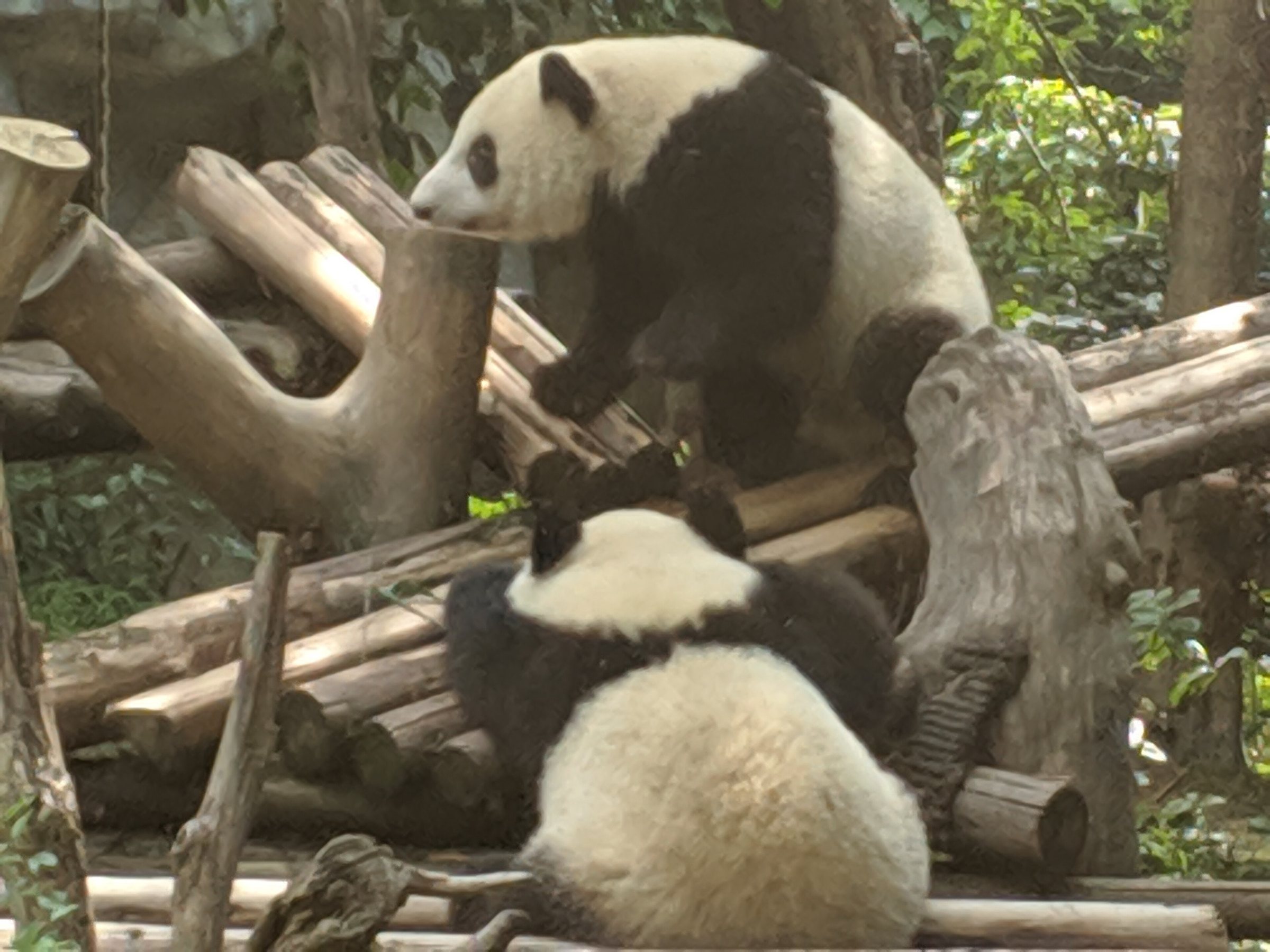
The Chengdu Research Base of Giant Panda Breeding is a real, working conservation centre — not a zoo. Get there early (gates open 7:30am) and you will see pandas eating breakfast bamboo while it is still cool. The Dujiangyan panda base, an hour outside the city, has a more naturalistic enclosure setup if you want to go deeper.
But it is the rhythm of the city that surprises most NZ travellers. People play mahjong in the parks. Tea houses serve bottomless bamboo-leaf tea for the equivalent of NZD $3. Old quarters like Kuanzhai Alley and Jinli Street have been restored without becoming pure tourist traps. Walking is genuinely the best way to get around.
The single most memorable thing I show clients in Chengdu is not on any highlights list: the Matchmaking Corner in People's Park. Parents gather along a shaded walkway with handwritten notices advertising their adult children — age, height, salary, apartment ownership — hoping to arrange an introduction. It runs most weekends, it is completely sincere, and it tells you more about contemporary Chinese family life in twenty minutes than any museum will.
The food is iconic but accessible. Chengdu Sichuan cuisine uses less raw mala (numbing-spicy peppercorn) than Chongqing, so even Kiwi travellers who think they can't handle spicy food can usually manage a Chengdu-style meal with the chef adjusting the heat. Try dan-dan noodles, mapo tofu, twice-cooked pork, and yuxiang eggplant.
And the day trips are unbeatable. Mt Emei (one of the Four Sacred Buddhist Mountains) is 2 hours away by high-speed train. Leshan Giant Buddha is on the same line. In autumn, Jiuzhaigou Valley's waterfalls and Tibetan villages are 4 hours away by long-distance bus.
The one I push hardest is Sanxingdui, an hour north of the city. It is a Bronze Age site, roughly contemporary with the late Shang dynasty, and the bronze masks pulled out of its sacrificial pits — huge protruding eyes, blade-thin ears, gold foil faces — look like nothing else in Chinese art. Most visitors have never heard of it before they arrive and talk about it for the rest of the trip.
For most first-time NZ travellers to southwest China, Chengdu is the right answer.
Why Chongqing is worth the trip for the second-timers
If you have already done Beijing, Shanghai or Xi'an and you want something that feels completely different, Chongqing is the answer. It is genuinely unlike any other city in China.
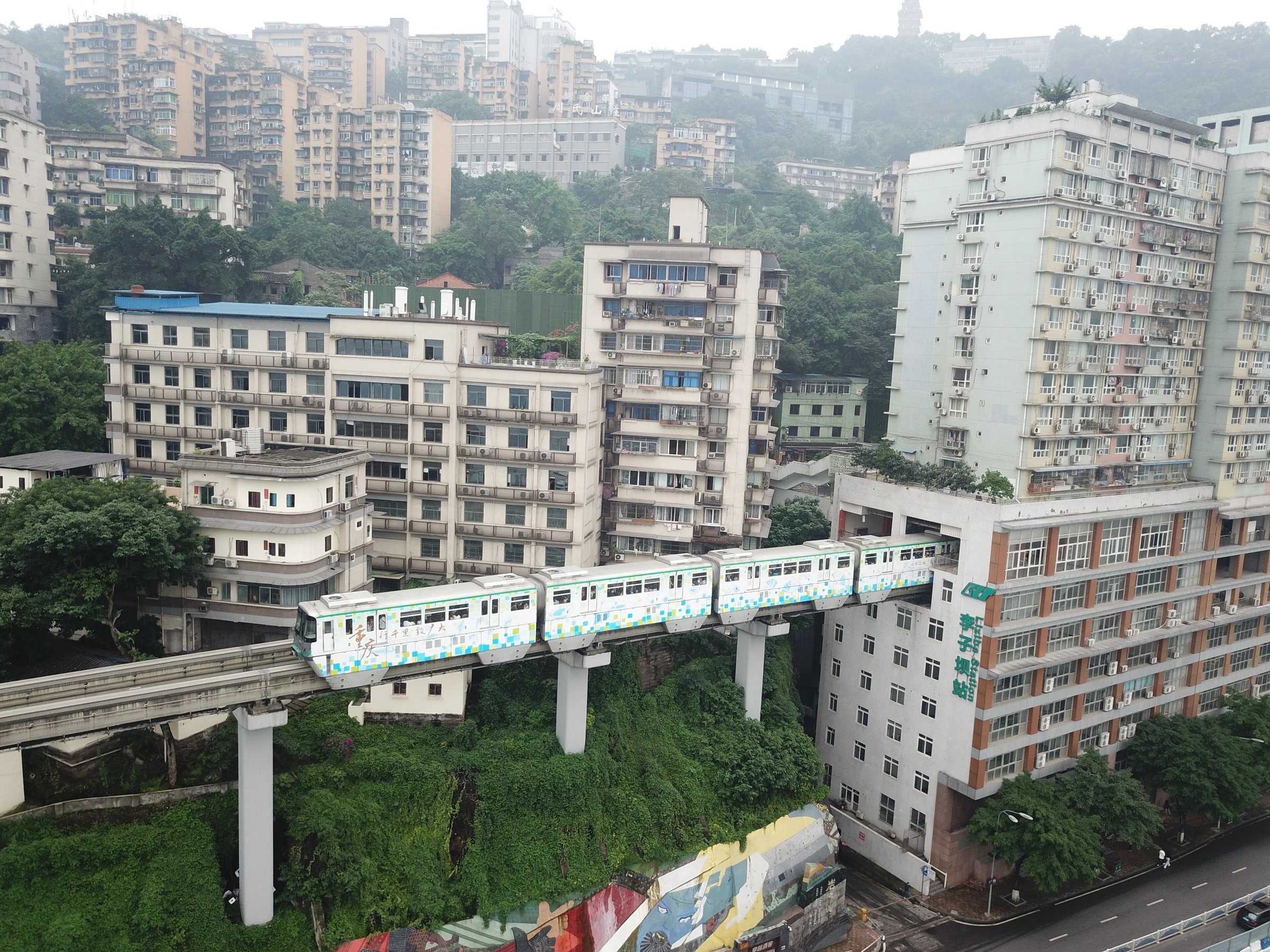
Chongqing is built on the meeting of two rivers — the Yangtze and the Jialing — and on extremely steep terrain. The result is a city where the "ground floor" of a shopping mall can be on level 8, where buses drive across the roofs of buildings, and where the Liziba monorail famously passes *through* a residential apartment block on its route (Line 2, floors 6–8 of a 19-storey block). This is not a marketing gimmick. The monorail genuinely cuts through the building, and you can ride it for the equivalent of NZD $1 to see it from the inside.
Locals call this "8D Magic" — a city with so many stacked levels that a two-dimensional map is useless. The internet calls it cyberpunk. Both are fair. Your phone's GPS will regularly insist you are 40 metres from where you are standing, because it has no idea which of the five road levels you are on.
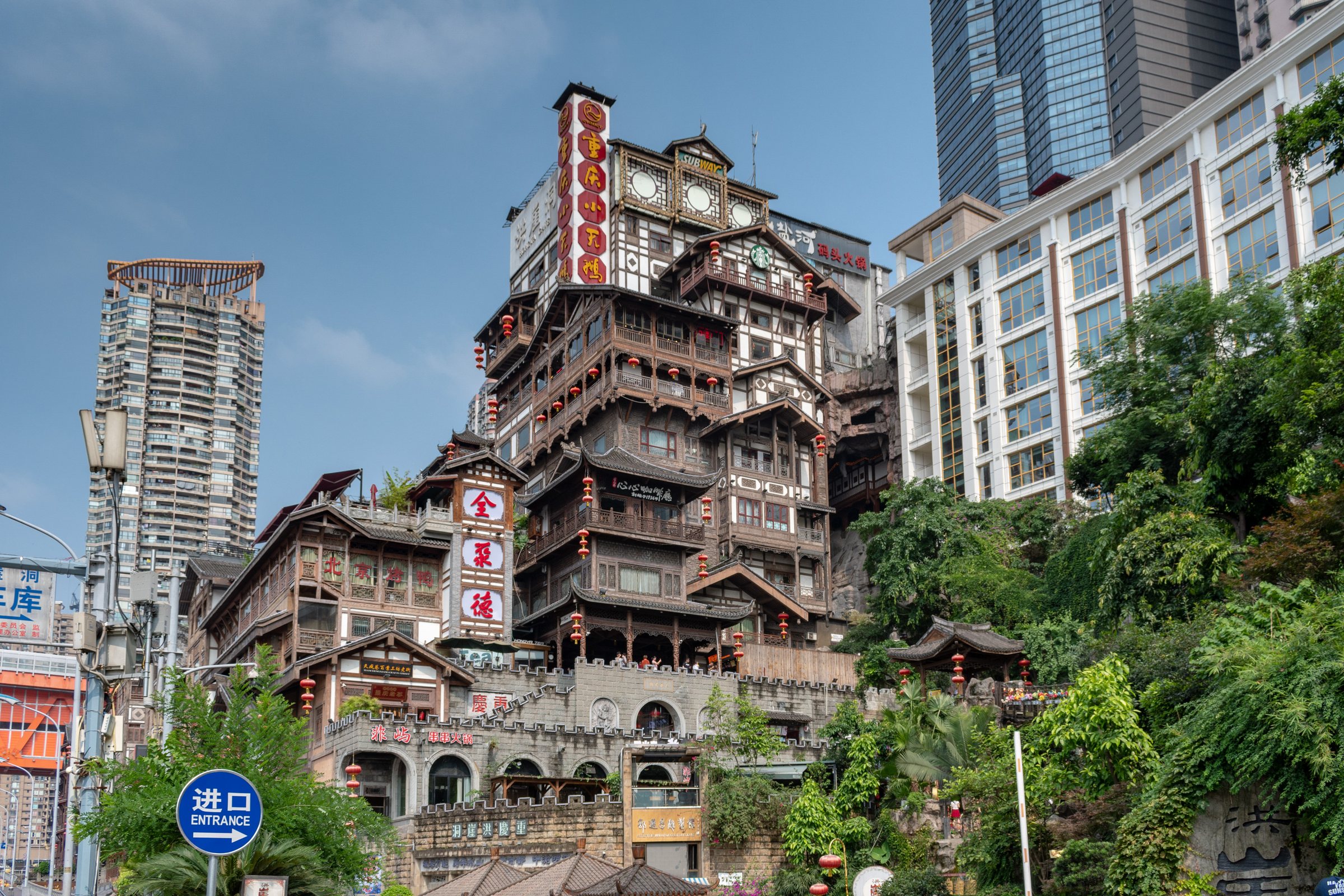
The food is the second draw. Chongqing hotpot is the original — a roiling pot of mala broth, beef tallow, dried chillies, and Sichuan peppercorns, served bubbling at every table from breakfast to midnight. Even if you order the split yuan yang pot with a clear-broth half, the spicy half will be more intense than anything you've had in Auckland. Hongyadong is the touristy place to go but the locals eat at the open-front shops in Jiefangbei and along the lanes near Liziba.
The third draw is the Yangtze River cruise. Most premium cruises into the Three Gorges depart from Chongqing port, sailing downstream to Yichang over 3-4 nights. This is a slow-travel experience NZ retirees love — proper cabin accommodation, shore excursions to Wushan and Fengdu, and the historic Three Gorges Dam at the end.
What gets lost in the viral clips is that Chongqing also has serious history. The Dazu Rock Carvings — a UNESCO World Heritage Site about 100km from the city — hold roughly 50,000 Buddhist, Taoist and Confucian sculptures carved between the 9th and 13th centuries, including a 31-metre reclining Nirvana Buddha. It is a full day out and it is the single most underrated thing in the region. Closer in, the Huguang Guild Hall (built 1759) is a beautifully preserved Qing dynasty merchant complex beside the Yangtze, from the era when migrants from Huguang were resettled into Sichuan in their millions. Browse our Chongqing tours or Chengdu tours.
But Chongqing is demanding. The terrain is steep. Summer heat is extreme (35-42°C is normal in July-August). The city is enormous and feels disorienting if you don't have a guide. This is why we recommend a guided 2-3 day trip rather than a DIY weekend.
How to combine Chongqing and Chengdu
The genuinely good news for NZ travellers: you don't have to choose. The two cities are connected by high-speed rail (CRH) in 1 hour 15 minutes. A typical CTS Tours combined itinerary looks like:
- Days 1-3: Chengdu — pandas, tea house morning, Kuanzhai Alley, day trip to Mt Emei or Leshan
- Day 4: Train Chengdu → Chongqing in the morning, arrive lunchtime
- Days 5-6: Chongqing — Liziba monorail, Hongyadong night view, Jiefangbei, Ciqikou ancient town
- Day 7 (optional): Yangtze River cruise embarkation, 3 nights to Yichang
This 5-7 day Sichuan loop is one of the most rewarding short trips in all of China. We cover the full route in detail in our Chongqing & Chengdu Discovery Guide.
How a Chongqing-Chengdu trip fits into a longer China itinerary from NZ
Most NZ travellers don't fly all the way to China for just Sichuan. Here is how I usually combine the region with a full 14-day China holiday from Auckland:
- Days 1-4: Beijing — Great Wall, Forbidden City, Temple of Heaven, hutongs
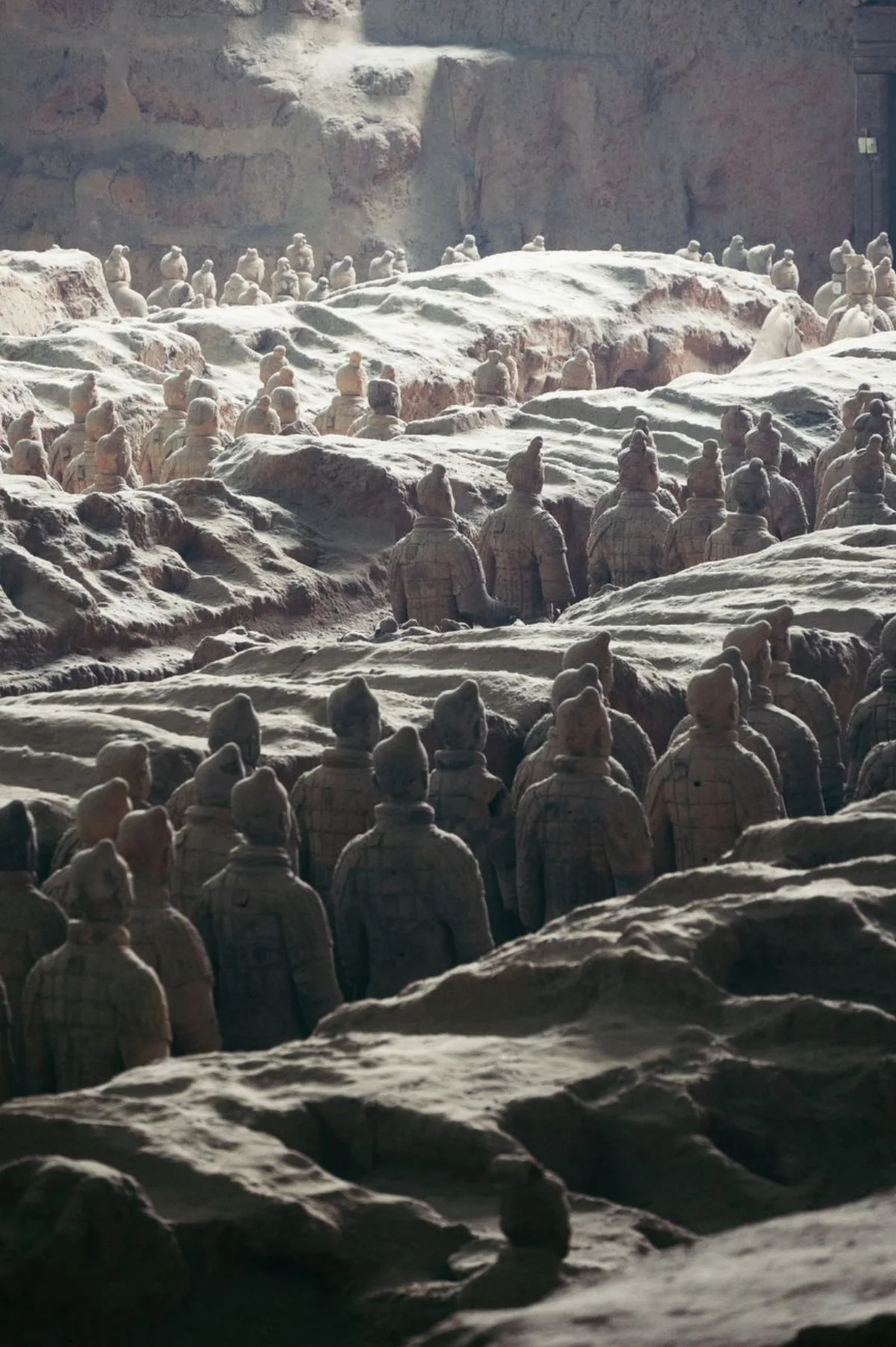
- Days 5-7: Xi'an — Terracotta Warriors, city walls, Muslim Quarter (high-speed rail from Beijing, 4.5 hours)
- Days 8-10: Chengdu — pandas, tea houses, day trip to Leshan
- Days 11-13: Chongqing — hotpot, Liziba, Yangtze evening cruise
- Day 14: Fly Auckland from Chongqing (CKG)
Total flying time from Auckland (return): roughly 26-28 hours including one stop each way. CTS Tours' Best of China and China tour packages from New Zealand include variants of this multi-city route with all internal transport, accommodation, and English-speaking guides.
A note on NZ visa-free entry
NZ ordinary passport holders can enter mainland China visa-free for up to 30 days per visit, valid through 31 December 2026. Both Chongqing Jiangbei International Airport (CKG) and Chengdu Tianfu / Shuangliu (TFU/CTU) accept visa-free arrivals. You will need:
- An NZ ordinary (blue) passport with at least 6 months remaining
- A return or onward ticket
- Accommodation confirmation (hotel booking or CTS tour documentation)
If you are travelling on a non-NZ passport, the China visa guide for New Zealand residents covers other passport scenarios.
What I tell people who can't decide
If you genuinely can't pick between Chongqing and Chengdu and you have 5+ days in southwest China — just do both. The high-speed rail link makes it almost free in time and money to add the second city. The two cities are so different that visiting both gives you the full Sichuan-Chongqing picture in a way that visiting either alone doesn't.
If you have only 2-3 days and have to choose, choose Chengdu for your first China trip, Chongqing if you have been to China before and want something dramatically different.
If you want to talk through your specific trip, the CTS Tours team is in Auckland and happy to walk through options on the phone. China Travel Service is our parent group. The New Zealand team runs Kiwi-focused trips from Auckland, and most of us have personally led tours through Chongqing and Chengdu multiple times.
Either city you choose, you will eat well, see something genuinely unforgettable, and come home with stories.