Chongqing at night is one of the great urban spectacles in Asia — a city of 32 million built on steep hills above two rivers, with a light display that outdoes anything in mainland China.
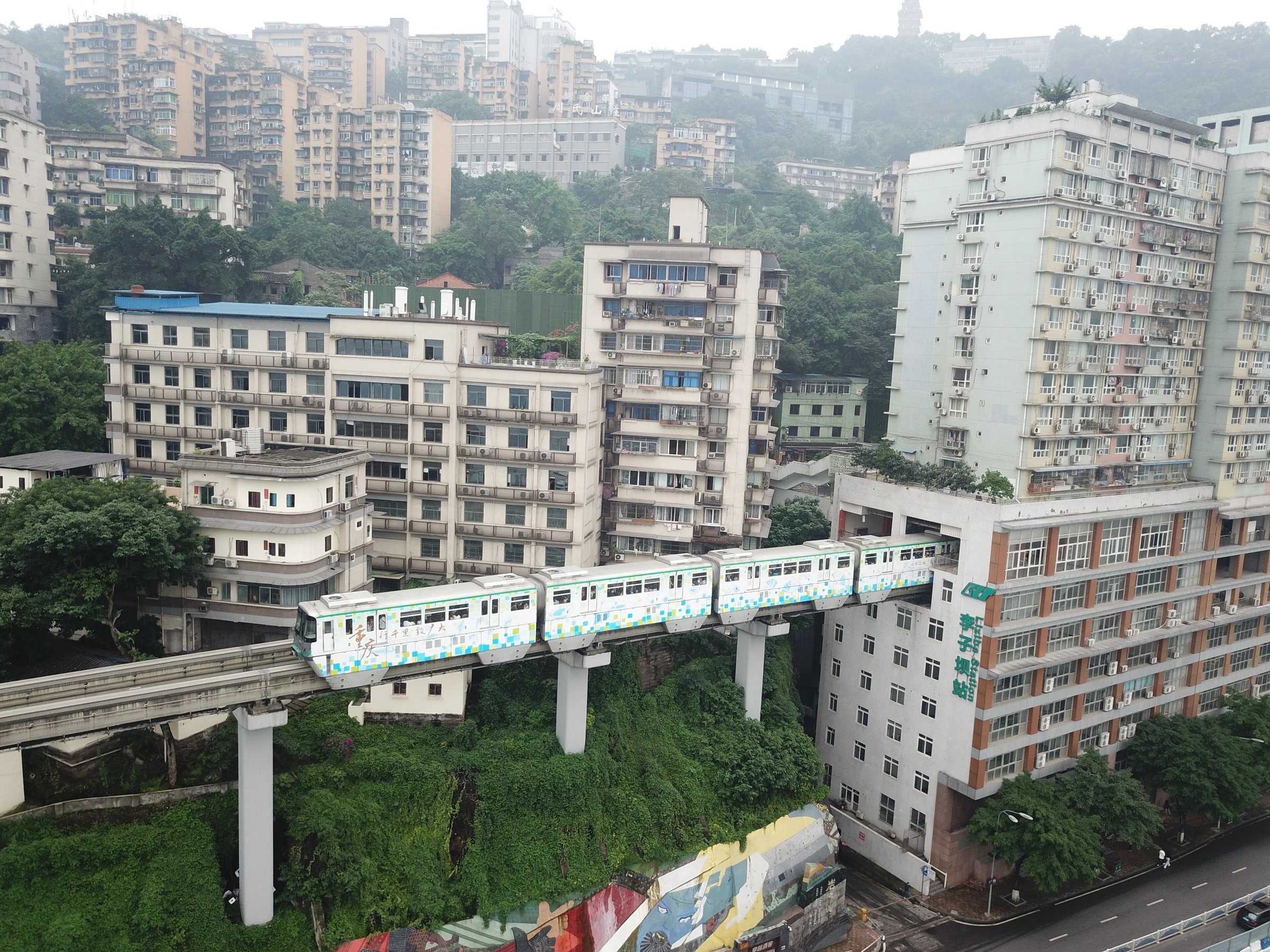
There is a photograph that circulates regularly on Chinese social media: a monorail train passing through the sixth floor of a residential apartment block, with the passengers visible through the carriage windows and the residents visible through their apartment windows, separated by a few metres and a pane of glass. This is Chongqing. This is a real thing that happens, on Line 2 of the Chongqing Rail Transit, at Liziba Station.
Chongqing's peculiar topography — a mountainous peninsula at the confluence of the Yangtze and Jialing rivers — made conventional city-building impossible and produced instead a vertical, layered, physically strange city that looks like science fiction from the right angle. At night, illuminated from below and above, it looks like something more.
The Best Night Views in Chongqing
Nanshan One Tree Hill (南山一棵树观景台) is the classic panorama: a viewpoint on the south bank of the Yangtze, facing north toward the central peninsula. The city spreads below you from left to right — the rivers, the bridges, the stacked lights of the residential towers climbing the hillsides, and the CBD towers in the centre. This is the view that goes viral on Chinese social media each Spring Festival when the fireworks go off. Come on a clear night, ideally after rain when the air has cleaned.
Yangtze River Cableway is the most dramatic way to cross the river: a cable car system that has connected the north and south banks since 1987, climbing 100 metres above the river surface. The view from the cabin — the river traffic below, the two banks receding in both directions — is disorienting in the best way. CNY 10 each way.
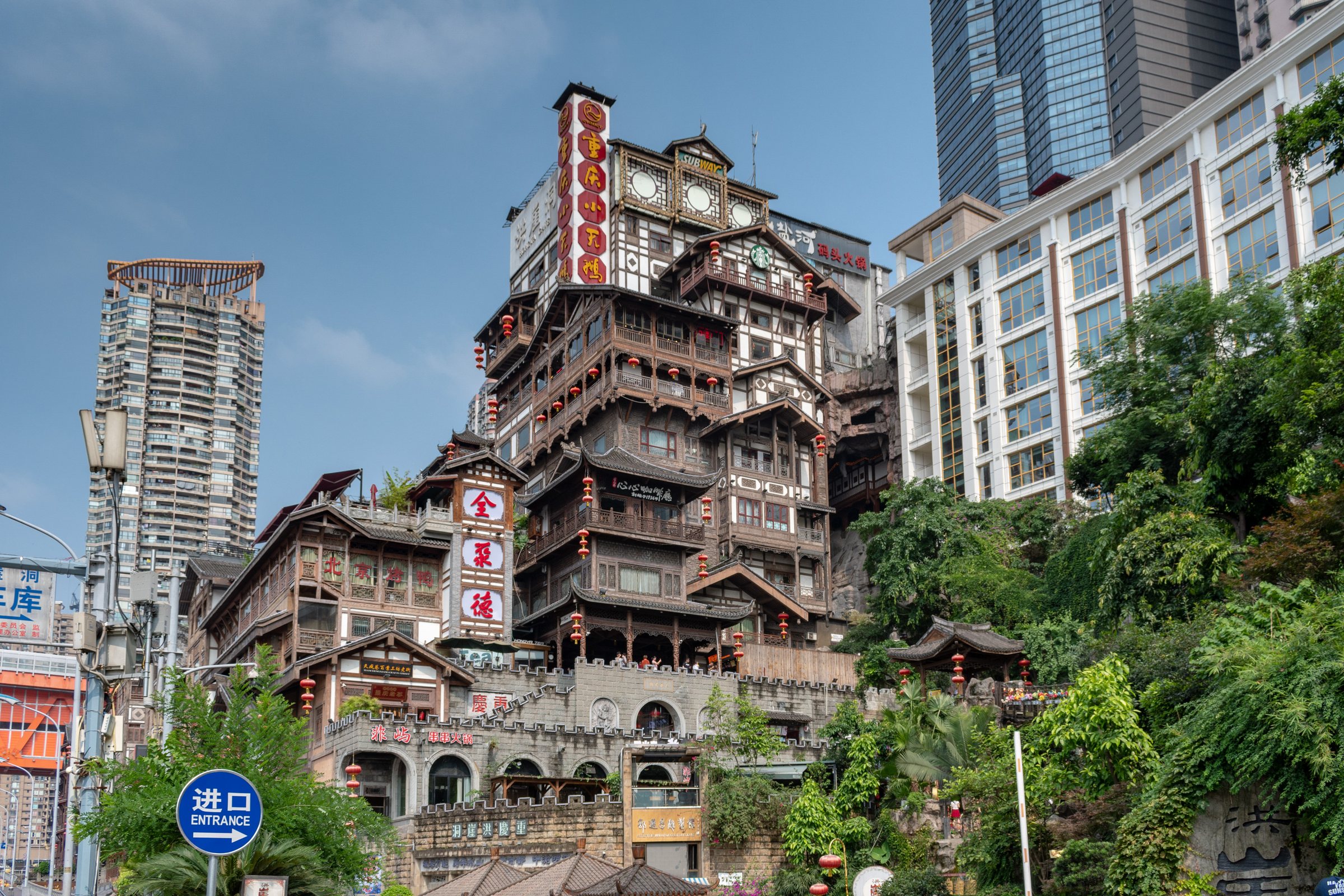
Hongyadong at night (mentioned in the Chongqing daytime guide) is even better illuminated after dark: the cliff-face stilt structure lit in layers of red and gold lanterns, reflected in the Jialing River below.
Chaotianmen Square at the tip of the peninsula, where the Yangtze and Jialing meet, is the emotional centrepiece of Chongqing's identity — the place where the two brown rivers join and where Chongqing's maritime culture has concentrated for millennia. At night, the cruise ships moored here for departure are lit from stem to stern, and the confluence is visible from the elevated walkway.
The Monorail Experience
Take the Chongqing Rail Transit Line 2 specifically to experience the Liziba Station passage. Board at any station heading toward Xinshan Village, and sit in a window seat on the left side of the carriage as you approach Liziba. The train enters the apartment building at the 6th floor, travels through the interior, and exits the other side. The building was designed around the transit line. This is urban planning at its most creative (or desperate, depending on your perspective). The locals treat it with complete normalcy.
The Food After Dark
Chongqing's night food culture centres on the riverside areas and the old alleyways of the Jiefangbei district (the CBD). Key experiences after dark:
Night hot pot: Chongqing hot pot is the original — more aggressively spiced than the Sichuan version, based on a tallow-heavy broth with dried chillies and Sichuan peppercorns. The outdoor hot pot restaurants along the river, with the city lights on the water and the long tables of diners, are where you understand what Chongqing actually is.
Xiaomian (小面): Chongqing's other great contribution to Chinese noodle culture — thin noodles in a broth with chilli oil, Sichuan pepper, preserved vegetables, peanuts, and spring onion. CNY 6–10 at street-level breakfast stalls. Outstanding.
Practical Details for a Night Visit
- Best months: October–November (clear air, comfortable temperature) and March–April
- Avoid: Summer nights can be hot and humid; winter can be foggy
- Transport: Chongqing's metro system runs until 11pm and connects all major viewpoints
- Dinner timing: Eat hot pot from 7pm; the riverside restaurants are fullest (and most atmospheric) between 8–10pm
Chongqing is included in our longer western China itineraries combining Chengdu, Chongqing, and the Yangtze River cruise. Browse our Chongqing tours, or read our guides to Hongyadong and Liziba Station. Contact us to discuss building it into your journey.