Shanghai is the city that makes every visitor rethink what China is. Baker Gu explains the Bund, Pudong, the French Concession, and how to understand Shanghai as both a historical port city and a glimpse of China's future.
I'm Baker Gu, and Shanghai is the city I use to recalibrate client expectations about China. If you arrive expecting ancient temples and rural villages, Shanghai will surprise you thoroughly — and that surprise is worth leaning into.
Shanghai is one of the most architecturally layered cities on earth. Within a single afternoon you can walk from Qing Dynasty tea houses to 1930s Art Deco banking halls to 21st-century supertall towers. Each layer is real. Each layer tells you something different about China's relationship with the world.
The Bund: Where the Story Starts
The Bund (外滩, Wàitān) is Shanghai's signature promenade along the west bank of the Huangpu River. The buildings on the western side of the road — the ones facing the river — are the colonial-era headquarters of the banks, trading houses, and hotels that made Shanghai one of the world's great commercial cities in the late 19th and early 20th centuries.
These buildings are not Chinese architecture. They are British neoclassical, Italian Renaissance, Art Deco, and Baroque — a remarkable collection of European commercial architecture built in Asia. The Customs House with its clock tower. The old HSBC building (now a Chinese bank) with its magnificent mosaic-domed banking hall. The Fairmont Peace Hotel (formerly the Cathay Hotel) where Noël Coward allegedly wrote Private Lives.
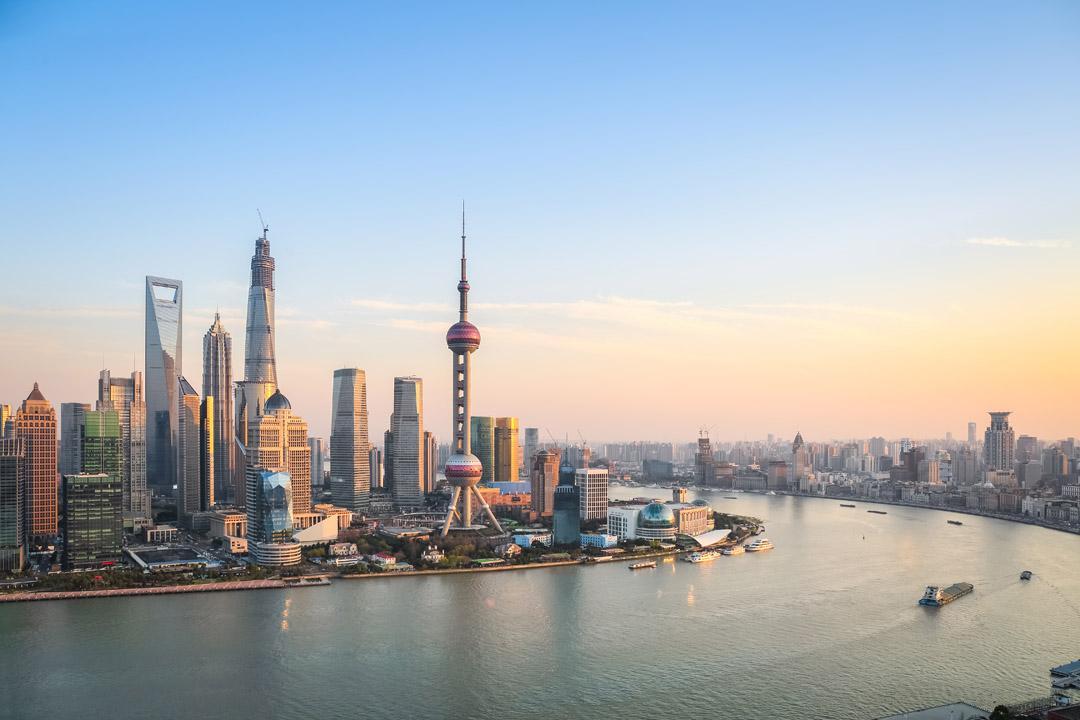
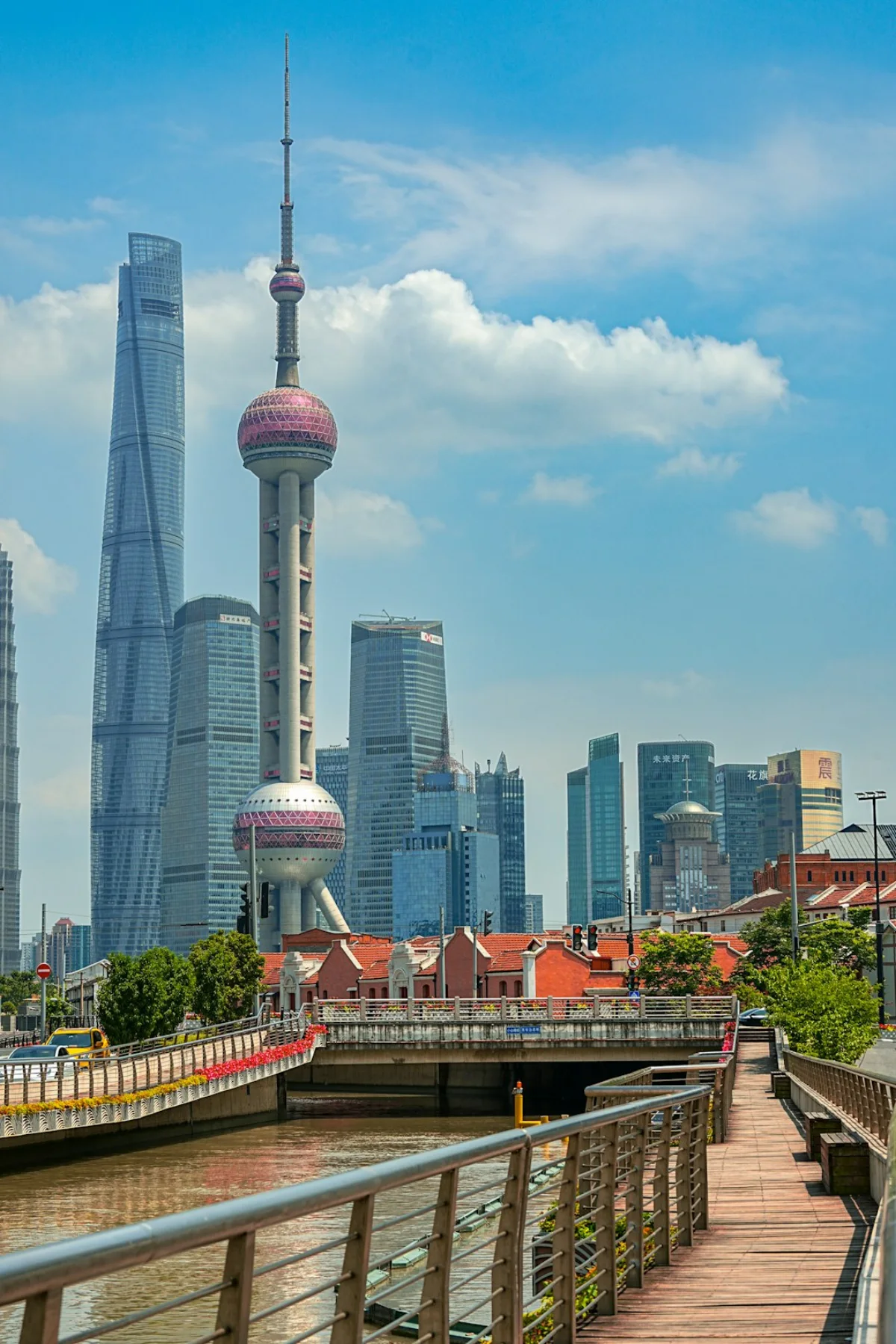
Across the river, Pudong: the jungle of towers that Shanghai built in the 1990s and 2000s on what was, before 1990, farmland. The Oriental Pearl Tower (1994, now looking retro), the Jin Mao Tower (1999), the World Financial Centre with its trapezoidal sky window at 492 metres, and the Shanghai Tower (2015, 632 metres) — all within walking distance of each other.
The Bund at night, looking across at the Pudong skyline, is one of the great city views in the world. Go before dinner.
The French Concession
The Foreign Concessions — areas of Shanghai administered by foreign powers under 19th-century treaty arrangements — produced an extraordinary urban fabric that survives in pockets across the city. The French Concession (法租界) is the most intact.
The streets of the French Concession are shaded by plane trees planted a century ago, lined with townhouses in a style that blends French residential design with Chinese decorative elements. Many of these buildings now house restaurants, boutiques, and cafes. The neighbourhood feels different from the rest of Shanghai — quieter, more intimate, with a pace that rewards walking without a destination.
Wukang Road is the neighbourhood's most photographed street, particularly where it curves past the Wukang Mansion — a 1924 Normandy-style apartment building that terminates the street's sightline. Walk north from there into the surrounding lanes and you will find some of the city's best coffee, independent bookshops, and the occasional surviving shikumen (stone gate) lanehouse — the distinctive Shanghai residential form that blends a Chinese courtyard with European row house construction.
Old Shanghai: Yu Garden and the City God Temple
Yu Garden (豫园, Yùyuán) is the preserved Ming Dynasty private garden that survived successive occupiers and developers through sheer historical prominence. It is small — 2 hectares — but dense with rockeries, pavilions, goldfish ponds, and the peculiarly beautiful garden aesthetic of the Jiangnan style.
The surrounding bazaar area, reconstructed in Ming style, is pure tourist commerce — but the garden itself repays the visit, particularly if you arrive at opening (8:30am) before the day crowds.
How to Understand Pudong
Many first-time visitors to Shanghai treat Pudong purely as a background for the Bund photos. This misses something. Take the Pearl Line ferry across (CNY 2, the cheapest river crossing in any major world city), go up to the observation deck of the Shanghai Tower or the World Financial Centre, and look down at the city spread below you.
What you are seeing is what China built in 30 years — the physical manifestation of an economic transformation without precedent in speed or scale. The highways, the tower clusters, the container port at the mouth of the river (the world's busiest): all of it assembled within living memory. Shanghai helps you understand the modern Chinese story in a way that the ancient capitals cannot.
Practical Details
- Getting around: Metro is excellent, cheap, and has English signage. Download the Alipay app for transit payments.
- Time required: Shanghai deserves a minimum of two full days; three is better.
- Must-visit at night: The Bund promenade (7–9pm), Tianzifang laneway area (lively after dark), Bar Rouge for the Pudong view.
- Day trips: Suzhou (30 minutes by high-speed rail), Hangzhou (45 minutes), Zhujiajiao water village (1 hour by bus).
Shanghai is the gateway for our Shanghai & Surroundings Discovery tour and can be added to any custom itinerary. Contact us to discuss.