The Terracotta Army is one of the greatest archaeological discoveries in history. Here's what to expect, how to make the most of your visit, and why it deserves a full day.
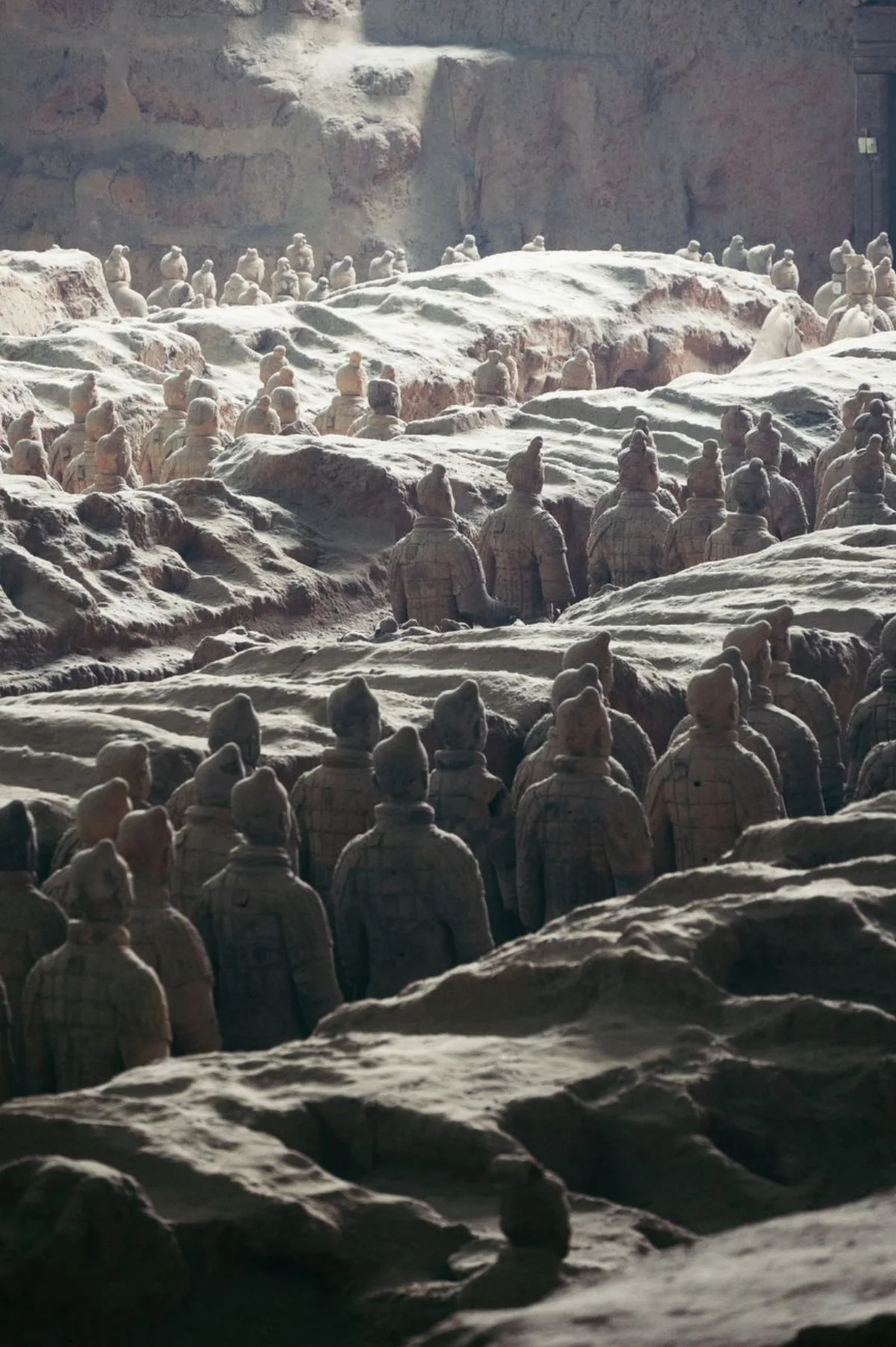
The Terracotta Army is one of those rare travel experiences where the reality exceeds the expectation. You've seen the photographs. You know the scale. And then you walk into Pit 1 and find that the photographs were not adequate preparation for what it's actually like to stand in front of several thousand life-sized warriors, each one individually sculpted, stretching away from you toward a horizon that's inside a building.
Here's everything New Zealand travellers need to know before visiting.
The Background
Qin Shi Huang unified China for the first time in 221 BC, founding the Qin Dynasty and establishing himself as the first emperor. He then spent significant resources preparing for his afterlife — including a buried army of terracotta soldiers, horses, and chariots designed to protect him in death as his real armies had protected him in life.
The warriors were discovered in March 1974 by farmers digging a well outside Xi'an. They notified local authorities; archaeologists arrived; and what followed was one of the most significant archaeological excavations of the 20th century, still ongoing more than 50 years later.
The buried complex is enormous — it surrounds the emperor's actual tomb mound, which has not yet been excavated. The three warrior pits open to visitors are just one part of what has been found.
The Three Pits
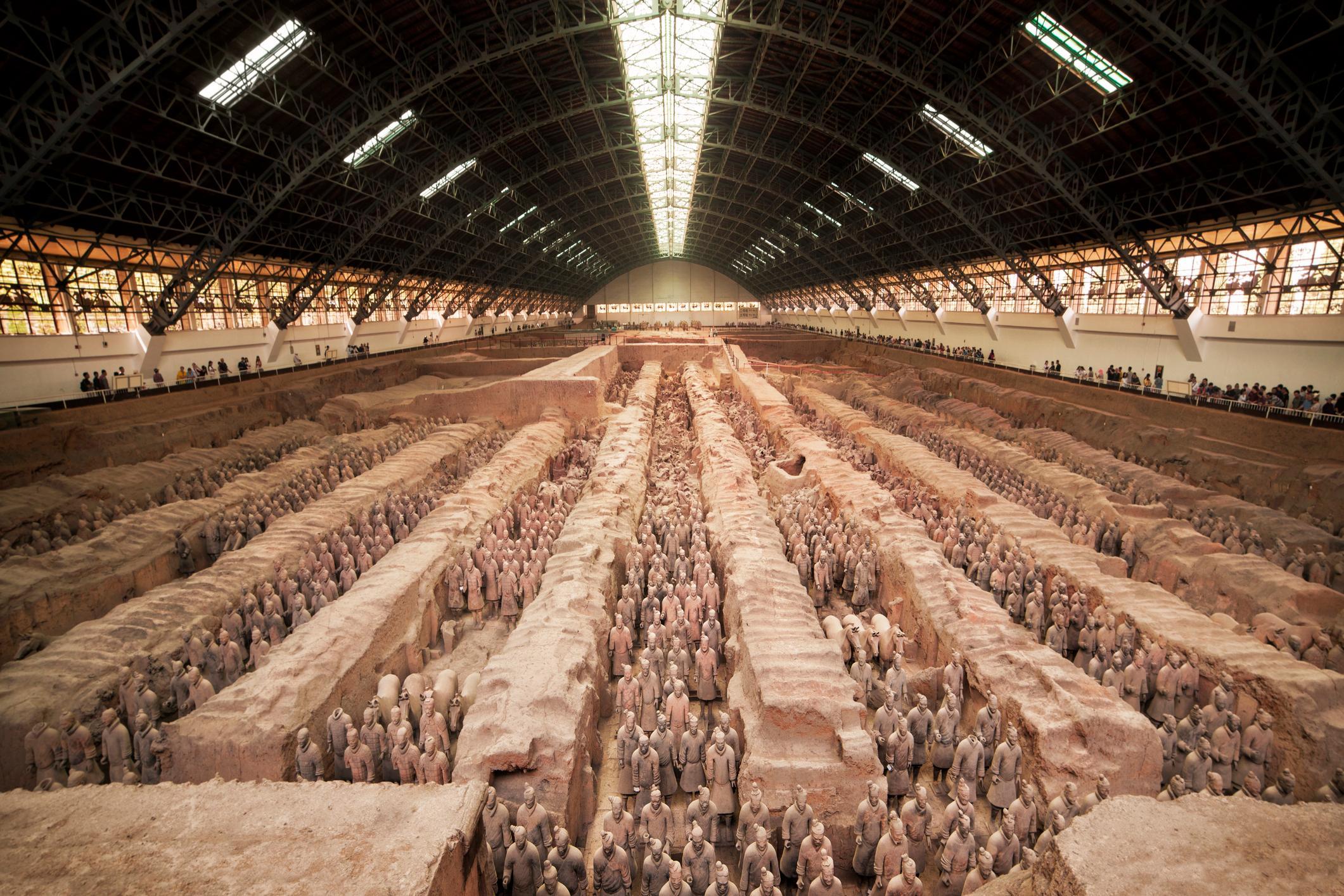
Pit 1 is the one in all the photographs. It's housed in a large hangar-like building — the largest on the site. The scale is immediately apparent: rows of infantry extending to the far wall, horses and chariots at intervals, the colour long faded from the clay figures but the detail in every face, every uniform, every hand position still sharp after 2,200 years.
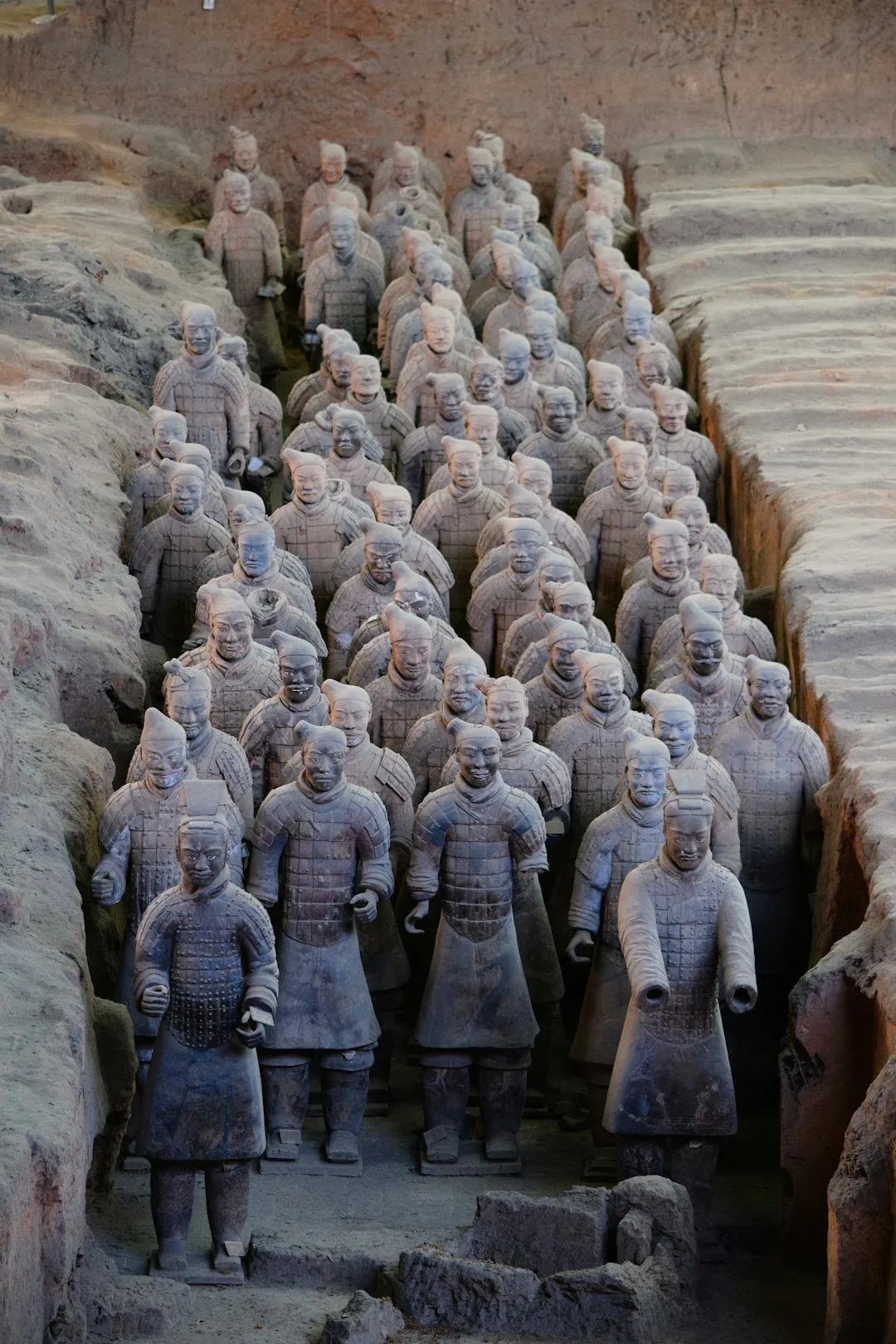
Crucially, no two faces are the same. Each warrior was modelled on a real soldier, with individual facial features sculpted by different craftsmen. This is not mass production in any modern sense — it is the recorded face of an actual person who lived in China in the third century BC.
Pit 2 is smaller and contains cavalry units and archers. Some of the most technically impressive pieces are here — the kneeling archers in particular, with extraordinary detail in the straps and laces of their armour.
Pit 3 is interpreted as the command structure: a small group of higher-ranking officers, their horses, and a war chariot. It's also where some of the most damaged pieces are on display — broken by the wooden roof collapsing in antiquity — which gives the pit an eerie, excavation-in-progress atmosphere.
The Exhibition Halls
Before or after the pits, the on-site museum displays individual warriors and horses at close range, allowing you to examine the craftsmanship that's harder to appreciate from the viewing distances in the pits. The bronze chariots and horses discovered in a separate pit near the emperor's tomb are also here — exquisitely detailed, about half the size of real horses, fully functional miniatures of working vehicles.
Practical Advice
Time required: A proper visit to all three pits plus the museum takes 3–4 hours. Most guided tours allocate a full morning or afternoon.
Getting there: The site is 35km east of Xi'an city centre — approximately 45 minutes by road. On a guided tour, transport is included. Independent travellers can take Bus 306 from Xi'an train station.
Crowds: The site receives millions of visitors per year. Weekdays are significantly quieter than weekends. Early morning (opening time, 8:30am) is the least crowded period in Pit 1. If your tour arrives mid-morning, the main pit will be busy — adjust expectations accordingly.
Photography: Photography is permitted in all pits. Flash is not necessary and can be irritating to other visitors; turn it off.
The guide matters. The significance of what you're seeing isn't self-evident from the figures themselves. A guide who can explain the historical context, identify specific details in the warrior types, and explain the excavation process makes the visit several times more meaningful than wandering without that context.
Combining Xi'an with Beijing
The Terracotta Warriors are the anchor of any Xi'an visit, but they shouldn't be the only reason to go. The city's ancient walls, the Muslim Quarter, and the Shaanxi History Museum are each worth half a day. CTS Tours allocates 3 full days in Xi'an as part of the A Tale of Two Cities itinerary — enough time to do all of them properly.
View the Beijing & Xi'an tour →