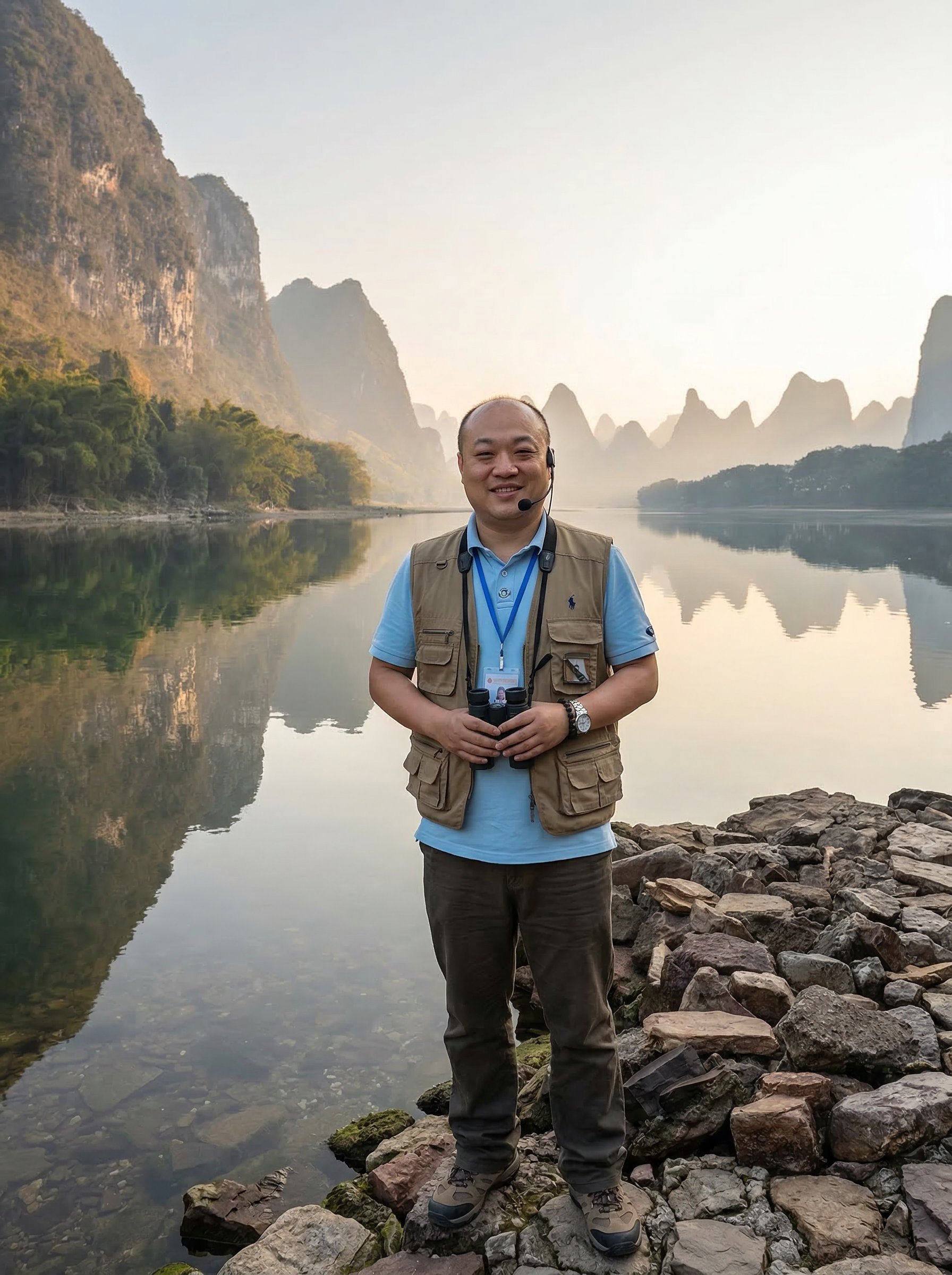
I’m Baker Gu — tea is how I slow clients down in China; here’s how I read the six great teas and where I take you on tour.
I’m Baker Gu. Tea is to China what wine is to France — not just a drink, but a way of life, and I use it to help travellers actually feel the country between temple visits.
A Brief History
Legend has it that Emperor Shen Nong discovered tea in 2737 BC when leaves from a wild tree blew into his pot of boiling water. Whether true or not, tea has been central to Chinese culture for millennia.
The Six Great Teas
1. Green Tea (Longjing) - Unoxidised, fresh and grassy. Hangzhou's Dragon Well is the most famous.
2. Black Tea (Hong Cha) - Fully oxidised, rich and malty. Keemun is a classic.
3. Oolong - Semi-oxidised, complex and aromatic. Tieguanyin from Fujian is renowned.
4. White Tea - Minimally processed, delicate. Silver Needle is the premium variety.
5. Pu-erh - Fermented and aged, earthy and complex. Yunnan's specialty.
6. Yellow Tea - Rare and subtle, similar to green but with a unique processing method.
Where I take you on my tours
- Hangzhou: Dragon Well plantations — I like you to see leaves picked and fired
- Chengdu: Old tea houses where locals play mahjong — I use it as a breathing day
- Fujian: When we build a longer east coast arc, I chase Oolong country in the Wuyi foothills
The Gongfu Tea Ceremony
This traditional brewing method, originating in Fujian and Guangdong, is an art form. Small teapots, multiple short infusions, and careful attention to water temperature bring out the best in each tea.
Baker's Tip
*"In China, tea is never rushed. When a host refills your cup, tap the table with two fingers—it's a silent thank you. And never let your guest's cup go empty. These small gestures show respect and understanding of the culture."*
Walk it with me on Imperial Heritage — Signature or tell me your dates and I will weave tea stops into your route.