
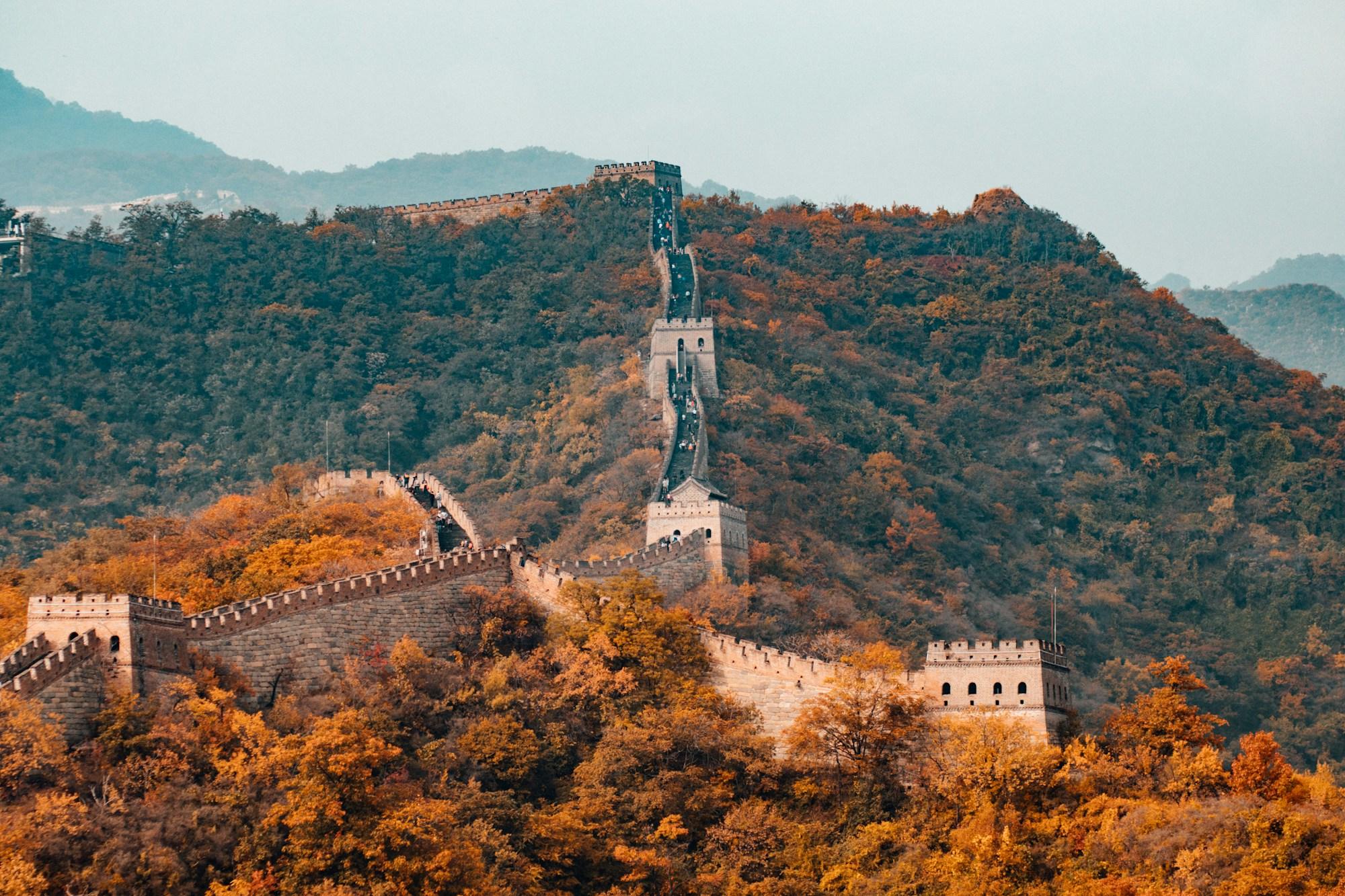
The Great Wall of China represents humanity's most ambitious construction project, stretching over 21,000 kilometres across northern China. Built and rebuilt across millennia (7th century BC to 17th century AD), the wall served defensive purposes protecting Chinese kingdoms from northern invasions. Most surviving sections date from Ming Dynasty (1368-1644), rebuilt using brick and stone for greater durability than earlier rammed earth versions.
The wall's construction required enormous labour, resources, and engineering sophistication. The architectural achievement transcends mere military functionality; the structure integrates into landscapes at grand scales. UNESCO recognised the Great Wall as World Heritage site, acknowledging both historical and aesthetic significance.
For visitors based in Beijing, multiple wall sections offer accessible day-trip experiences. Badaling section (43km from city) represents most visited, fully-restored, and tourist-accessible option. Mutianyu (74km) offers fewer crowds and forested beauty. Simatai and Jinshanling appeal to serious hikers and photographers seeking unrestored, dramatic sections.
Great Wall of China with CTS Tours
Expert-led tours. Small groups. 33+ years in China.
Sections Near Beijing
Badaling remains most accessible and popular section. Located just 43km northwest, a 90-minute drive reaches this fully-restored segment. Cable cars assist ascent; well-maintained paths permit leisurely walking. Most visitors spend 2-3 hours navigating wall sections.
Unrestored Sections for Hikers
Simatai and Jinshanling sections feature unrestored wall with dramatic angles and greater challenges. Located 120km northeast, these sections appeal to serious hikers. Simatai's steep gradients challenge experienced climbers; Jinshanling's moderate routes suit intermediate hikers. Sunrise hikes offer spectacular light and solitude.
Top Attractions in Great Wall of China
Badaling Great Wall
Most accessible restored section; cable cars and well-maintained paths.
Mutianyu Great Wall
Less crowded restored section with forest backdrop and cable car.
Simatai Great Wall
Challenging unrestored section for experienced hikers; dramatic angles.
Great Wall of China Photo Gallery
Practical Information
Getting Around
Organised tours from Beijing (¥150-300). Private car hire (¥400-600). Public transport: metro to terminus then shuttle buses. Most visitors use tour operators.
Climate & Best Time
Beijing climate applies. Spring and autumn ideal. Best time: April-May and September-October.
Budget
Tour ¥150-300; entry ¥40-50; meals ¥50-100.
Language & Safety
English on signs at Badaling; less common at remote sections. Sections safe with normal precautions. Unrestored sections require fitness and attention.
Frequently Asked Questions
Which Great Wall of China tour section should I visit?
Badaling is best for first-time visitors — fully restored, accessible, and 43km from central Beijing. Mutianyu offers fewer crowds and forested scenery (74km from city). Simatai and Jinshanling suit serious hikers seeking unrestored, dramatic sections. Most CTS guided tours visit Mutianyu or Badaling as day trips from Beijing.
How long does a Great Wall of China tour take from Beijing?
A typical guided Great Wall tour takes 6–8 hours including travel time from Beijing. Badaling and Mutianyu are 90 minutes each way by road. Most visitors spend 2–3 hours on the wall itself. CTS includes Great Wall visits in multi-day Beijing itineraries as a highlight day trip.
Can I book a guided Great Wall tour from New Zealand?
Yes. CTS Tours (based in Auckland) includes Great Wall guided tours in our Beijing tour packages. Our local Beijing guides are English-speaking, expert, and included in all tour prices — no booking hassle on arrival. Contact our Auckland team to add a Great Wall day trip to your China itinerary.
What is the best time to visit the Great Wall of China?
Spring (April–May) and autumn (September–October) offer mild weather, clear skies, and vivid colours. Summer is warm but can be hazy; winter is cold but crowd-free with dramatic snow-dusted scenery. Avoid Chinese public holidays (National Day in October, Labour Day in May) when crowds peak significantly.
Do New Zealanders need a visa to visit the Great Wall?
No. New Zealand ordinary passport holders can enter China visa-free for up to 30 days (policy published until 31 December 2026). A visit to the Great Wall is included in most CTS Beijing packages, which are 10–14 days — well within the visa-free limit. You need a return ticket and valid NZ passport (6+ months remaining). See our China visa guide for NZ travellers for full details.
Recommended Reading
Continue the story with practical routes, local food, transport and the wider history of beijing.

Photography Guide to China: Best Locations & Hidden Gems
I’m Baker Gu — field notes for photographers: light, lenses, drone reality, and the side gates I ask guides to use so you’re not fighting busloads.
Best Time to Visit China: Seasonal Weather & Crowds
I’m Baker Gu — how I pick months for Kiwis: north vs south weather, Golden Week reality, and when I’d pay more to avoid a bad week.

China Travel Safety Guide: Tips, Scams & Etiquette
I’m Baker Gu — how I brief first-time Kiwis on safety: what’s genuinely low-risk, what annoys people, and the etiquette that keeps days smooth.