Xi'an was the capital of thirteen Chinese dynasties, including the Qin, Tang, and Ming. It is one of the world's oldest cities that people still live in today.
For more than two thousand years, Xi'an sat at the eastern end of the Silk Road. Traders and faiths met here. The name means "Western Peace."
The Terracotta Army is Xi'an's headline sight. Farmers found the warriors in 1974. Thousands of life-sized figures still guard Emperor Qin's tomb.
You can also walk Ming-era city walls, visit Buddhist pagodas, and browse the Muslim Quarter for food and crafts.
Flights and high-speed trains link Xi'an to Beijing and Shanghai. The metro is easy to use in the centre.
For New Zealand visitors, Xi'an pairs well with Beijing on one trip. Allow time for noodles, bread dishes, and night views from the walls.
Xi'an with CTS Tours
Expert-led tours. Small groups. 33+ years in China.
The Terracotta Army & Qin Mausoleum
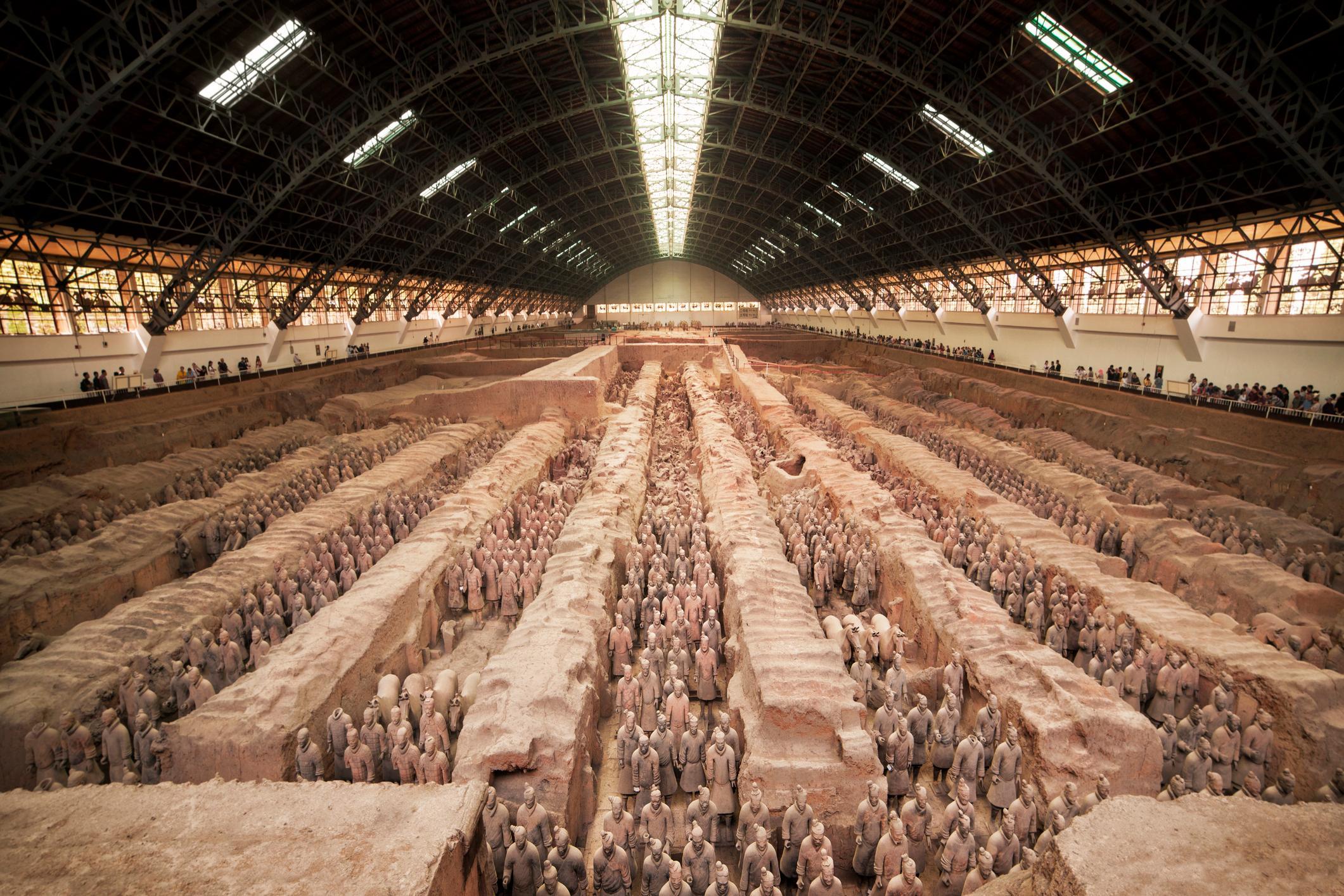
Emperor Qin Shi Huang commissioned this extraordinary underground army around 210 BC, following the Warring States period which he unified. Estimates suggest approximately 8,000 soldiers, accompanied by horses, chariots, and weapons, were crafted from local clay. Each warrior displays distinct facial features, hairstyles, and armour, suggesting portraits of actual soldiers. The scale of this project—employing hundreds of craftspeople over decades—illustrates the emperor's vision of imperial power extended into the afterlife.
Three main pits have been excavated. Pit 1 contains the largest concentration of warriors in battle formation (approximately 6,000), currently displayed in a colossal exhibition hall where visitors observe ongoing excavation work. Pit 2 houses mixed infantry, archers, and cavalry units. Pit 3, smaller and containing higher-ranking officers, provides insight into military hierarchy. Visitors can observe terracotta soldiers at various stages of archaeological treatment—some still partially buried, others fully restored to striking effect.
The site experience includes the museum complex spanning 62 hectares. The Qin Shi Huang Mausoleum Museum contextualises the emperor's reign and tomb complex. Bronze chariot and horse replicas, discovered near the mausoleum entrance, showcase Qin metallurgical expertise. The surrounding park offers respite; the mausoleum itself remains unexcavated, archaeologists preserving it for future generations with superior technological capabilities. Plan 3-4 hours for thorough exploration; early arrival (8am opening) minimises crowds around the exhibition halls.
Ancient City Walls & Medieval Xi'an
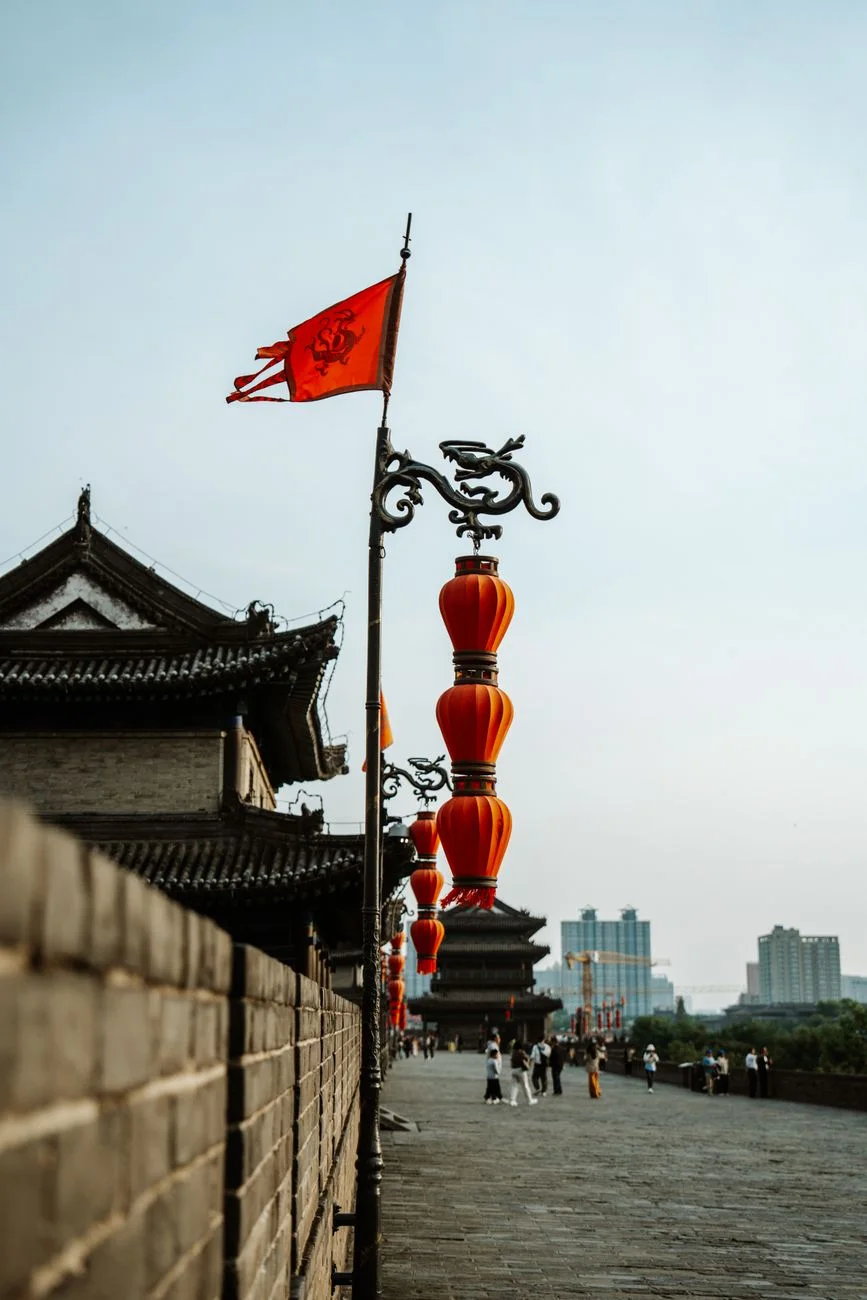
Xi'an's city walls, first built during the Tang Dynasty and reconstructed during the Ming (1370 AD), represent the world's most complete surviving ancient city walls. Measuring 13.7 kilometres in circumference with 98 watchtowers, the walls enclose the historic city centre. Unlike many Chinese cities that demolished walls during modernisation, Xi'an preserved this architectural treasure. The restored walls feature tarmac surfaces suitable for walking, cycling, or electric cart rides, offering panoramic city views.
Walking sections require 2-3 hours for the complete circuit; renting bicycles or e-scooters accelerates pace. The four main gates—east, south, west, north—feature recently renovated gate towers showcasing Tang Dynasty architectural styles. Evening visits are particularly atmospheric; moonlit walks provide romantic ambiance, whilst nighttime illumination accents architectural details. The Dayan Pagoda area near the south gate offers photogenic perspectives of wall and ancient structures.
Inside the walls, the historic city reveals narrow lanes connecting temples, traditional courtyard houses, and restored Ming architecture. The Bell Tower (originally built 1384) stands at the city's geographic centre and remains a functional timekeeper. The Drum Tower nearby participates in daily performance demonstrations. Street-level exploration reveals family-operated noodle shops, antique dealers, and craft workshops preserving traditional skills.
Buddhist & Taoist Spiritual Heritage
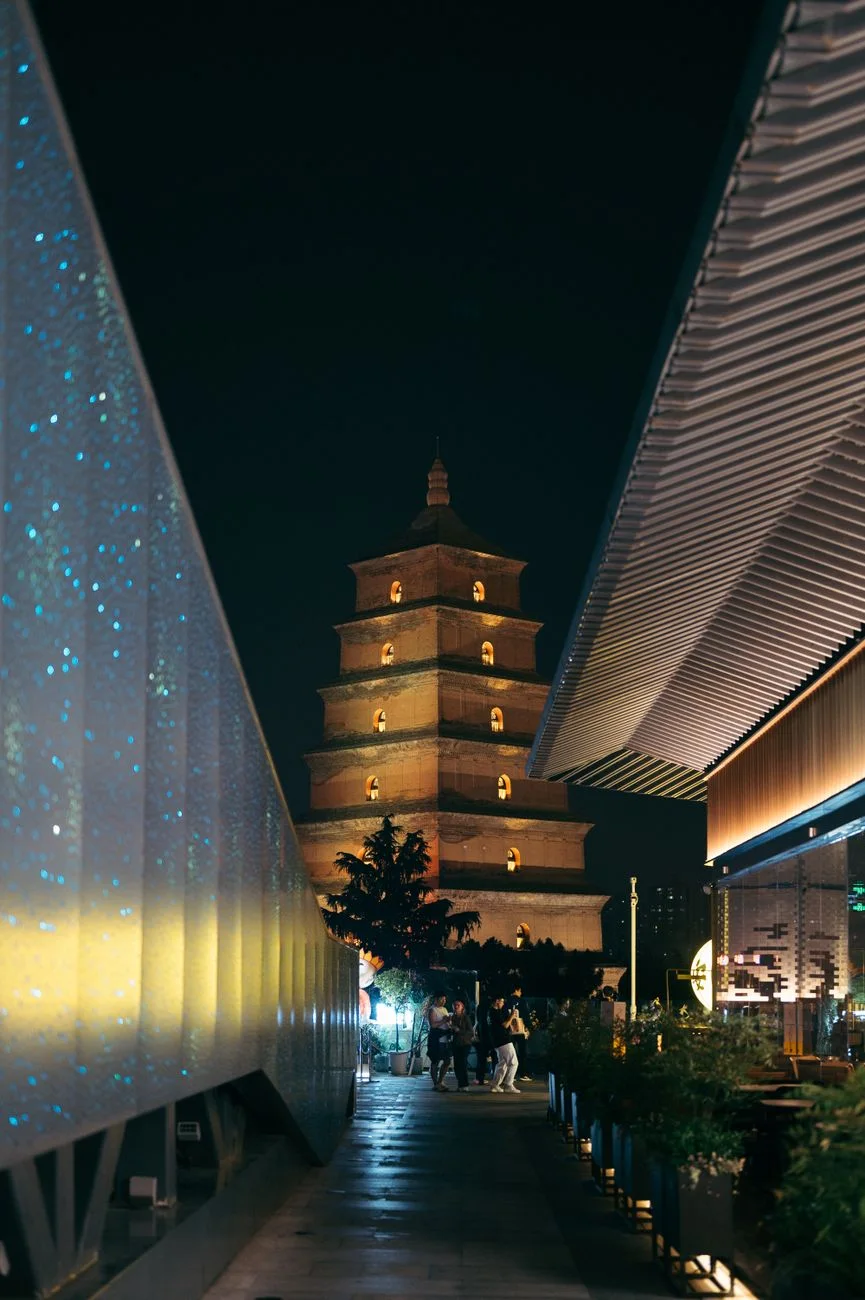
The Great Goose Pagoda, built 652 AD during the Tang Dynasty, originally housed Buddhist scriptures brought from India by the monk Xuanzang. This seven-storey brick structure represents pinnacle Tang architecture. Visitors can climb internal stairs (or elevators) to observation decks offering city panoramas. The surrounding temple grounds include gardens, meditation halls, and a museum detailing Xuanzang's legendary pilgrimage to India—immortalised in the classic novel "Journey to the West."
Shaanxi Province contains exceptional Buddhist cave temples, particularly at Binyang Caves and Qianfo Caves (Thousand Buddha Caves). These rock-carved temples, created across multiple dynasties (4th-9th centuries), showcase evolving Buddhist iconography and sculptural techniques. Many caves feature colossal Buddha statues, intricate relief carvings, and faded pigments revealing artistic sophistication. The Zhenwu Temple, dedicated to the Taoist deity Zhenwu, combines residential temple architecture with surrounding courtyards.
Xi'an's Grand Mosque, established 8th century, represents one of China's largest Islamic centres, blending Chinese architectural styles with Islamic design principles. The mosque complex includes courtyards, prayer halls, and mingaret-style structures. Muslim services occur daily; non-Muslim visitors can observe architecture respectfully. The adjacent Muslim Quarter bustles with cultural commerce and authentic cuisine.
Silk Road Heritage & Trade Routes
As the eastern terminus of the Silk Road, Xi'an synthesized trade goods, ideas, religions, and artistic styles from across Central Asia and beyond. The Silk Road Museum (Museum of Chinese Silk Road Civilisation) documents this 2,000-year exchange through artifacts, maps, and multimedia presentations. Exhibits showcase trade goods (silks, spices, ceramics), religious art (Buddhist sculptures, Islamic calligraphy), and numismatic collections reflecting multicultural commerce.
The Shaanxi History Museum houses comprehensive collections spanning multiple dynasties, including Zhou, Qin, Tang, and Song periods. The museum's chronological arrangement traces political, artistic, and technological developments. Notable exhibits include jade carvings, bronze vessels, ceramic figurines, and imperial regalia. The treasure collection—requiring separate queuing—showcases the empire's most prized objects. Audio guides in multiple languages contextualise displays.
Modern Xi'an acknowledges Silk Road heritage through cultural initiatives. The annual Silk Road International Festival (September-October) hosts exhibitions, performances, and academic conferences. Cultural parks recreating Silk Road trading towns, though somewhat commercialised, illustrate historical commercial dynamics. The Tang West Market museum complex reconstructs a Tang Dynasty marketplace, complete with vendor stalls and commercial activities.
Shaanxi Cuisine & Culinary Experiences
Xi'an and Shaanxi Province offer distinctive regional cuisines reflecting the region's wheat-based agricultural heritage. Roujiamo ("meat-filled bun") combines slow-braised pork shoulder with cumin-spiced herbs stuffed into sesame-crusted flatbread—a portable staple found at street stalls throughout the city. Biangbiang noodles (wide hand-pulled ribbons), featuring characteristically wide, hand-pulled ribbons, appear in numerous variations: oil-splashed, vinegar-based, or in broth.
Shaanxi cold noodle preparations, served year-round, include liangpi (wheat or rice-based sheets with vinegar-chilli dressing) and cold sesame noodles. Street food experiences in the Muslim Quarter offer lamb skewers (yangrouping), flatbreads (jianbing), and fragrant soups. Huimin Street evening market provides concentrated street food exploration—dozens of vendors cook traditional specialities in compact quarters.
Fine dining restaurants serve elevated Shaanxi cuisine using premium ingredients. Tang-themed banquet restaurants recreate imperial dining experiences with historical accuracy. Wine regions in Shaanxi produce distinctive varietals; wine appreciation tastings offer enological education. Tea culture thrives; jasmine and flower tea ceremonies provide meditative experiences. Cooking classes teaching roujiamo preparation or noodle-making offer hands-on cultural engagement.
Top Attractions in Xi'an
Terracotta Army Museum
Archaeological marvel featuring 8,000+ life-sized terracotta warriors, horses, and chariots from Qin Dynasty mausoleum.
Xi'an City Walls
Best-preserved medieval city walls (13.7km) with watchtowers, gates, museums, offering 360-degree city views.
Great Goose Pagoda
Seven-storey Tang Dynasty pagoda housing Buddhist reliquaries; interior stairs to observation decks.
Shaanxi History Museum
Comprehensive museum spanning Zhou to Song dynasties with jade, bronze, ceramics, and imperial collections.
Muslim Quarter & Huimin Street
Historic Islamic neighbourhood with grand mosque, bazaars, street food stalls, and cultural authenticity.
Small Goose Pagoda & Tang West Market Museum
Tang Dynasty pagoda paired with reconstructed marketplace offering cultural immersion and shopping.
Binyang Caves Buddhist Temple
Ancient rock-carved Buddhist caves featuring colossal statues, intricate reliefs, and architectural evolution.
Silk Road Museum
Specialised museum documenting 2,000-year trade routes through artifacts, maps, and multicultural exhibits.
Xi'an Photo Gallery
Practical Information
Getting Around
Modern metro system (4 lines) with clear signage; taxis and Didi ride-sharing widely available. Xianyang Airport (45km) has shuttle buses (¥25), metro (¥2.50), or taxi (¥100-120). High-speed trains to Beijing (5 hours), Shanghai (10 hours), Chengdu (3 hours), Hangzhou (12 hours). Long-distance buses connect provincial destinations.
Climate & Best Time
Cold, dry winters (-5 to 5°C, November-March); hot summers (25-35°C, June-August); spring and autumn mild. Limited rainfall year-round. Best time: April to May (spring, 15-25°C, flowers blooming) and September to November (autumn, 10-20°C, clear skies). December-February very cold; July-August very hot.
Budget
Street food ¥10-30; mid-range meals ¥50-150; upscale restaurants ¥200-500+. Hotels: budget ¥150-350, mid-range ¥500-1200, luxury ¥1500+. Attractions individually range ¥30-150.
Language & Safety
Mandarin Chinese; some English in tourist areas and hotels. Apps for translation helpful. Most staff at major attractions speak basic English. Safe city for tourists; standard urban precautions apply. Terracotta Army area well-developed with clear tourist infrastructure. Night activities concentrate in city-centre areas.
Frequently Asked Questions
Can I see the Terracotta Army's complete collection?
Only three pits have been excavated; many soldiers remain buried. The museum displays thousands in the main exhibition halls plus ongoing excavation sites where visitors observe active archaeological work. Complete excavation is deliberately deferred for future generations with superior technologies.
How do I reach the Terracotta Army from Xi'an city?
The site (35km east) is reachable by hired car (45 minutes, ¥80-100), tour bus (¥50-80), shuttle bus from tourist centres (¥25-35), or metro line 9 to end station then shuttle (¥2.50 metro + ¥25 shuttle). Most day tours include transport and guide.
Is climbing Xi'an walls difficult?
Walking the flat rampart surface is straightforward; climbing internal stairs to watchtowers is moderate effort. Sections near gates are busier. Renting bikes or e-scooters extends reach without physical exertion. Strollers and wheelchairs navigate rampart sections easily.
What's the best time to visit Xi'an?
April-May and September-November offer ideal weather (15-25°C) and clear visibility. Summer is hot (30-35°C); winter is cold (-5 to 5°C). Avoid Chinese New Year (late January-February) and October Golden Week when crowds peak.
Can I eat well in Xi'an as a Western vegetarian?
Buddhist temples offer vegetarian meals; Muslim Quarter has vegetable-based noodle options; modern restaurants accommodate dietary restrictions. Fresh produce markets abound. Communicate dietary needs clearly; language apps help bridge gaps.
Recommended Reading
Continue the story with practical routes, local food, transport and the wider history of Xi'an.
Visiting the Terracotta Warriors: NZ Traveller Guide
The Terracotta Army is one of the greatest archaeological discoveries in history. Here's what to expect, how to make the most of your visit, and why it deserves a full day.
10-Day Beijing & Xi'an Itinerary for NZ Travellers
A practical day-by-day guide to 10 days in Beijing and Xi'an — the Forbidden City, Great Wall, high-speed train, and Terracotta Warriors — designed for New Zealand travellers doing China for the first time.
First China Trip: Why Beijing & Xi'an Is the Right Start
If you're planning your first trip to China from New Zealand, Beijing and Xi'an is the most rewarding and logistically sensible combination. Here's why — and how to do it properly.