Most New Zealanders who visit China put Chongqing on a list and then quietly remove it. Too hard to get to, they think. Too similar to other Chinese cities. Too spicy. They're wrong on all three counts.
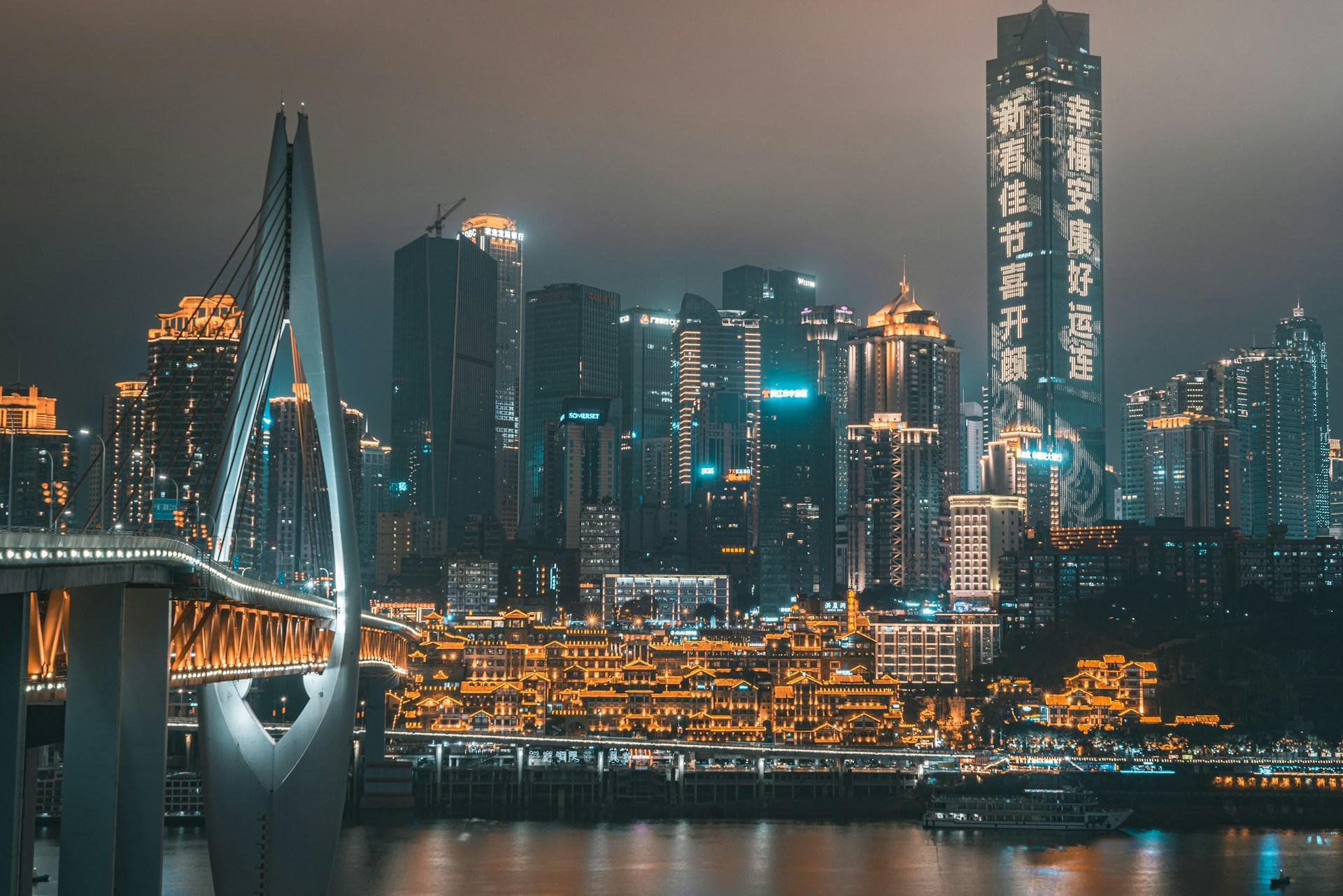
Chongqing is built across a mountain ridge between two rivers — there are no flat blocks or logical grids. Buildings stack vertically up cliff faces. Highways thread through skyscrapers. A metro train passes through the sixth floor of a residential building as a matter of routine. At night, neon reflects off the rivers below and the fog rolling in off the Yangtze gives the city a diffused, cinematic glow. This is the "cyberpunk city" that has circulated on social media for several years, and it fully delivers in person.
For NZ travellers, Chongqing fits naturally into a Beijing and Chongqing pairing — 10 days is comfortable — or a Beijing, Chongqing and Shanghai itinerary at 14 days. The flight from Beijing takes about 2 hours 20 minutes. From there, Chongqing earns 3 to 4 days easily. This guide covers the essential stops, the honest trade-offs, and what to eat if you don't do chilli.
Chongqing with CTS Tours
Expert-led tours. Small groups. 33+ years in China.
Hongyadong (洪崖洞) — The Icon, Best Seen After Dark
Every visitor to Chongqing ends up at Hongyadong. That's both its strength and its limitation. The complex is an 11-storey reconstruction of the traditional stilted diaojiaolou architecture that the Ba people built along Chongqing's cliffsides for centuries — at night, lit with thousands of red and golden lanterns, it creates a glowing, layered spectacle above the Jialing River that appears in every China travel reel.
The trade-off: daytime visits feel like a shopping mall with a view — crowds are thick, stalls repetitive, food average. Come after dark from around 7pm when the lights come on. Cross to the Qiansimen Bridge for the full panoramic view — that's the photograph everyone is trying to take, and it's worth the 10-minute walk. The interior is free to enter; eat elsewhere.
I'd put Hongyadong on your first evening, not as a daytime destination. An evening river cruise departing from Chaotianmen that passes the cave from the water gives you the full spectacle without the crowds inside — worth considering if you prefer a slower pace.
Hongyadong: complete visitor guide →Liziba Station — The Metro Train Through a Building
Chongqing Rail Transit Line 2 passes through the 6th to 8th floors of a 19-storey residential building at Liziba Station. The train enters, stops on the platform inside the building, and exits the other side. Locals use it as any other metro stop. Visitors gather on the street-level observation platform below to photograph the train emerging from the facade. The surreal quality does not diminish with repetition.
Ride Line 2 through the building for the inside view, then watch from the street below — both perspectives are worth having. Trains run every few minutes; most visitors spend 30 to 60 minutes. Walk up to the platform itself and look out the windows while waiting: the city view from inside a residential building at floor 7 is extraordinary and most visitors miss it.
Liziba is 15 minutes from central Chongqing by metro. It pairs naturally with Eling Park two stops away — a morning covering both, then Hongyadong after dark, makes a satisfying first-day loop.
Liziba Station: complete visitor guide →Luohan Temple (罗汉寺) — 500 Clay Faces in the City Centre
Luohan Temple sits in the middle of Chongqing's commercial district, which initially seems like the wrong place for a working Buddhist monastery. Walk through the gate, past the incense smoke and chanting, and the city disappears faster than you'd expect. The main hall houses 524 clay arhat statues — Buddhist saints each with a distinct face and posture, carved during the Qing Dynasty. The craftsmanship is extraordinary; the hall is dimly lit enough that the statues seem to emerge from the walls.
Founded in the Song Dynasty with the current incarnation dating from 1752, the temple is among the most significant Buddhist sites in Chongqing. Best visited before 10am when morning rituals are underway and the light in the main hall is good. The temple runs a vegetarian canteen popular with locals — an excellent option for travellers avoiding spice, and genuinely good food.
An hour is enough for most visitors. Luohan Temple is often more memorable than larger, more famous temples because it is working rather than monumental. It is a short walk from Chaotianmen Dock — combine both on a morning before the crowds build.
Eling Park (鹅岭公园) — The View That Explains the City
If you want to understand Chongqing's geography — why there are no flat blocks, why the roads spiral rather than grid, why buildings appear to grow from cliff faces — go to Eling Park first. The park occupies a hilltop in the urban centre, and from the main viewing platform you can see both rivers, the peninsula between them, and the CBD towers. The altitude difference between the valley streets below and the park above is roughly 250 metres.
The park is free to enter, lightly visited by international travellers, and heavily used by locals for morning walks and tai chi. Arrive before 9am for the best light on the rivers and the most local atmosphere. A 20-minute walk connects it to Liziba Station — pair them on the same morning.
The main viewing platform is accessible; some garden areas involve steps. Eling Park pairs naturally with Xiahaoli in the same neighbourhood — together they make a good half-day circuit through one of Chongqing's quieter, more residential areas.
Raffles City Sky Bridge — Modern Chongqing at Its Most Ambitious
Opened in 2019 and designed by Israeli-Canadian architect Moshe Safdie, Raffles City Chongqing is one of the most ambitious building complexes of recent decades. Eight towers rise from a shared podium at the confluence of the two rivers. The defining feature is The Crystal — a horizontal sky bridge connecting two towers at 250 metres — containing a garden, restaurants, and an observation deck with an unmatched view of the Jialing-Yangtze confluence.
The trade-off is commercial: the observation deck charges approximately ¥168 and the building is a premium mall with international luxury brands. Go for the architecture and the altitude. A clear day is significantly better than a cloudy one — Chongqing's famous fog can close out the view entirely in winter and spring, so check the forecast before committing to the ticket.
The building lobby is free to enter and the architecture alone is worth seeing. Combine with Chaotianmen Dock (walking distance) for a morning that covers both the old and new faces of Chongqing's waterfront.
Xiahaoli (下浩里) — Where Chongqing Gets Creative
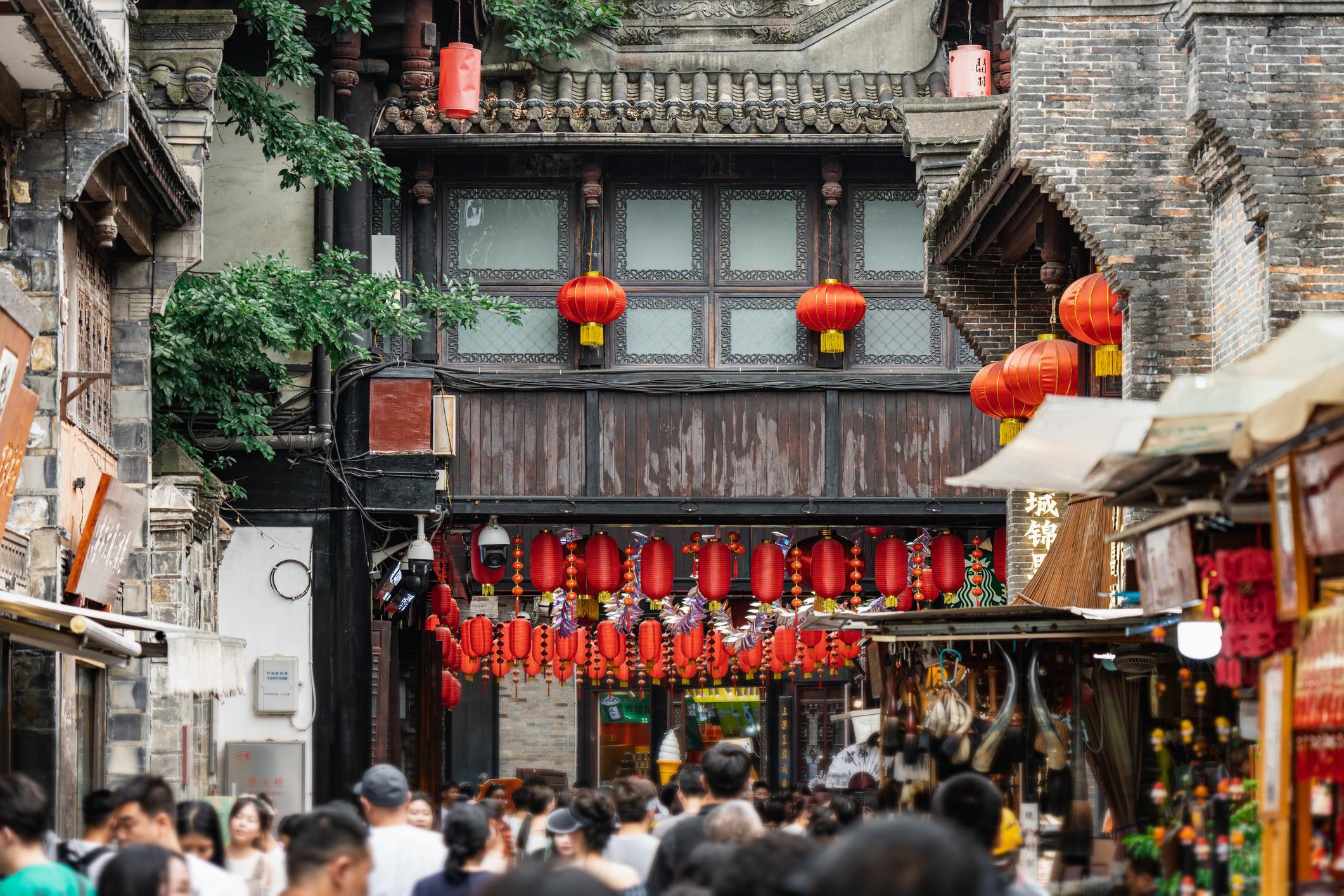
Xiahaoli is a cluster of pre-war alleyway housing in the Nanbin Road area that has been gradually taken over by small cafés, independent bookshops, photography studios, and street art. It is where Chongqing's creative community gathers, and it has a very different register from the rest of the city — quieter, more personal, less curated for tourism.
The area is compact enough to walk completely in 30 minutes, which means it rewards slow exploration rather than goal-directed visiting. The coffee is genuinely good. The architecture — narrow lanes, wooden overhangs, painted tile walls — gives you a texture of old Chongqing that is hard to find anywhere in the modern city.
Visit on a weekday afternoon when the neighbourhood is most relaxed. It pairs well with Eling Park — both sites are close enough to combine in a single morning-into-afternoon outing in the south-central part of the city.
Chongqing Hot Pot — And What to Eat If You Don't Do Spice
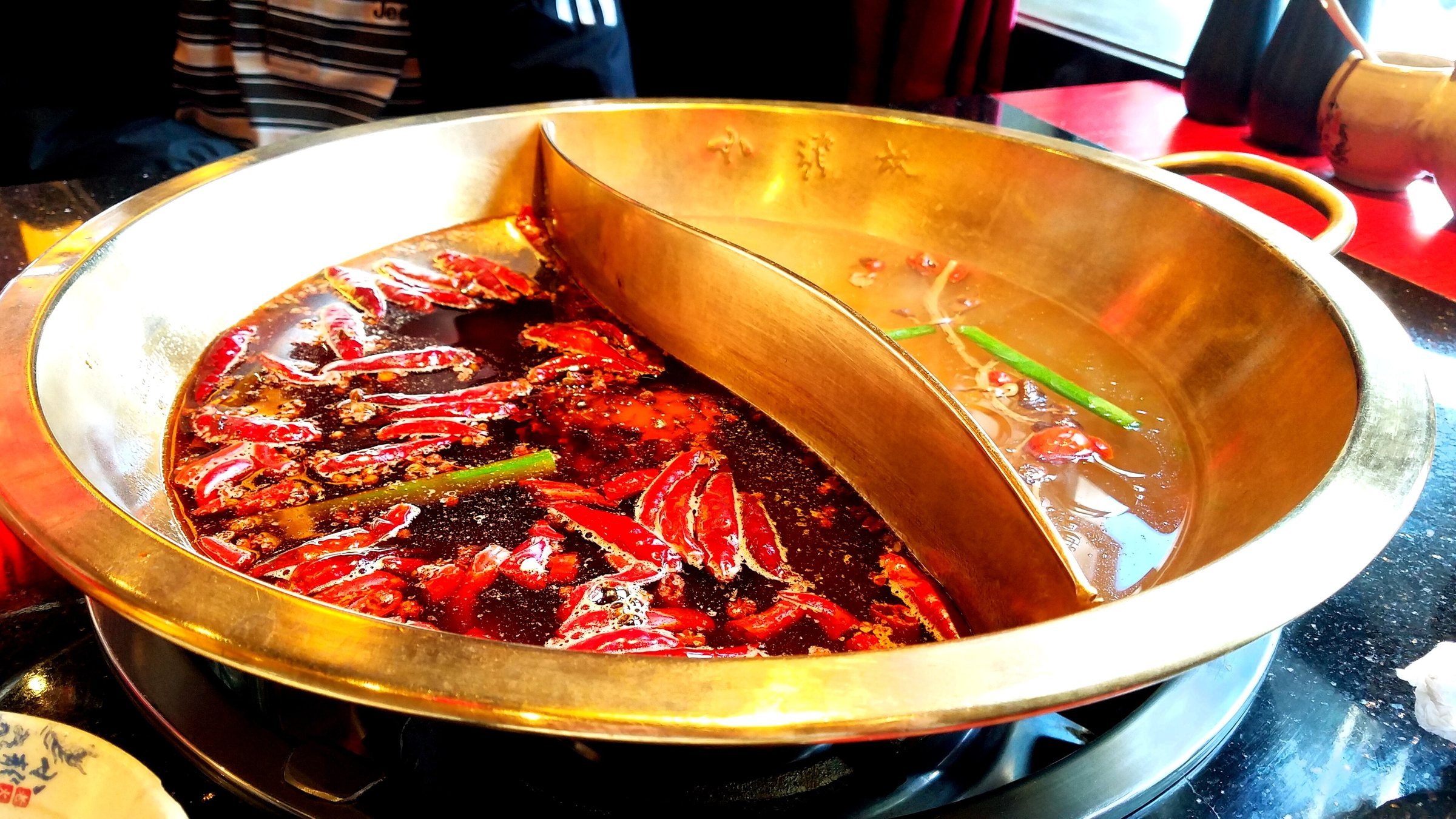
Chongqing is the birthplace of Chinese hot pot — significantly different from versions served elsewhere. The traditional base uses beef tallow, dried chillis, and Sichuan peppercorn that numbs more than it burns. The communal dining format — cooking ingredients at the table and dipping in sesame sauce — is as much a cultural ritual as a meal. This is one of the best things you can do in Chongqing regardless of spice tolerance, because almost every proper restaurant offers a split pot.
Ask for yuānyang guō (鸳鸯锅 — mandarin duck pot): one side carries the full red broth, the other a mild chicken or bone broth. The mild side is genuinely mild, not "mild for China." This is a standard menu option. At any restaurant, bù là (不辣, not spicy) gets you a manageable dish; wēi là (微辣, a tiny bit spicy) works for those who want a hint.
Hongjiuge Hot Pot is a well-known chain with views and English-friendly menus. Chongqing dry noodles (xiǎo miàn, 小面) are an excellent non-spicy alternative — a street-food breakfast staple available mild on request. The vegetarian canteen at Luohan Temple has no meat and no chilli, and is open for lunch.
Nanfeng Cliff Night Views (南山一棵树)
South Mountain (Nanshan) rises steeply from the Yangtze's south bank and gives you a view back across the Chongqing peninsula that no street-level vantage point can match. The Nanfeng Cliff observation area is where you come after dark to see what Chongqing actually looks like from a distance: a tongue of land between two rivers, every slope covered in light.
The Nanfeng Cliff Restaurant & Bar is one of the city's most popular dinner reservations, positioned directly at the prime viewpoint. Arrive at dusk for the colour transition as the city lights come on progressively — dinner at 7:30pm aligns well with that window. Book at least a day in advance. Getting here requires a taxi or Didi (15 to 20 minutes from central Chongqing).
Hong'en Temple is in the same hills on the south bank — a half-day that combines a temple visit in the afternoon with Nanfeng Cliff dinner in the evening makes efficient use of the journey. For NZ travellers wanting a more relaxed evening than Hongyadong's crowds, Nanfeng Cliff is the better option.
Dazu Rock Carvings — UNESCO Hidden Gem
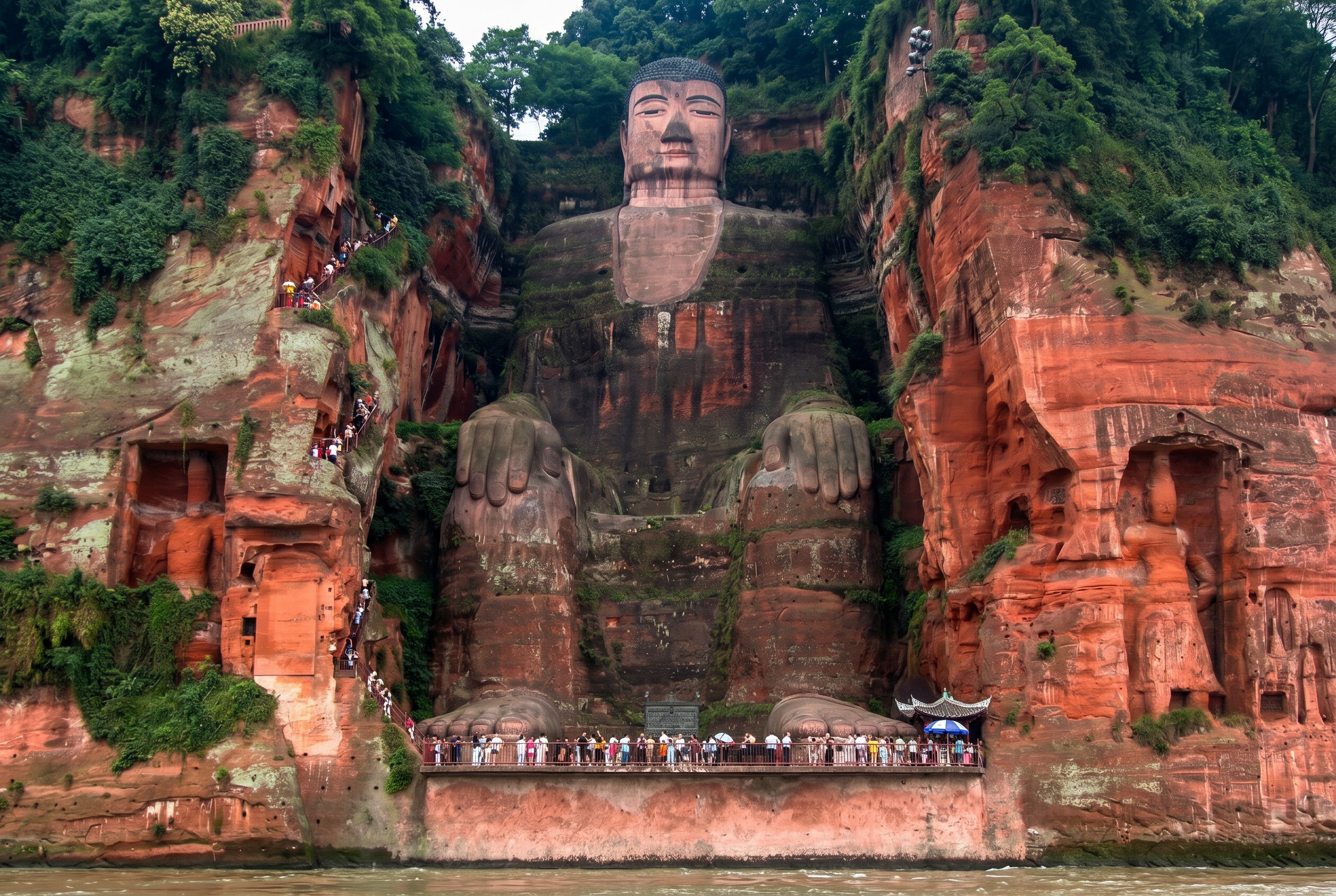
The Dazu Rock Carvings are one of the great surprises of Chinese travel: a UNESCO World Heritage Site (inscribed 1999) that most Western visitors have never heard of. Located 100km from Chongqing city, the site contains approximately 50,000 stone sculptures and over 100,000 characters of inscriptions carved between the 9th and 13th centuries.
The Baodingshan site features large-scale narrative Buddhist scenes including a 31-metre reclining Nirvana Buddha. Beishan contains earlier, more densely packed sculptures of outstanding aesthetic quality. The carvings uniquely synthesise Buddhism, Taoism, and Confucianism — a reflection of Song Dynasty religious culture that has no parallel elsewhere in China.
Plan a full day: the drive takes approximately 1.5 hours each way, and the site rewards unhurried exploration. A guided visit adds significant context — the iconographic programme is subtle. This is one of the stops where arranging transport in advance makes a real difference; the logistics between sites on a single day are non-trivial without local knowledge.
Planning Your Chongqing Itinerary
Three to four days is the right amount of time. Day 1: Eling Park for orientation, then Liziba Station, Luohan Temple with vegetarian lunch, Jiefangbei pedestrian area in the afternoon, Hongyadong from 7pm. Day 2: Chaotianmen Dock in the morning, Raffles City sky bridge, hot pot lunch with a split pot, Nanfeng Cliff for dinner at dusk. Day 3: Dazu Rock Carvings full day trip — leave early. Day 4 if available: Xiahaoli and Ciqikou in the morning, Yangtze River Cableway in the afternoon.
Getting around: Chongqing Rail Transit covers the Yuzhong peninsula well. Line 2 connects Liziba Station to the city centre with bilingual signage. For south-bank destinations — Nanfeng Cliff, Hong'en Temple — taxis or Didi are more practical than the metro. Jiangbei Airport (CKG) connects to Auckland via Beijing or Shanghai; Beijing to Chongqing is approximately 2 hours 20 minutes by air.
Chongqing pairs naturally with Beijing for a 10-day trip or with Beijing and Shanghai for 14 days. If pandas are on your list, note that the Giant Panda Breeding Research Base is in Chengdu — 90 minutes by high-speed train. The two cities together make a compelling southwest China combination. Contact CTS Tours for a tailor-made itinerary that fits your timeframe and interests.
Top Attractions in Chongqing
Hongyadong (洪崖洞)
11-storey stilted cliffside complex above the Jialing River. Best experienced after dark — view from Qiansimen Bridge for the full panoramic spectacle.
Liziba Station (李子坝站)
Chongqing Rail Transit Line 2 passes through the 6th–8th floors of a 19-storey residential building. The most photographed railway station in China.
Raffles City Sky Bridge (The Crystal)
Moshe Safdie-designed complex with a sky bridge at 250m. Best panoramic view of the two-river confluence in the city.
Eling Park (鹅岭公园)
Free forested ridge park with panoramic views of the Jialing-Yangtze confluence. Lightly touristed, popular with locals for morning walks.
Xiahaoli (下浩里)
Pre-war alley neighbourhood turned creative district — independent cafés, bookshops, street art. The most atmospheric place for a slow afternoon in Chongqing.
Nanfeng Cliff Night Views (南山一棵树)
South Mountain viewpoint with the best panoramic night view of Chongqing's peninsula. Iconic restaurant at the prime viewpoint — book in advance.
Dazu Rock Carvings (大足石刻)
UNESCO World Heritage Site with 50,000 stone sculptures carved between the 9th–13th centuries. One of the most impressive Buddhist art sites in China.
Ciqikou Ancient Town (磁器口)
Song Dynasty market street with flagstone lanes, teahouses, and Sichuan street food. Vivid contrast to the futuristic cityscape surrounding it.
Yangtze River Cableway (长江索道)
Iconic aerial tramway (opened 1987) crossing the Yangtze River — one of the last urban cable car commuter systems in China.
Huguang Guild Hall (湖广会馆)
One of China's best-preserved Qing Dynasty guild hall complexes (built 1759), climbing a terraced hillside above the Yangtze.
Practical Information
Getting Around
Jiangbei Airport (CKG) connects to Auckland via Beijing or Shanghai (approximately 15 hours total travel). Chongqing Rail Transit (10 metro lines) covers all key tourist sites with bilingual English signage. Line 2 is the main tourist line, connecting Liziba Station to the city centre. Taxis and Didi (ride-hailing) are reliable for south-bank destinations.
Climate & Best Time
Hot, humid summers (June–August, up to 40°C — Chongqing is one of China's "Three Furnaces"). Mild winters with characteristic fog. Spring (March–May) and autumn (September–November) offer comfortable temperatures and are the recommended travel seasons. Winter fog adds atmosphere to Hongyadong and is not a reason to avoid visiting. Best time: September–November (autumn) and March–May (spring) for comfortable temperatures (15–25°C). July–August is very hot but manageable. Winter brings atmospheric fog.
Budget
Hot pot dinner ¥80–200 per person; casual noodles ¥15–40. Hotels: budget ¥250–450/night, mid-range ¥600–1200/night. Metro fare ¥2–8 per trip. Dazu day trip ¥250–450 total including transport.
Language & Safety
Mandarin. English is limited outside major hotels and tourist attractions. The metro has bilingual signage; most restaurants do not. A translation app with camera function (Google Translate or Pleco) is genuinely useful. CTS Tours provides English-speaking guides throughout. Very safe city for tourists. The practical caution is footing on steep hillside streets and stairs, which can be slippery in wet weather. Standard urban precautions (watch bags in crowded areas) apply.
Frequently Asked Questions
Is all the food spicy in Chongqing? What if I can't eat spicy food?
No — Chongqing has plenty of non-spicy options. For hotpot, order a split pot (鸳鸯锅), which has spicy broth on one side and mild chicken broth on the other. The mild side is genuinely mild, not "mild for China." Dry noodles (干溜面), dumplings, steamed dishes, and general Chinese food are all available without spice. Saying "bu yao la" (不要辣 — no spice) is understood at most tourist-area restaurants.
How many days should I spend in Chongqing?
3–4 days is ideal: Day 1 covers Liziba Station and Hongyadong. Day 2 covers Raffles City sky bridge and a hotpot dinner. Day 3 adds Eling Park, Xiahaoli, and Nanfeng Cliff evening. Day 4 is for Dazu Rock Carvings. On a tighter schedule, 2 full days covers the core viral highlights.
Where can I see pandas near Chongqing?
Giant pandas are not found in Chongqing itself. The best place in the world to see them is the Giant Panda Breeding Research Base in Chengdu, approximately 90 minutes from Chongqing by high-speed train. Many travellers combine Chongqing (3–4 nights) with Chengdu (2–3 nights) in one Southwest China itinerary — CTS Tours offers this as a dedicated tour.
What is the Liziba Station monorail through a building?
Liziba is a station on Chongqing Rail Transit Line 2 where the train passes directly through the 6th to 8th floors of a 19-storey residential building. The station and building were constructed at the same time in 2004. It is completely real and operational — ride through on Line 2 for the inside view, or watch from the street-level plaza below.
Do New Zealanders need a visa to visit China?
New Zealand passport holders currently benefit from China's visa-free entry policy for up to 30 days for tourism (policy in effect from 2024). Always verify the current requirements with the Chinese Embassy in Wellington before booking, as visa policies can change.
What is the best time of year to visit Chongqing?
September–November (autumn) and March–May (spring) are the most comfortable, with temperatures around 15–25°C and clear skies. July–August reaches up to 40°C with high humidity — demanding but manageable. Winter fog (November–February) is actually an asset for atmospheric photography of Hongyadong and the city skyline.
Is Chongqing safe and easy to navigate for international visitors?
Chongqing is very safe for tourists. The metro system is modern and has bilingual English signage. The main challenge is the city's dramatic vertical topography — steep stairs and hillside streets can be disorienting. A translation app helps with restaurants. A guided tour makes logistics significantly easier, especially for day trips to Dazu Rock Carvings.
Can I visit Chongqing as part of a tour from New Zealand?
Yes — CTS Tours specialises in tailor-made China itineraries for NZ travellers. Chongqing pairs naturally with Beijing (10 days) or Beijing and Shanghai (14 days). We can also combine Chongqing with Chengdu (for the panda base) on a southwest China itinerary. Contact us to discuss your timeframe and we'll build an itinerary around your interests.
Recommended Reading
Continue the story with practical routes, local food, transport and the wider history of Chongqing.
Chongqing Hot Pot: What It Is and Where to Eat
I'm Baker Gu — Chongqing hot pot is the original, and it's significantly different from what you've eaten elsewhere. Here's what makes it different, what to order, and what to expect from the heat.
How Many Days in Chongqing? 3, 5 or 7 Days
How long should you spend in Chongqing — 2 days, 5 days, or longer? A practical day-by-day planning guide for Kiwi travellers covering Liziba monorail, Hongyadong, hotpot, day trips, and Yangtze River cruise embarkation, by CTS Tours NZ.
Chongqing vs Chengdu: Which to Visit in 2026?
Hotpot capital vs panda capital — which Sichuan-region city is right for your China trip from New Zealand? A practical comparison covering food, pace, day trips, and how long to spend in each, written for Kiwi travellers by CTS Tours NZ.